
Our Lady of the Rosary in Catholic Art
According to Catholic tradition, the Blessed Virgin Mary appeared to St. Dominic in the early thirteenth century. She gave him the Rosary, a prayer that would serve as a spiritual weapon to help convert sinners. Over the following centuries, the Rosary developed into a widespread Catholic practice with a defined structure. The Rosary became part of the Christian iconographic tradition through paintings of Our Lady of the Rosary and the Mysteries of the Rosary, which encouraged the faithful to embrace the devotion and seek the intercession of the Blessed Mother. Our Lady of the Rosary began appearing in sacred art in the early sixteenth century, and she is commonly portrayed with the Christ Child and St. Dominic.
Our Lady of the Rosary in Altarpieces
In the 1470s, the Dominican friar Blessed Alan de la Roche (c. 1428–1475) helped establish one of the first Confraternities of the Holy Rosary. This Catholic association promoted the regular recitation of the Rosary, inviting people to grow closer to Christ through Mary. The confraternity spread rapidly in the following decades, as branches were established in churches across Germany, France, Spain, and Italy.
The growth of the confraternity led to the commissioning of altarpieces of Our Lady and the Mysteries of the Rosary for churches throughout Europe. Among the earliest examples is an altarpiece by an early sixteenth-century Netherlandish painter in Brussels. Dated to around 1515–1520, it appears to be the earliest surviving altarpiece known to depict all fifteen Mysteries, or major events from the lives of Jesus and Mary meditated upon during the Rosary.
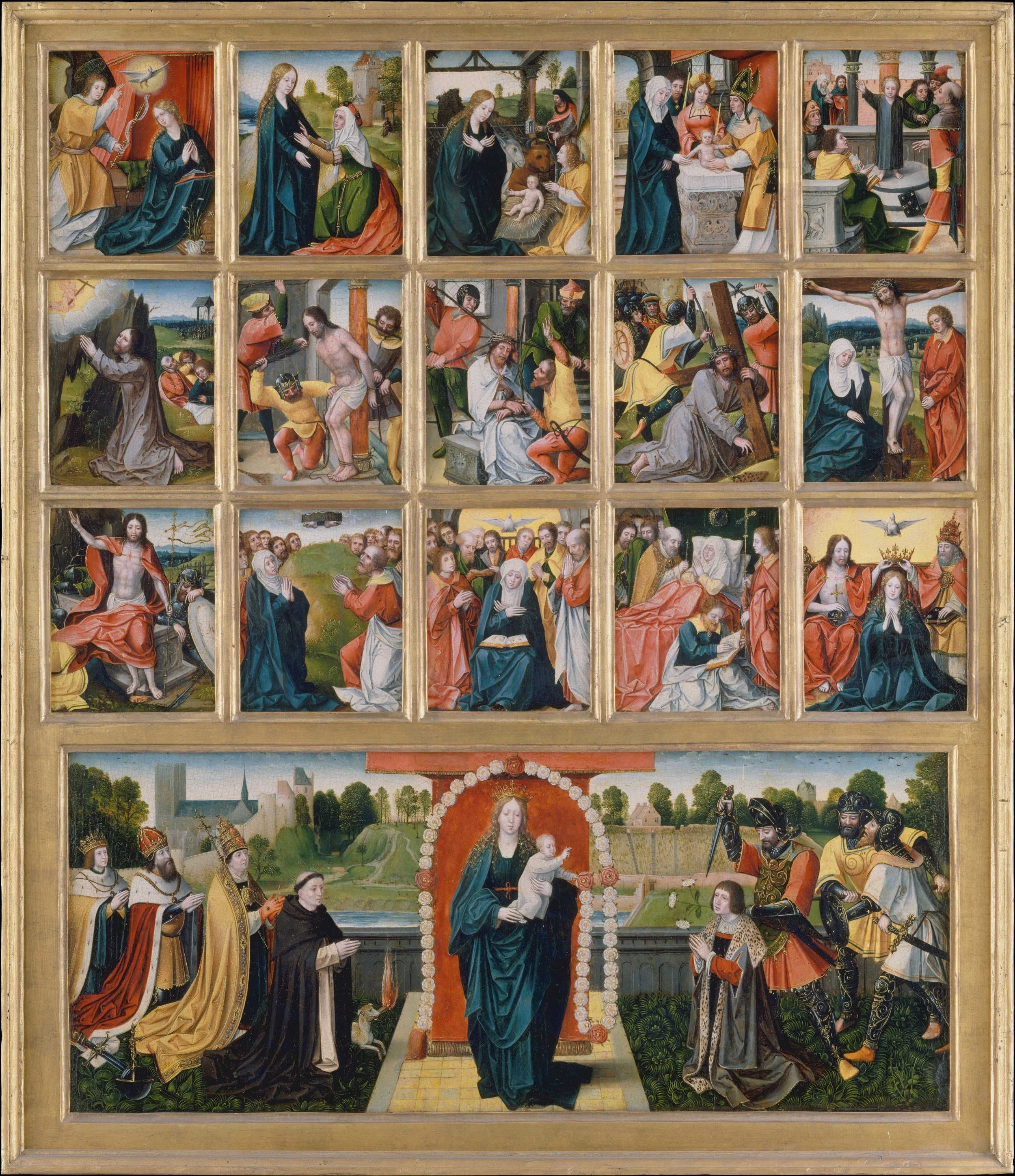
Netherlandish (Brussels) Painter, The Fifteen Mysteries and the Virgin of the Rosary, c. 1515–20, The Met
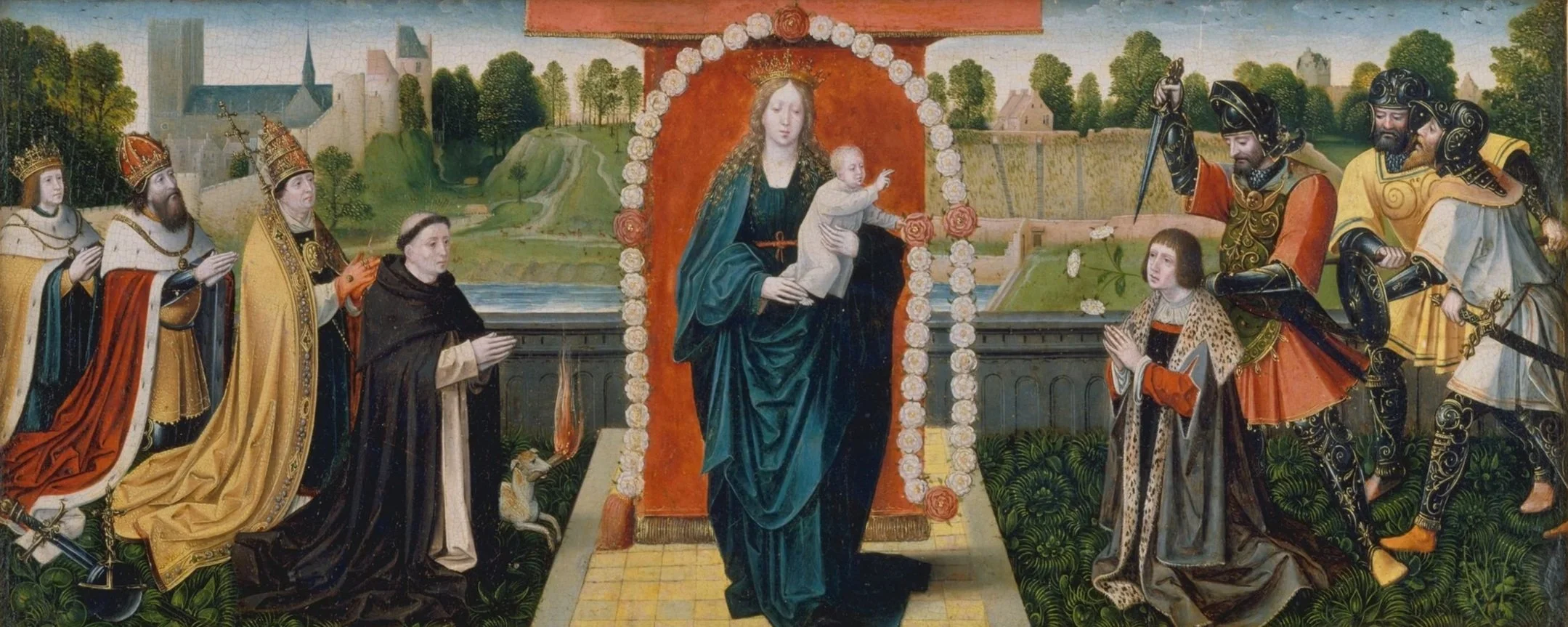
In The Fifteen Mysteries and the Virgin of the Rosary, the bottom panel is dedicated to the veneration of Our Lady of the Rosary. She holds the Christ Child, who in turn grasps a five-decade Rosary composed of rose-shaped beads. The word “Rosary” derives from the Latin rosarium, meaning “rose garden” or “garland of roses.” Christ is indeed holding a garland of roses in this painting. St. Dominic notably kneels to the left of Our Lady, referencing the Dominican tradition of him receiving the Rosary from Mary.
The uppermost fifteen panels of the altarpiece are dedicated to the fifteen Mysteries: the Joyful, Sorrowful, and Glorious. This work shows that the Rosary was already developing into a recognizable form, since these panels were created several decades before Pope St. Pius V issued his 1569 apostolic constitution Consueverunt Romani Pontifices, which gave formal papal support to the Rosary. The altarpiece shows the Mysteries that were traditionally meditated on before the addition of the Luminous Mysteries, with the exception of the Dormition of Mary, which was later replaced by the Assumption as the Fourth Glorious Mystery. The two events, however, are closely connected in Catholic tradition.
There are many other examples of sixteenth-century altarpieces depicting the Mysteries and Our Lady of the Rosary. Here are just a few:
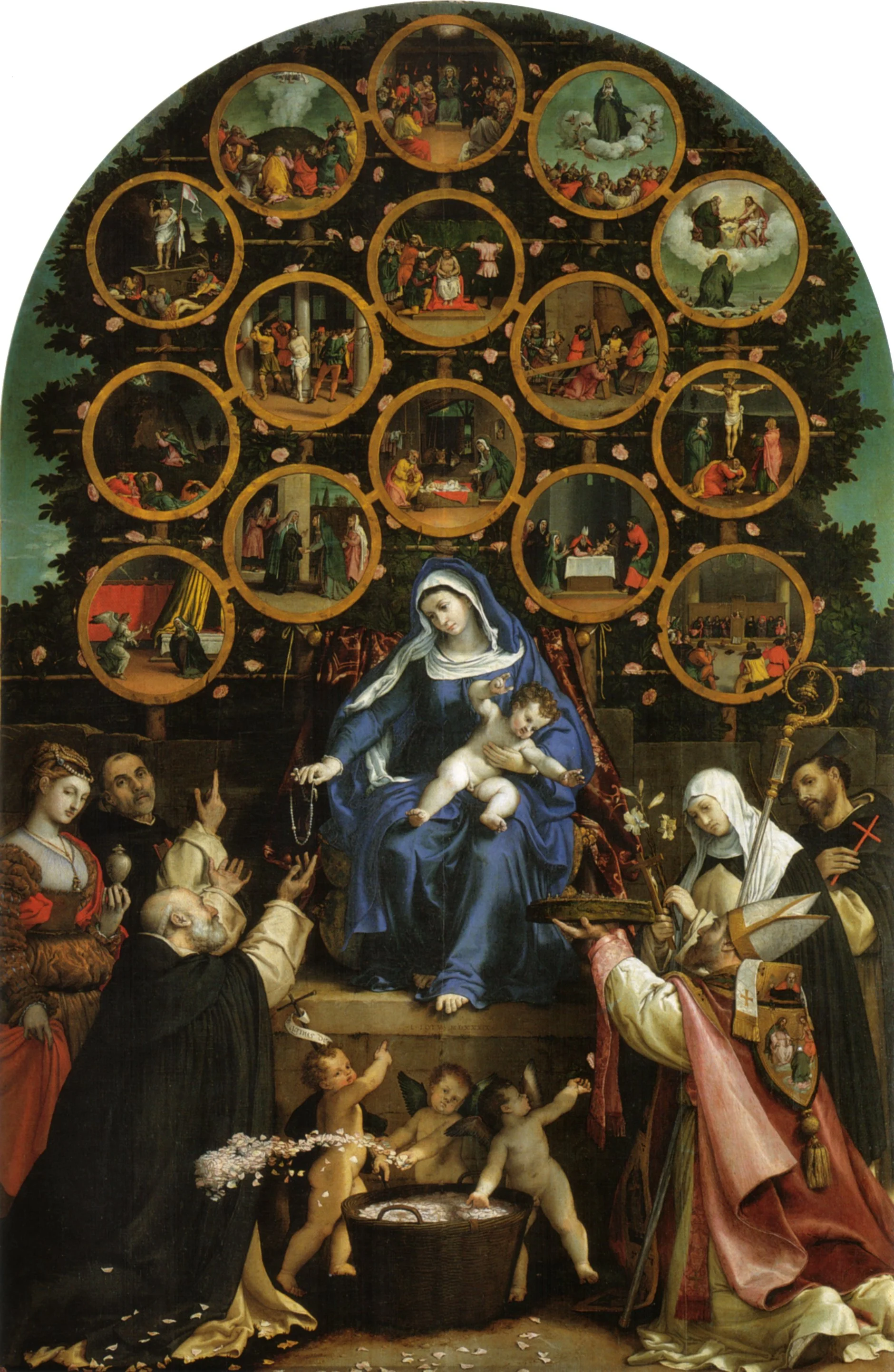
Lorenzo Lotto, Madonna of the Rosary, 1539, Wikimedia Commons, Public Domain
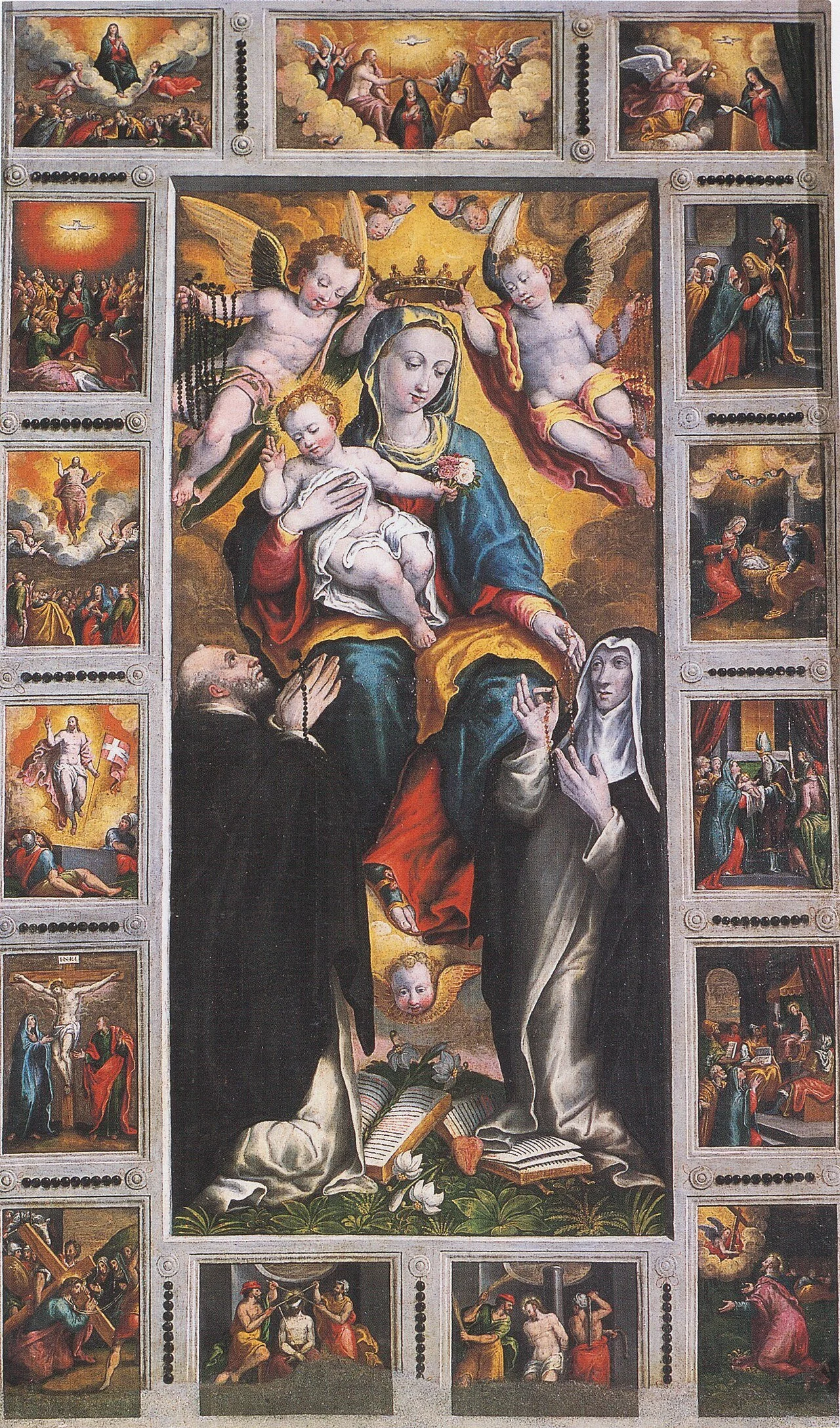
Ercole Ramazzani, Madonna of the Rosary, 1589, Wikimedia Commons, Public Domain
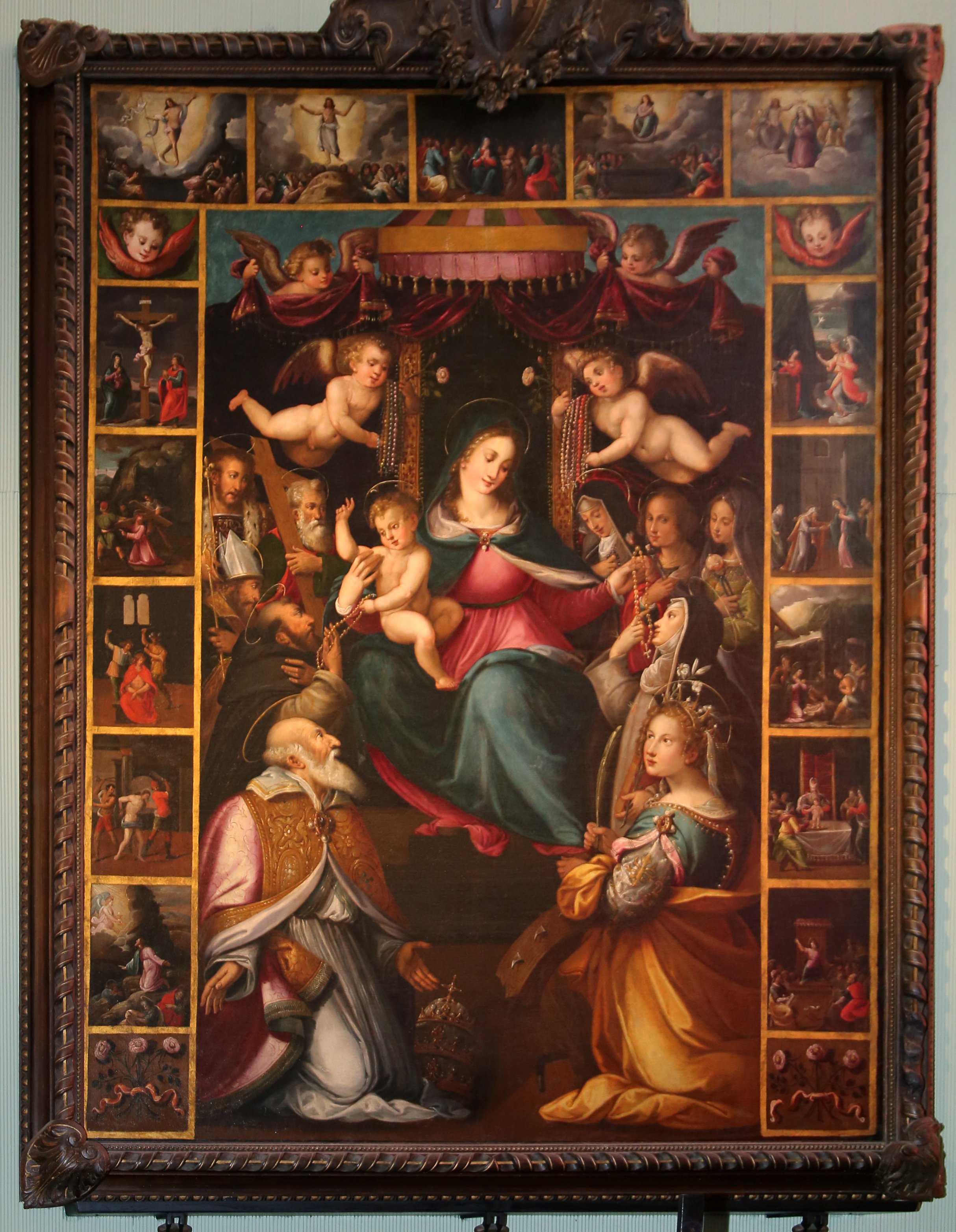
Niccolò Betti, Madonna of the Rosary, 1596, Licensed under CC BY-SA 4.0 by Sailko on Wikimedia Commons.
The Battle of Lepanto and Our Lady of Victory
The Christians secured a major victory over the Ottoman Empire in the Battle of Lepanto on October 7, 1571—an event that Pope St. Pius V attributed to the intercession of Our Lady through the Rosary. As an act of thanksgiving, he established the Feast of Our Lady of Victory on October 7. In 1573, Pope Gregory XIII changed its name to the Feast of the Holy Rosary, moving the feast to the first Sunday in October.
The Battle of Lepanto likely contributed to an increased number of images portraying Our Lady of the Rosary, also known as Our Lady of Victory, in the late sixteenth and early seventeenth centuries. The Fifteen Saturdays, a Catholic devotion centered on the Rosary, also originated among the Dominicans in the seventeenth century. It began spreading to Dominican parishes and churches associated with the Confraternity of the Rosary.
Perhaps the most famous painting from this period is the Madonna of the Rosary by Caravaggio. The Italian Baroque painter completed this work around 1607, likely intending it as an altarpiece. The composition shows St. Dominic standing to the left of the Madonna and Child. Our Lady gestures toward the kneeling crowd with her right hand, directing St. Dominic to distribute the Rosary beads hanging from his fingers. The Rosaries are difficult to see in the scene’s dark lighting.
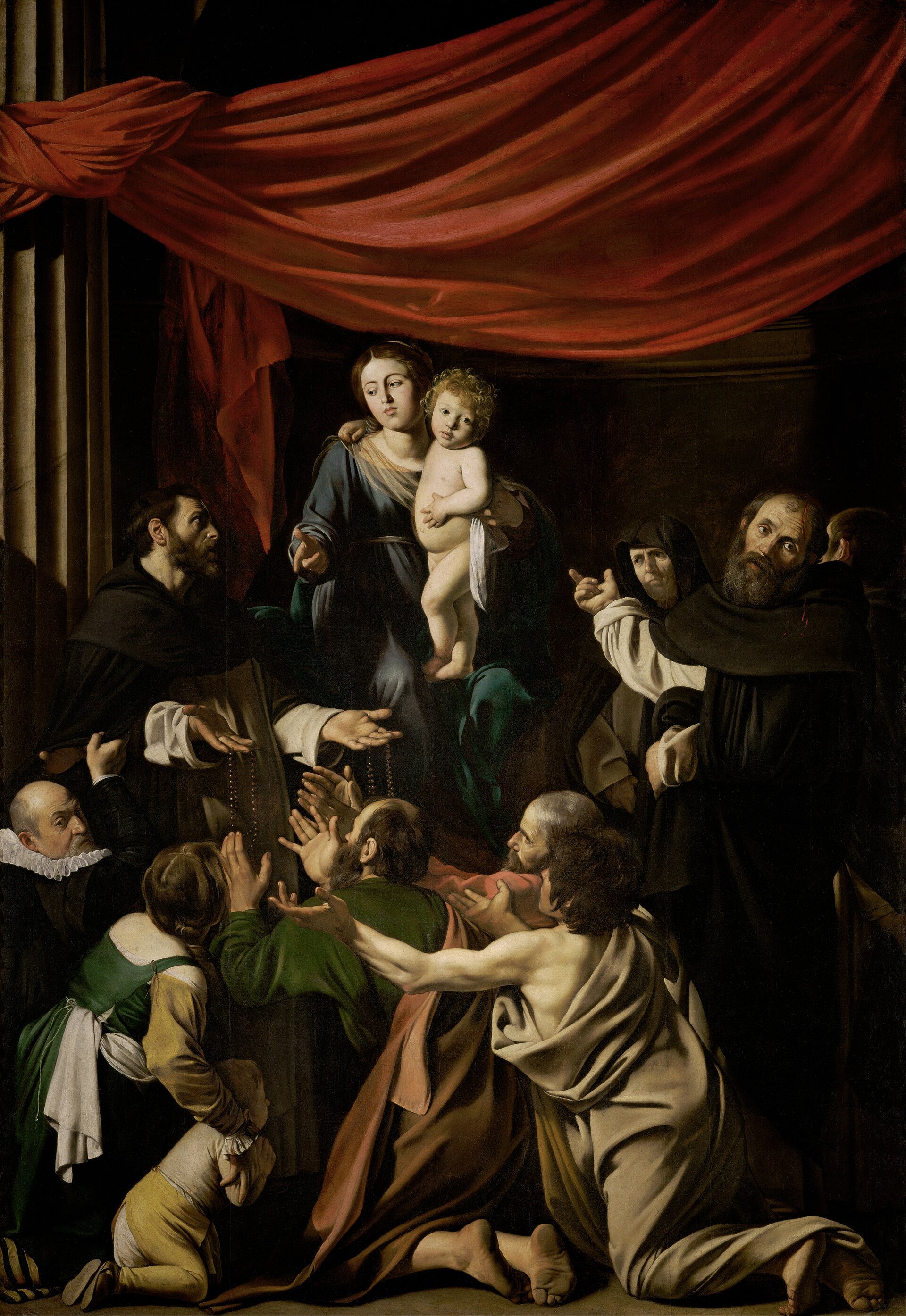
Caravaggio, Madonna of the Rosary, 1605–1607, Wikimedia Commons, Public Domain
A group of artists and merchants from Antwerp eventually purchased the Madonna of the Rosary and brought it to St. Paul’s Church, a Dominican parish in the city. They placed the artwork at the center of a series of fifteen paintings of the Mysteries of the Rosary, created around 1617–1620 by Flemish artists, including Peter Paul Rubens, Anthony van Dyck, and Jacob Jordaens. Paired with Caravaggio’s painting, this series demonstrates the continued promotion of the Rosary in the decades following the Battle of Lepanto.
Another example from the early seventeenth century is the Virgin of the Rosary by Juan de Uceda (1570–1631), a Spanish painter from Seville. In this depiction, the Madonna and Child hold a Rosary in the midst of a mandorla, or almond-shaped glow of light that signifies divine glory.
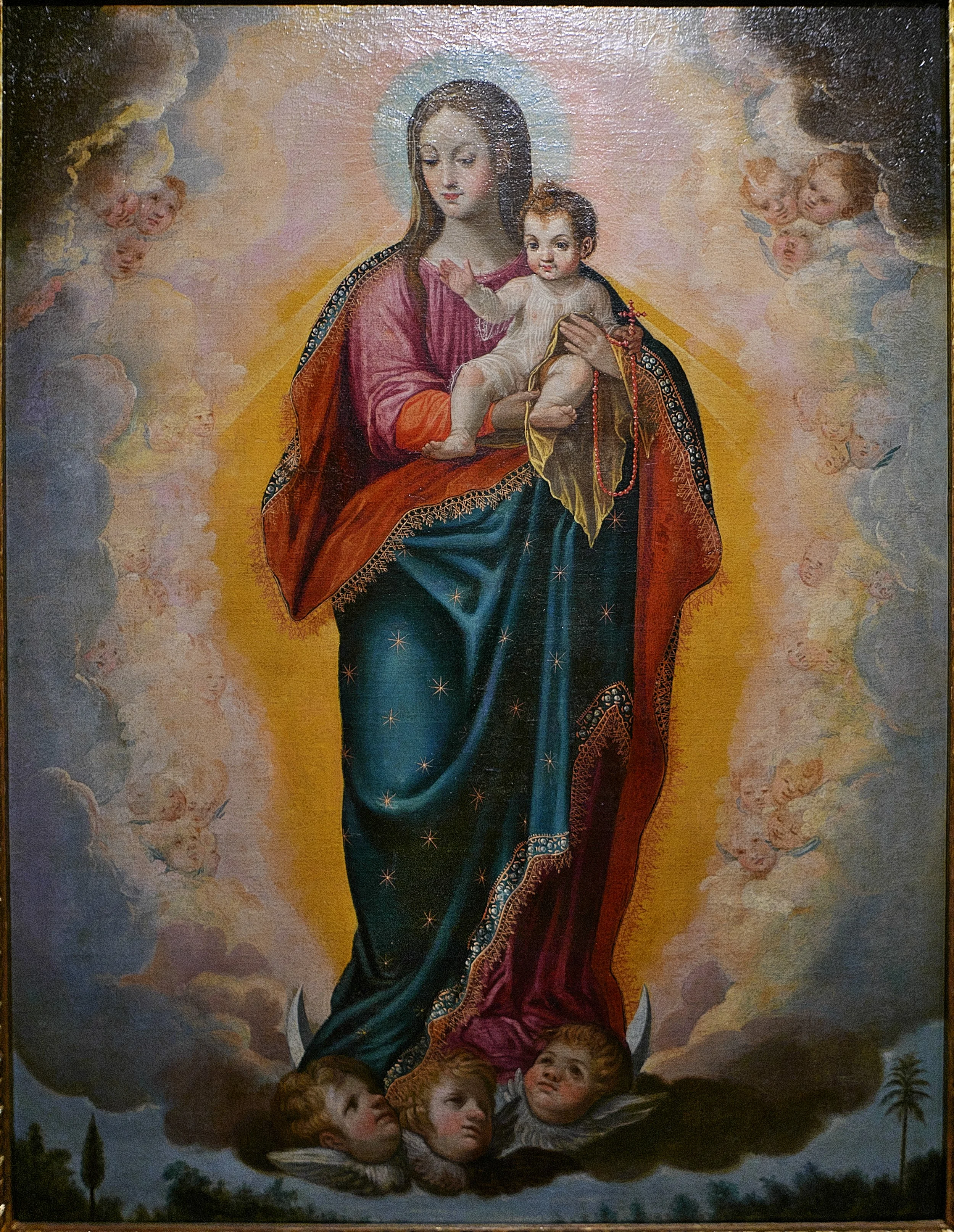
Juan de Uceda, Virgin of the Rosary, 17th century, Wikimedia Commons, Public Domain
Bartolomé Esteban Murillo (1617–1682) was another Spanish artist from Seville who portrayed Our Lady of the Rosary in the seventeenth century. He was a member of the Confraternity of the Holy Rosary, and he painted Our Lady of the Rosary several times. One of Murillo’s most prominent compositions of this subject is The Virgin of the Rosary at the Museo del Prado. Completed around 1650–1655, the painting shows the Virgin Mary seated on a stone bench with Christ standing on her lap. Mother and Son gaze toward the viewer with tenderness, while a Rosary is loosely draped near Christ’s body.
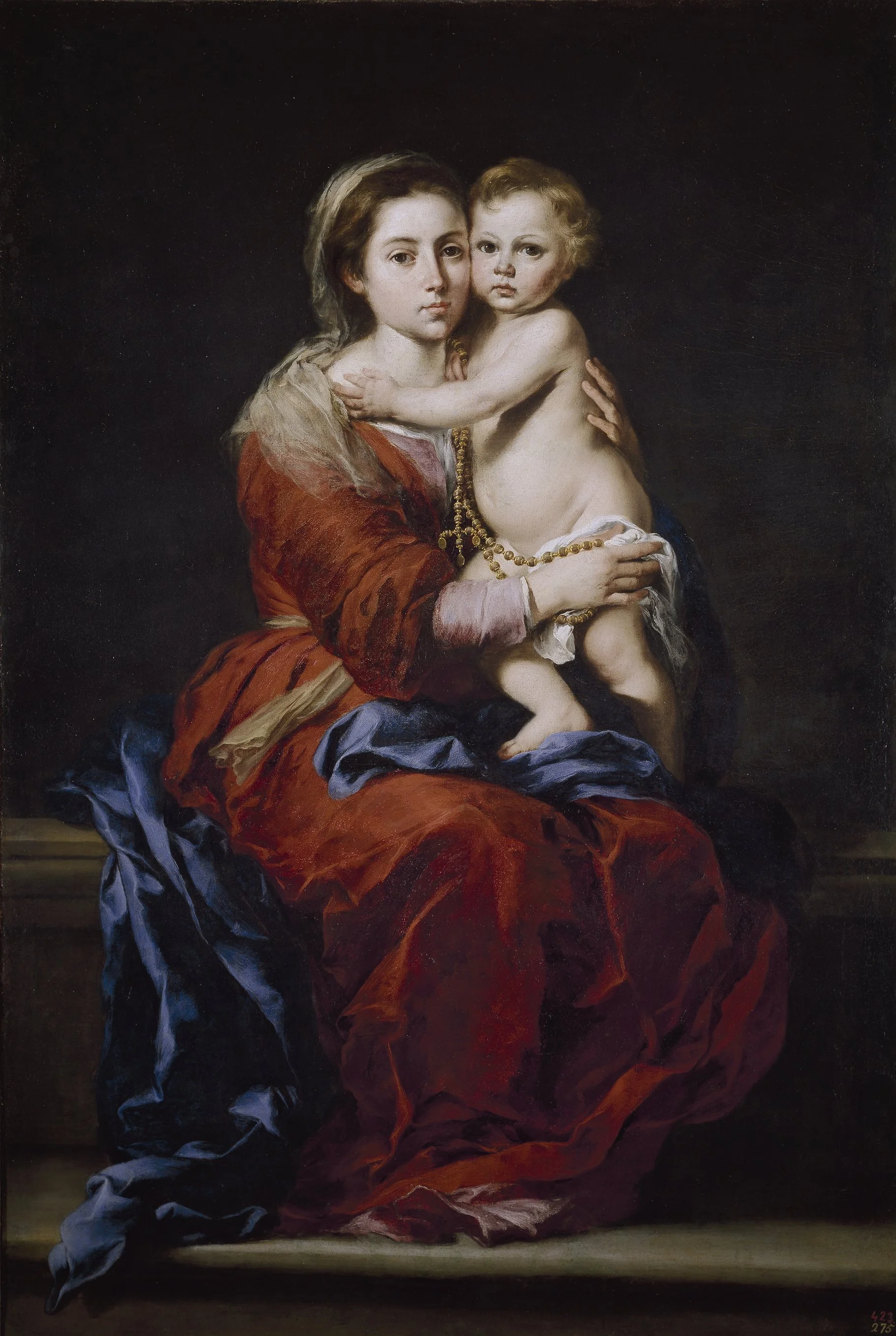
Bartolomé Esteban Murillo, The Virgin of the Rosary, c. 1650–1655, Museo del Prado, Wikimedia Commons, Public Domain
One final seventeenth-century painting of Our Lady of the Rosary is the image of Our Lady of Pompeii. Art historians generally identify the unknown artist as belonging to the school of Luca Giordano. The artwork portrays the Madonna and Child handing Rosaries to St. Dominic and St. Catherine of Siena, another prominent Dominican saint. St. Bartolo Longo obtained the painting in 1875 for the shrine he was instrumental in founding in Pompeii. The icon was placed above the main altar and is currently surrounded by images of the Mysteries, including the Luminous Mysteries, which were added after Pope St. John Paul II introduced them in 2002.
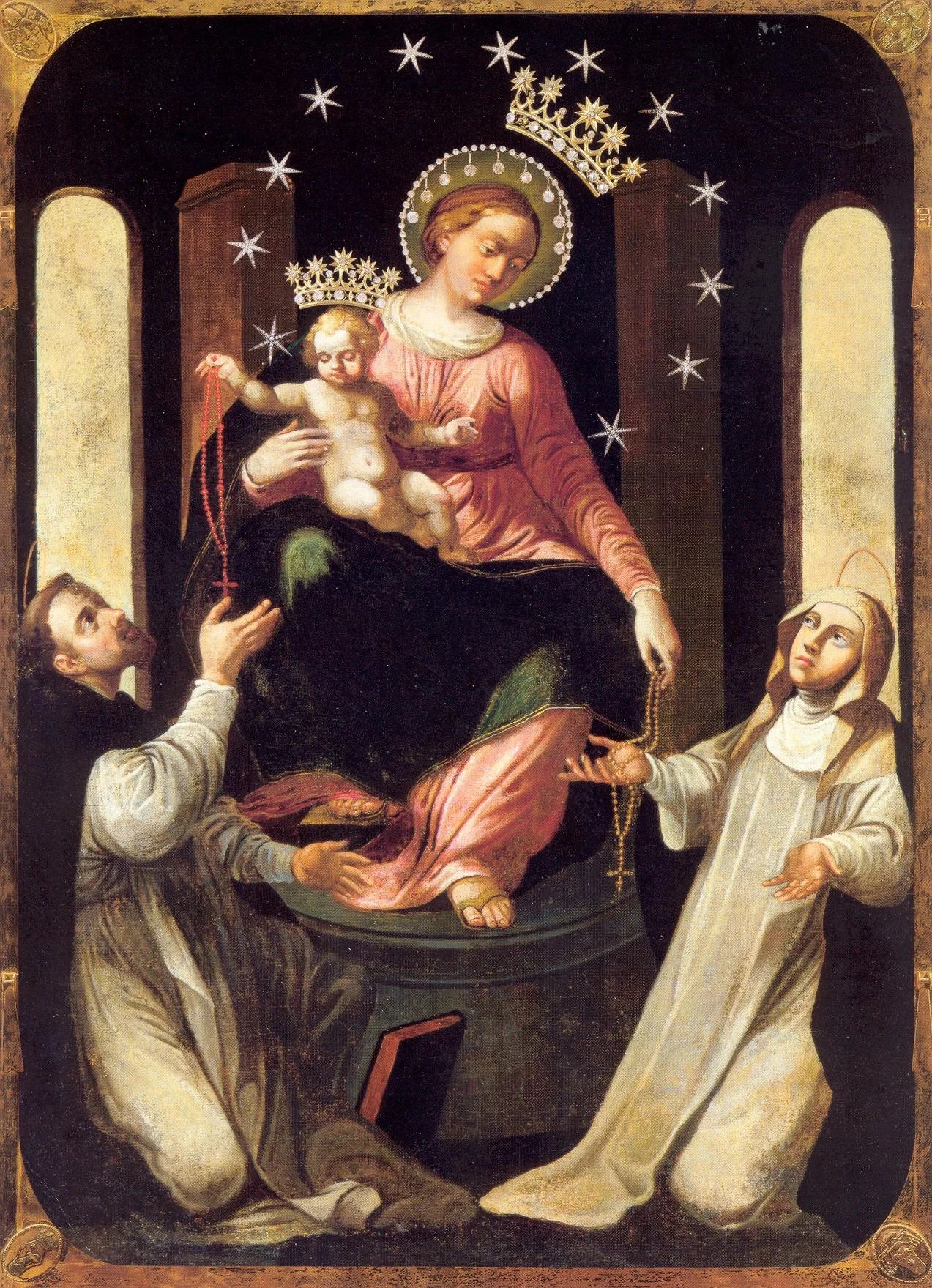
Our Lady of Pompeii, Wikimedia Commons, Public Domain
Our Lady of the Rosary Today
Today, Our Lady of the Rosary remains a beloved figure in Catholic art. She is typically shown holding the Christ Child and the Rosary, while some compositions also include St. Dominic, kneeling below her and receiving the Rosary from Our Lady. These images invite the faithful to turn to Mary for her intercession and to take up the Rosary as a spiritual weapon—one powerful enough to transform hearts and draw souls closer to Christ.
Catholics particularly honor Our Lady of the Rosary during the month of October. Although the feast has been celebrated under various titles and on different dates throughout the centuries, Pope St. Pius X restored its celebration to October 7 in 1913. More than 450 years after the Battle of Lepanto, the feast continues to remind Catholics of the power of the Rosary and Mary’s intercession. Through sacred art, the image of Our Lady of the Rosary continues to remind the faithful to pray the Rosary with fidelity and perseverance.
More Paintings of Our Lady of the Rosary
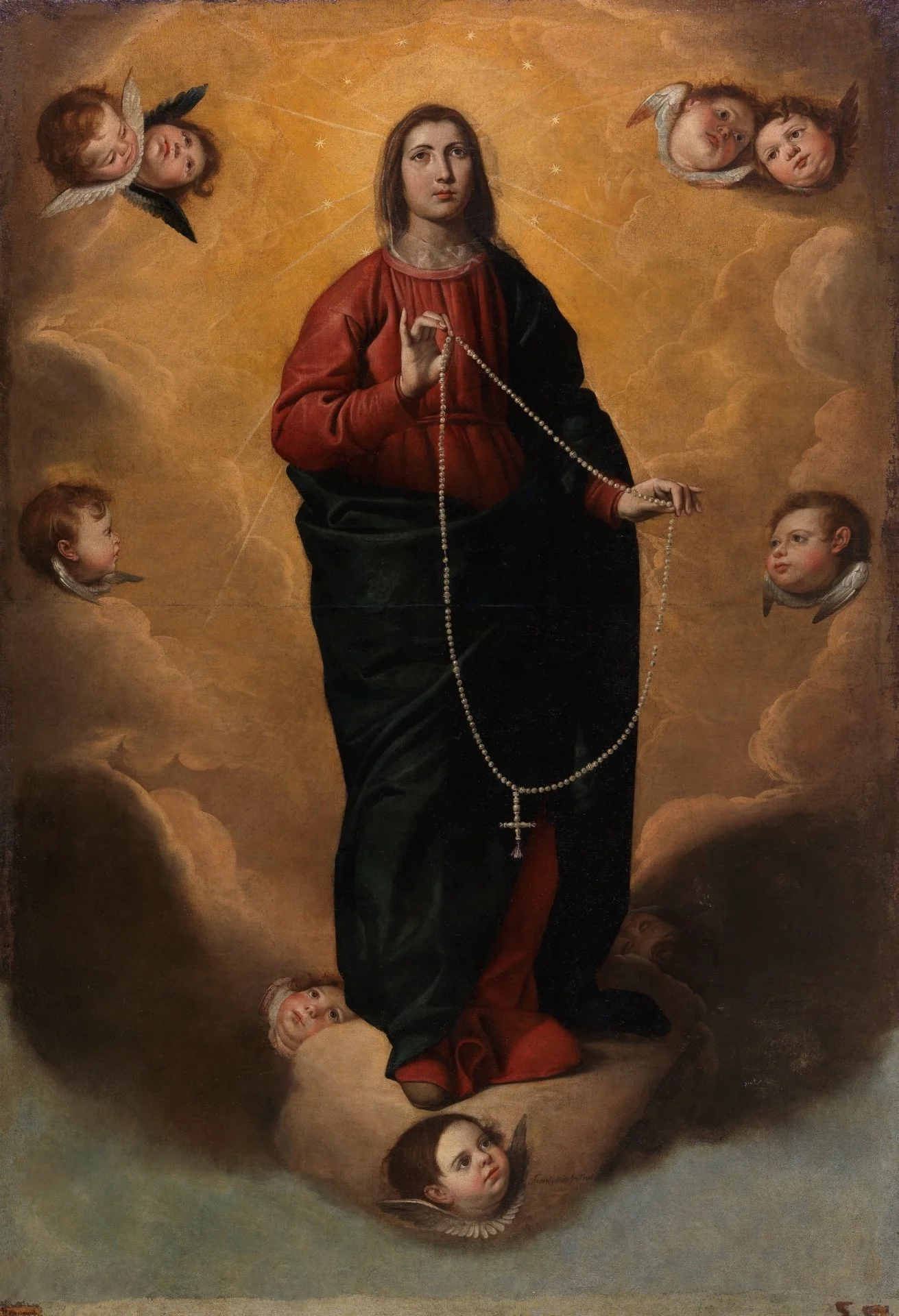
Antonio Arias Fernández, The Virgin of the Rosary, 1644, Museo del Prado, Wikimedia Commons, Public Domain

Bartolomé Esteban Murillo, The Virgin and Child with a Rosary, c. 1670–1680, Public Domain
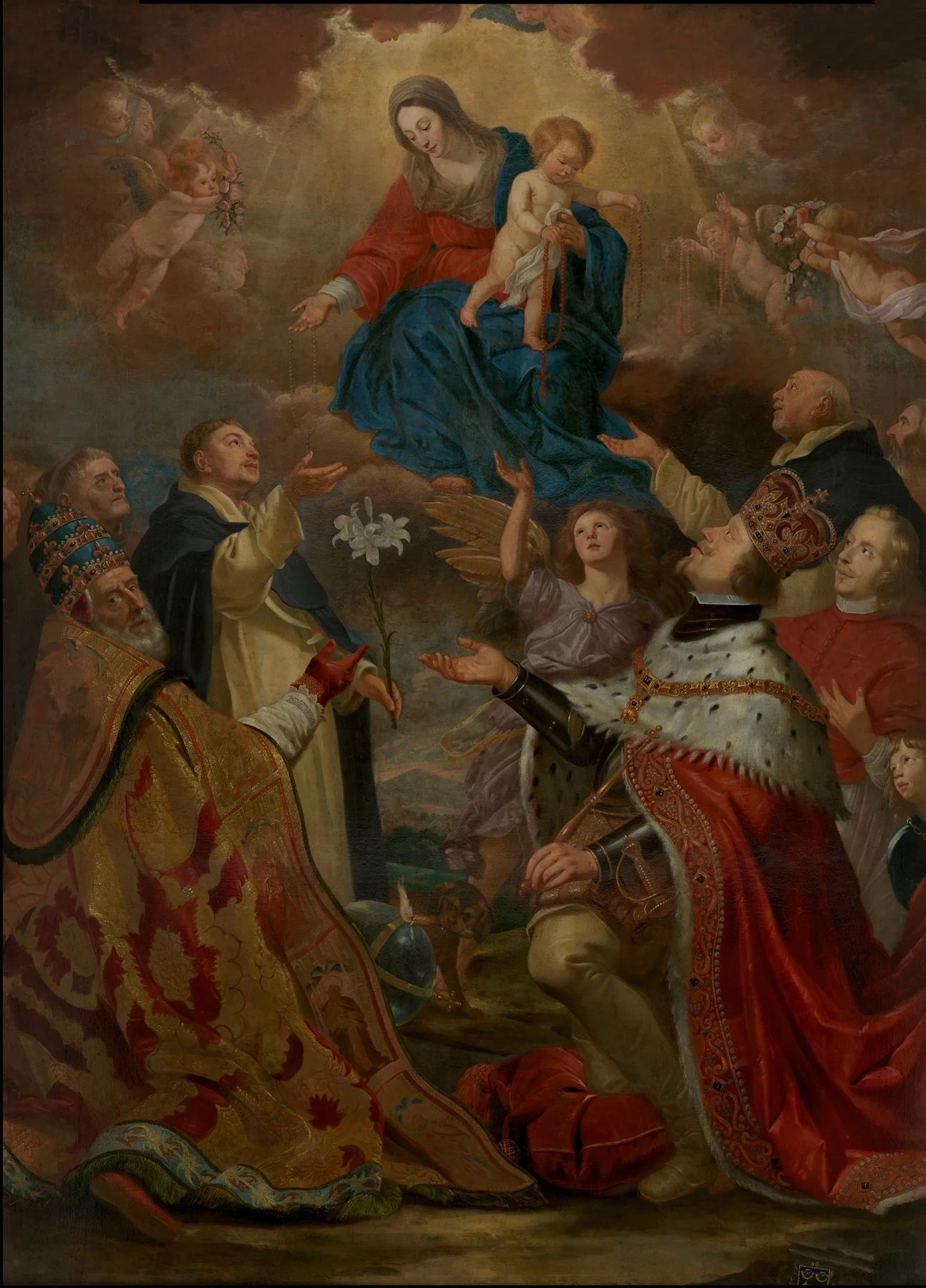
Antoon van den Heuvel, Saint Dominic, Pope Gregory XIII, King Philip IV of Spain and Cardinal-Infante Ferdinand of Austria Venerating the Madonna of the Rosary, 17th century, Public Domain
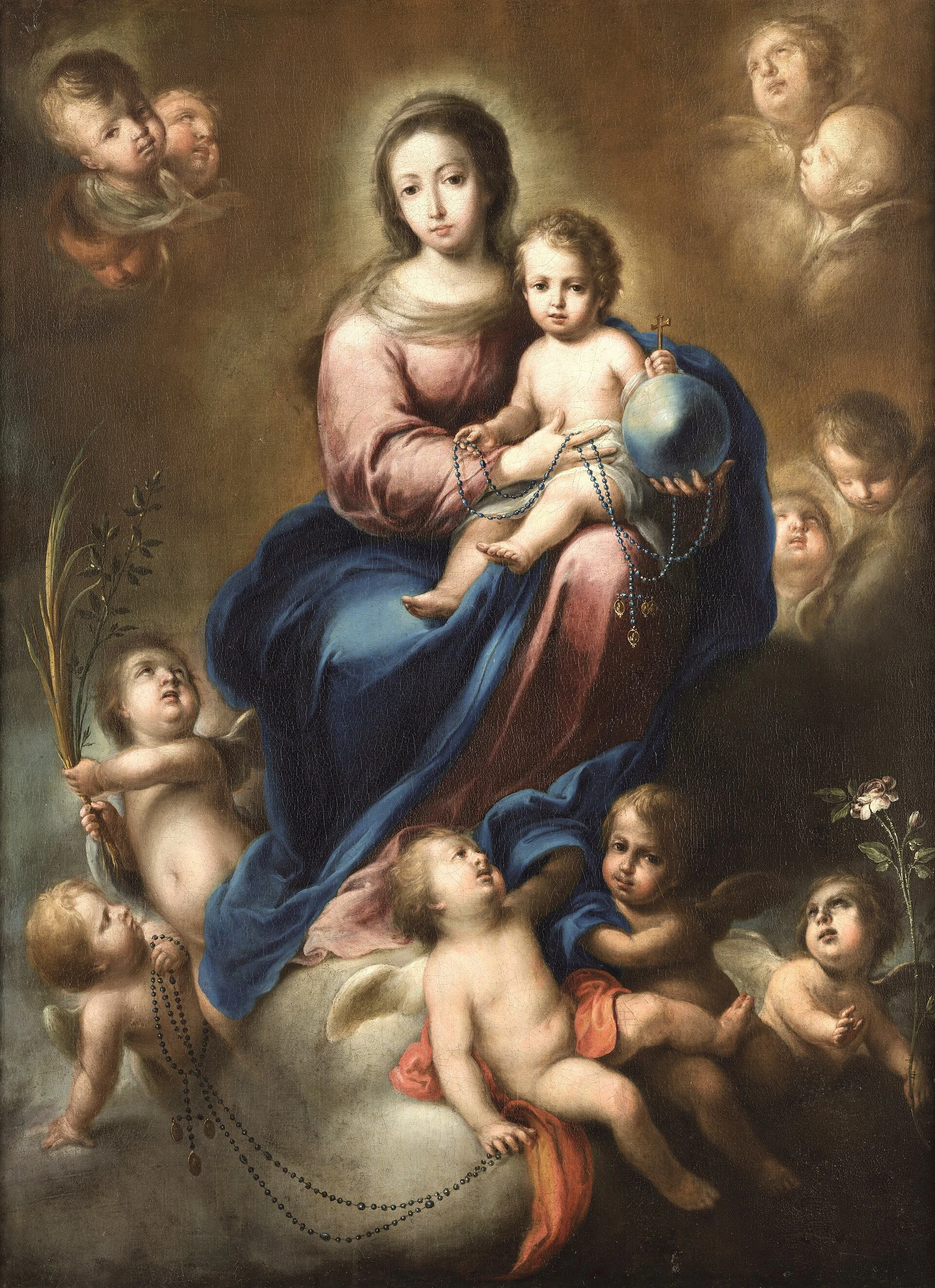
Domingo Martínez, Virgin of the Rosary, c. 1720, Museo de Bellas Artes de Sevilla, Wikimedia Commons, Public Domain
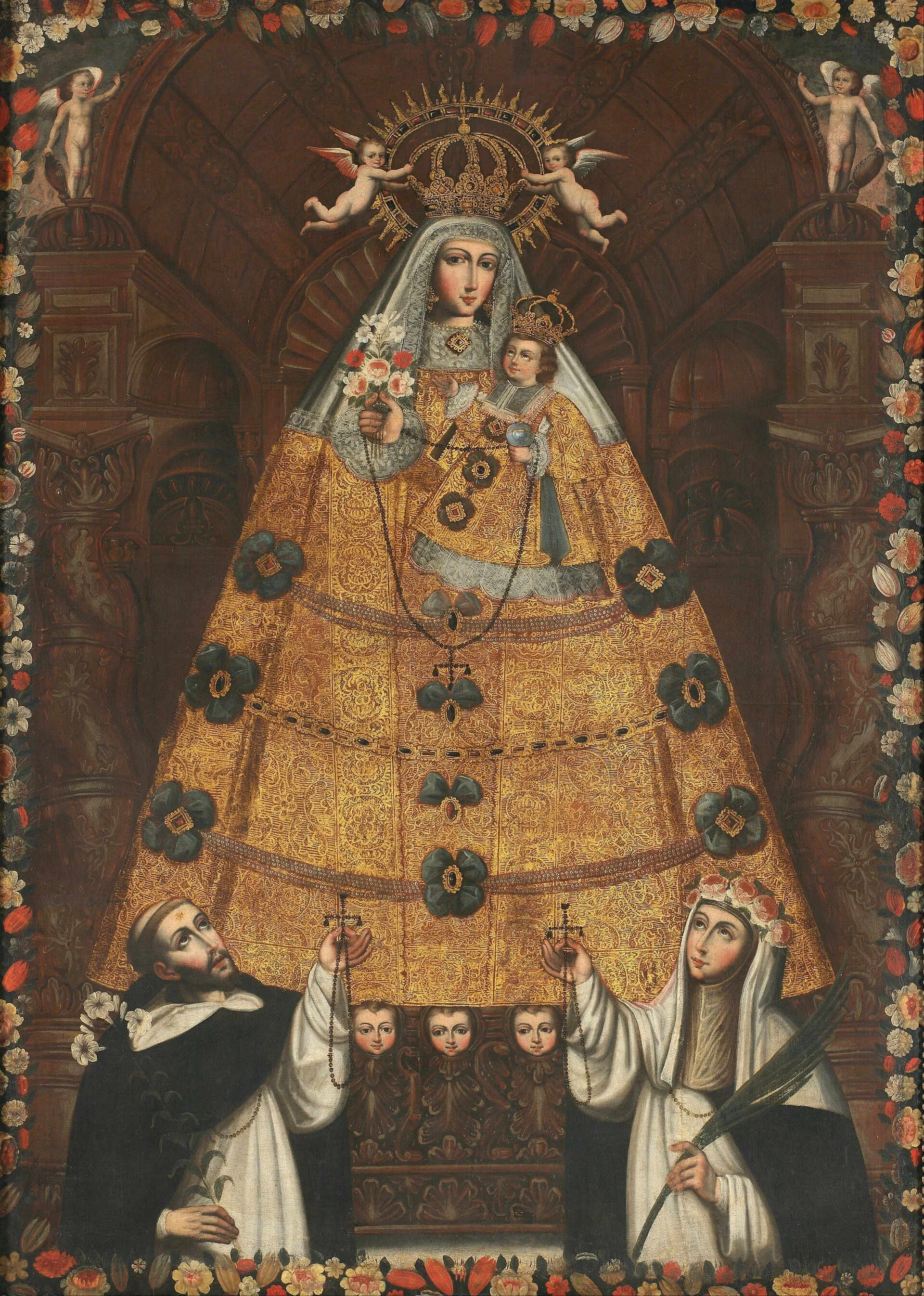
Anonymous Cusco School, Our Lady of the Rosary with St. Dominic and St. Rose, c. 1750, Lima Art Museum, Wikimedia Commons, Public Domain

Johann Konrad Wengner, St. Dominic receiving the Rosary from Mary, 1750–1755, Public Domain