
St. Luke Painting the Virgin: History, Meaning, and Paintings
St. Luke the Evangelist is commonly known as the author of one of the four Gospels and the Acts of the Apostles. Referred to as “a beloved physician” in St. Paul’s Letter to the Colossians, he is consequently the patron saint of doctors, surgeons, and healthcare workers. He is also the patron saint of artists in Catholic tradition, and the reason might be a little less obvious at first glance. Numerous paintings portray St. Luke painting the Virgin Mary and Christ Child, but Scripture does not identify him as an artist.
How, then, did the idea of St. Luke being an artist arise? The answer can be found in church and art history, which established St. Luke as the painter of sacred images depicting the Madonna and Child. Keep reading to discover the history, meaning, and paintings of St. Luke painting the Virgin.
Contents
The Origins of St. Luke Painting the Virgin
The Origins of St. Luke Painting the Virgin
St. Luke painting the Virgin is a subject in Christian art that has been around for centuries. The idea that St. Luke painted the Madonna and Child originated in the Byzantine Empire during the Iconoclast controversy in the eighth century. St. Andrew of Crete, who died in the first half of the eighth century, is traditionally credited with writing On the Veneration of Holy Images, the earliest surviving written text that states St. Luke created images of the Virgin Mary and Christ Child. Over time, this belief spread among the faithful, and by the eleventh century, Christians in the East were attributing various icons to St. Luke, such as the Black Madonna of Częstochowa and the Virgin of Vladimir.
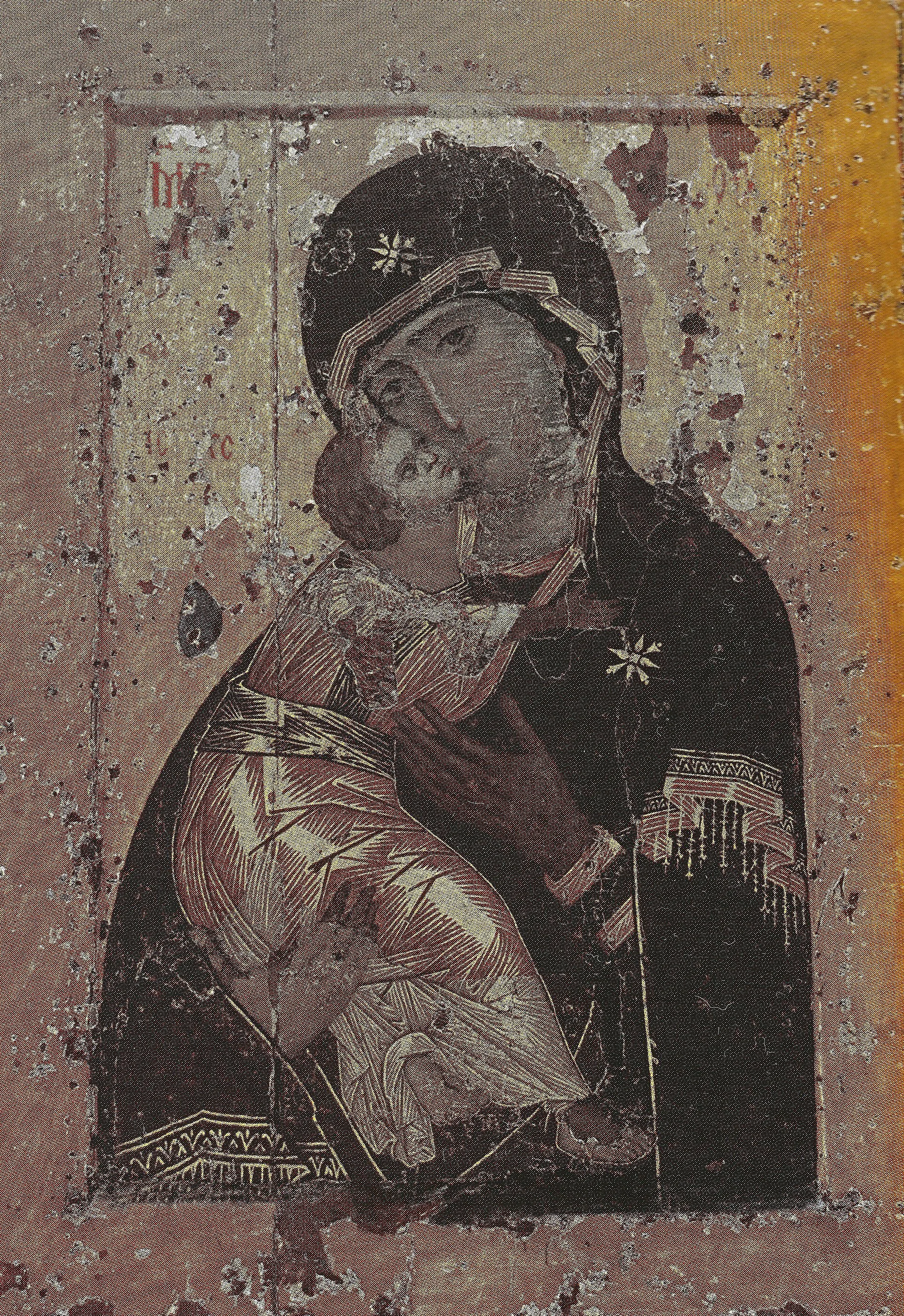
The Virgin of Vladimir is a twelfth-century Byzantine icon that is traditionally attributed to St. Luke the Evangelist. Image credit: Wikimedia Commons
The earliest known depiction of St. Luke painting the Virgin is a miniature in a twelfth-century Greek lectionary. It is preserved at Saint Catherine’s Monastery in Sinai, which also houses the oldest surviving painting of Christ Pantocrator.
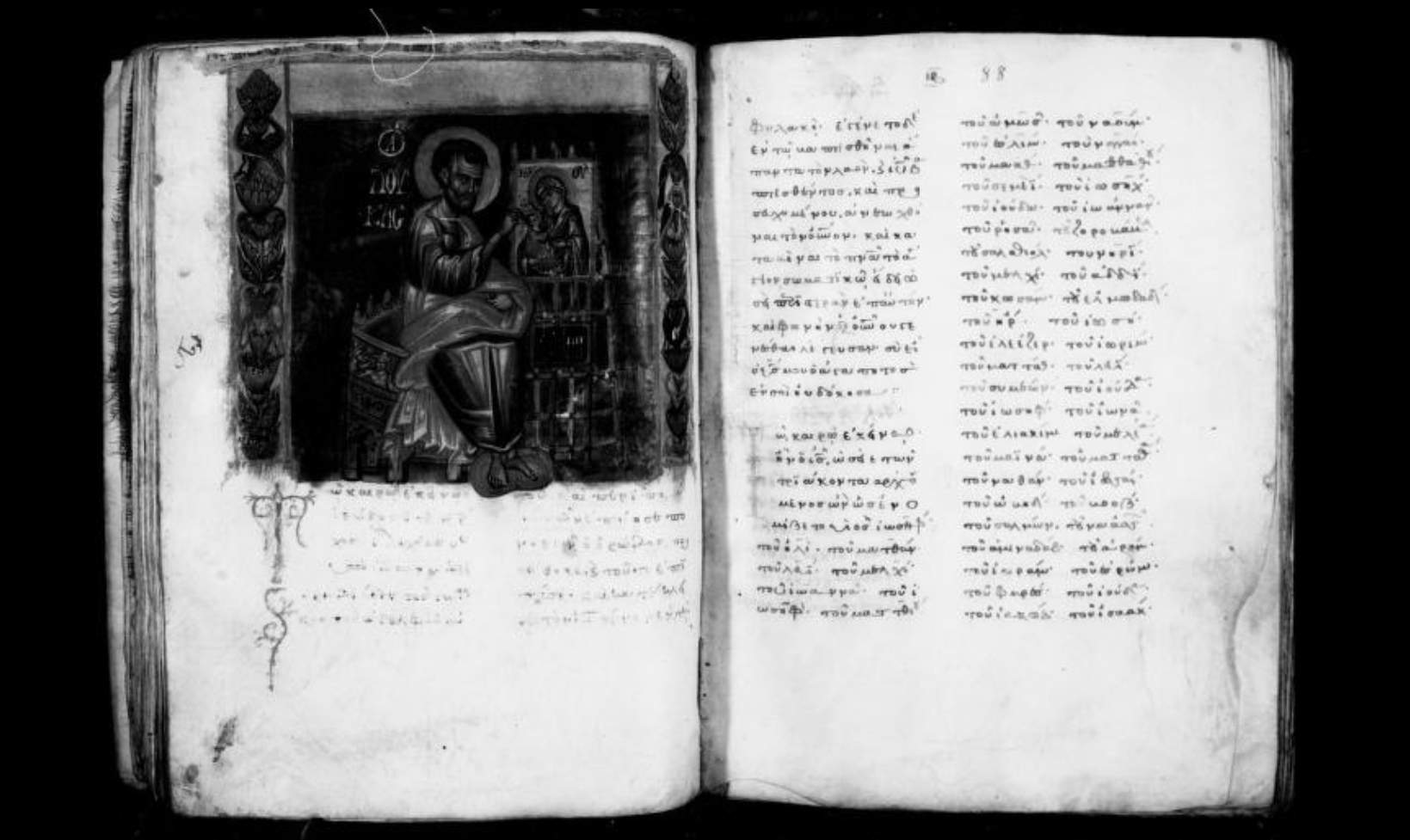
The earliest known depiction of St. Luke Painting the Virgin in a twelfth-century Greek lectionary. Image credit: Library of Congress
St. Luke Painting the Virgin in Western Art
In the second half of the fourteenth century, St. Luke painting the Virgin emerged as a theme in Western art. However, it was not until the fifteenth century that the subject became popular among European artists. One of the most recognizable and influential depictions from this time is Rogier van der Weyden’s St. Luke Drawing the Virgin. Completed between about 1435 and 1440, it is the earliest known Early Netherlandish painting of this theme. The artwork shows St. Luke kneeling before the seated Madonna and Child and drawing their likeness with a stylus. Rogier portrays the Virgin Mary breastfeeding her Son, adopting the image of the nursing Madonna popularized by his teacher, Robert Campin (c. 1375/79–1444).
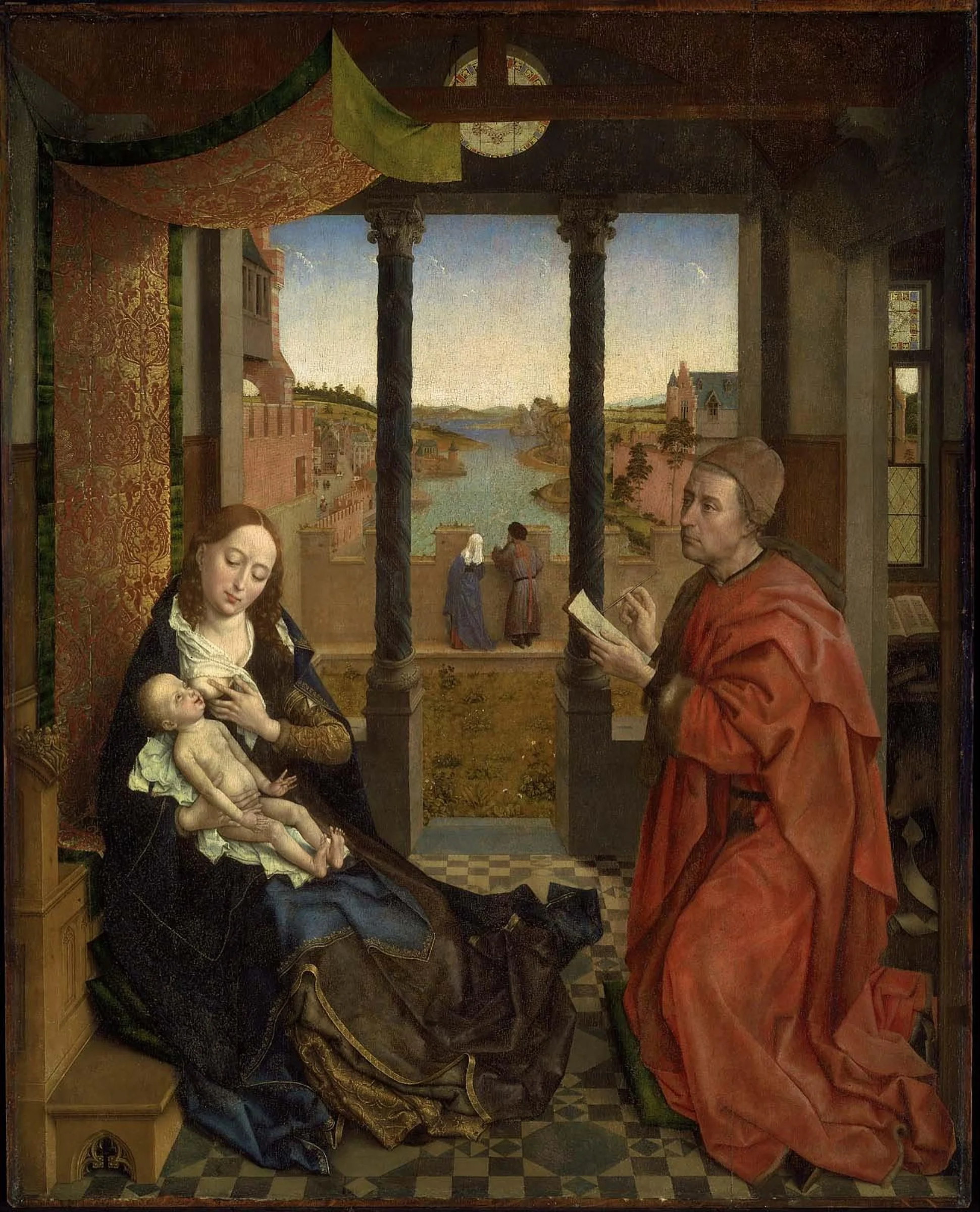
Rogier van der Weyden, St. Luke Drawing the Virgin, c. 1435-1440, Museum of Fine Arts, Boston, Wikimedia Commons, Public Domain
Art historians generally agree that Rogier made St. Luke Drawing the Virgin as an altarpiece for the chapel of St. Luke’s Guild in Brussels. Many other groups of painters across Europe likewise adopted the name “St. Luke’s Guild” during this period.
In the Italian Renaissance, St. Luke’s patronage became more widespread as painters simultaneously rose to a more respected position in society. Some guilds required members to create a masterpiece of St. Luke painting the Virgin to earn the title of master. As in Rogier’s case, members of St. Luke’s Guilds often made paintings of the subject for their local guild chapels.
Turning to the sixteenth century, prominent religious artists who portrayed St. Luke painting the Virgin include Jan Gossaert, Giorgio Vasari, and El Greco. Gossaert (1478–1532) created two depictions in the Northern Renaissance. The Italian Renaissance painter Giorgio Vasari (1511–1574) made a painting for the Chapel of St. Luke in Florence. Finally, one of El Greco’s (1541–1614) earliest works is a Byzantine-style icon of St. Luke painting the Virgin and Child.
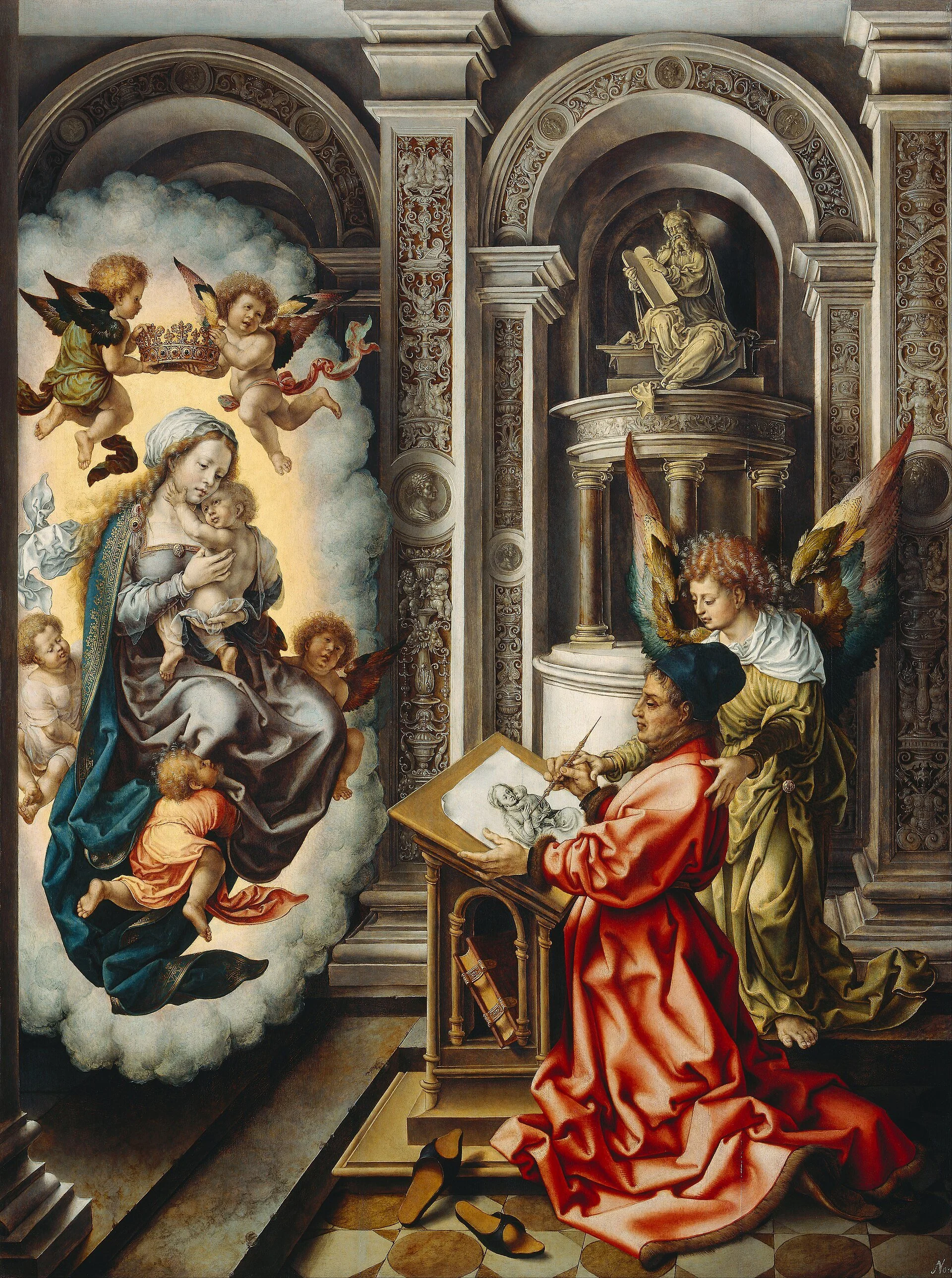
Jan Gossaert, St. Luke Painting the Virgin, c. 1520, Kunsthistorisches Museum, Wikimedia Commons, Public Domain
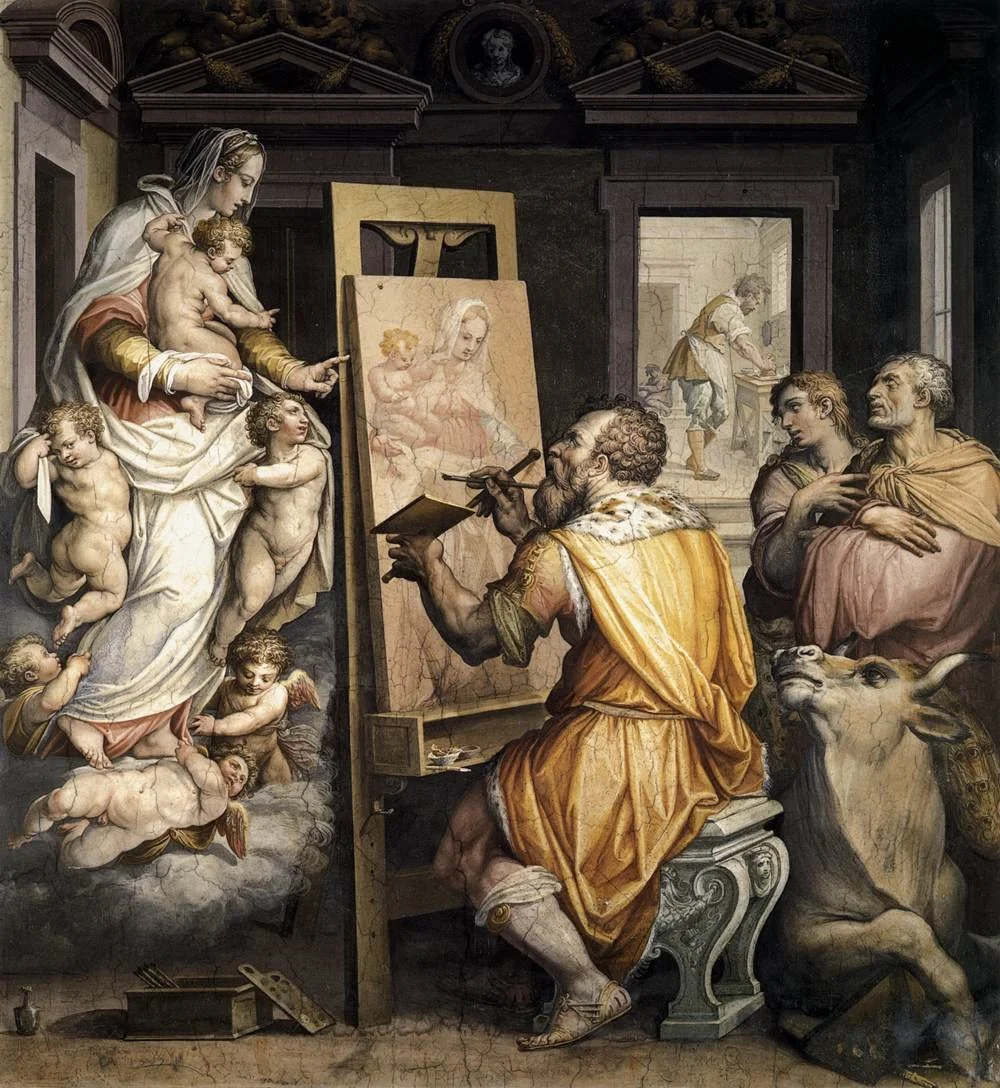
Giorgio Vasari, St. Luke Painting the Virgin, 1569-1570, Wikimedia Commons, Public Domain
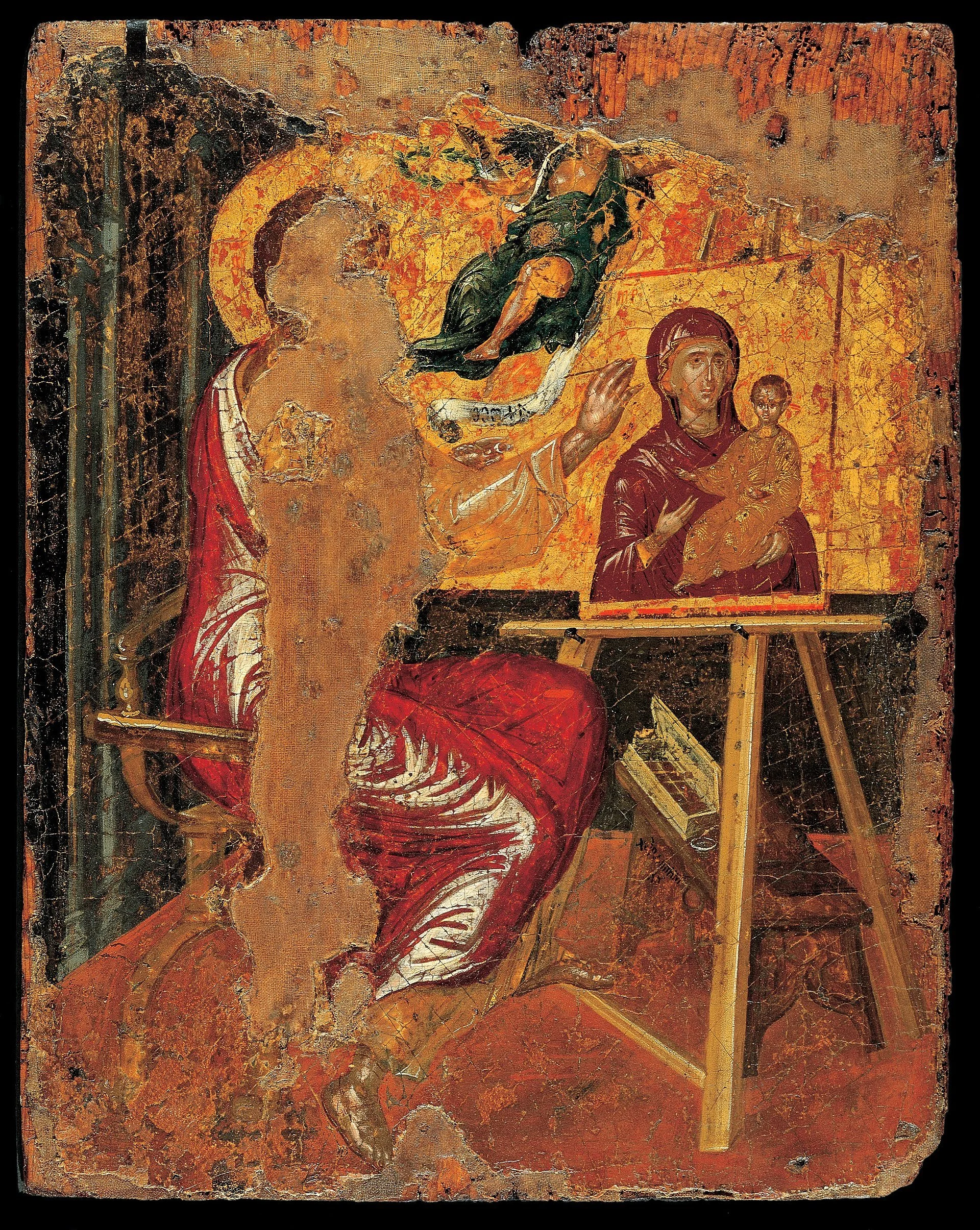
El Greco, St. Luke Painting the Virgin, c. 1560-1567, Benaki Museum, Wikimedia Commons, Public Domain
But Did St. Luke Actually Paint the Virgin Mary?
St. Luke painting the Virgin is a common subject in sacred art, originating from a tradition that identifies St. Luke as one of the earliest creators of Christian icons. Yet after examining the historical and artistic roots of this subject, the question remains: Did St. Luke actually paint the Virgin Mary and Christ Child? After all, the earliest surviving written account of this tradition dates to centuries after St. Luke’s death in the first century. The Evangelist was certainly in communication with the Virgin Mary, who likely related to him the details of Jesus’ conception, birth, and childhood recounted in his Gospel. But is claiming that St. Luke was an artist going too far?
The fact is that St. Luke’s identity as a painter became part of Christian tradition and has remained so for centuries. This belief was developed and handed down over time, becoming part of a visual narrative of sacred art. For generations, artists have identified with St. Luke, looking to him as their patron, role model, and intercessor. Several painters, including Rogier van der Weyden and Giorgio Vasari, even identified themselves with him. Many art historians believe that their depictions of St. Luke are actually self-portraits.
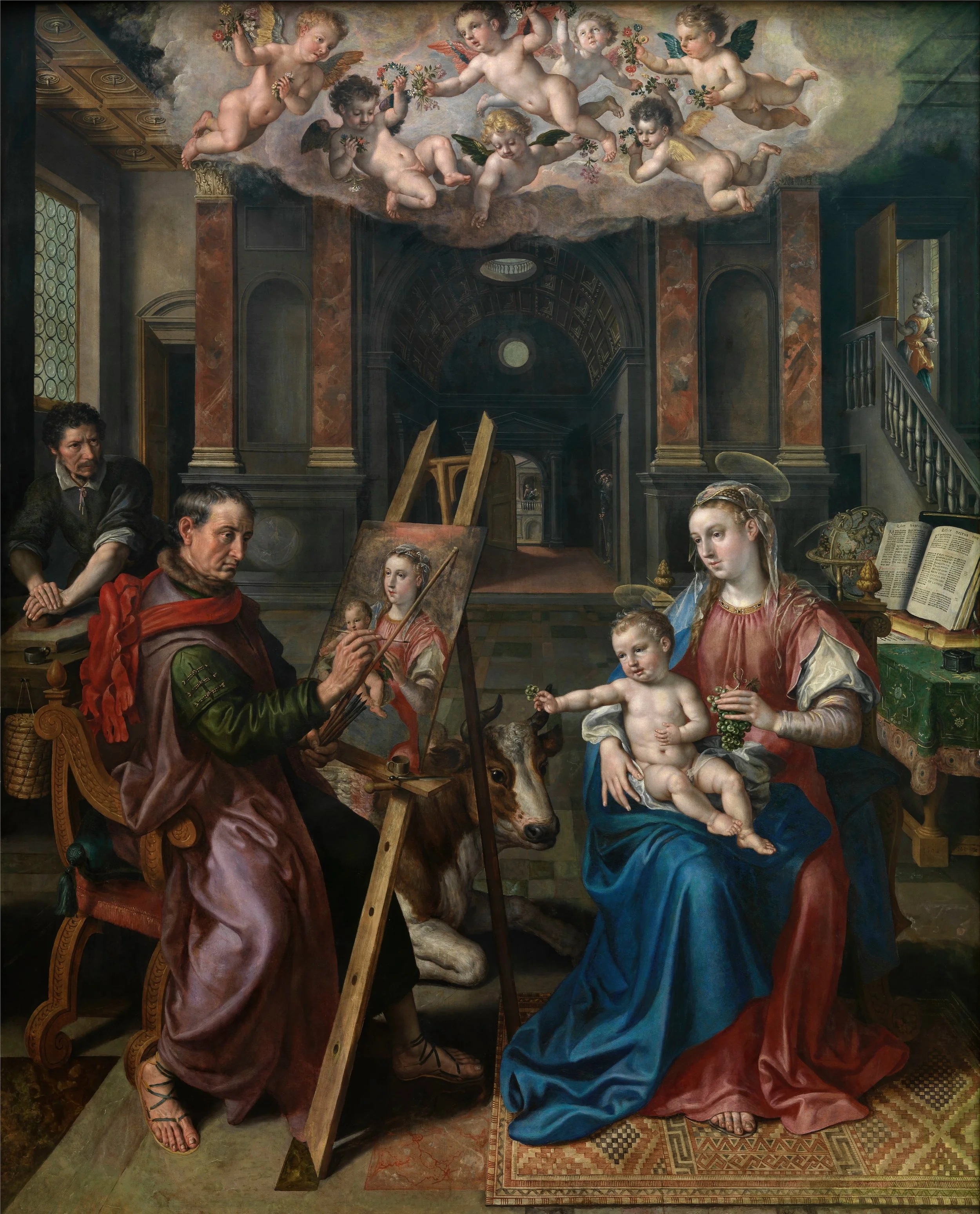
Maerten de Vos, St. Luke Painting the Virgin, 1602, Royal Museum of Fine Arts Antwerp
From the perspective of a non-believer, the idea of St. Luke being an actual artist might seem ridiculous or purely fictional. They are free to question its historical authenticity. But for generations of both artists and believers, the tradition of St. Luke as a painter has held deep meaning. Through faith, it is possible to accept that God permitted this belief to germinate and flourish in minds and hearts, allowing it to take root and spread among the faithful.