
Top 20 Greatest Works of Christian Sacred Art (Part 1)
The world contains a vast amount of sacred art in the Christian tradition. It’s impossible to estimate—much less number—the quantity of religious artworks created over the last two thousand years. Only the most gifted artists produced art that rose above this large array, such as Leonardo da Vinci, Michelangelo, and Caravaggio. Their artwork has particularly shaped the public conception of Christian art and manages to retain significance even in the secular culture of today.
This two-part blog series lists the top 20 greatest of sacred art in the world, basing the ranking on both public opinion and significance in art history. It’s worth taking a moment to appreciate the works of Christian art that have captivated people for centuries with their extraordinary craftsmanship and beauty.
1. The Last Supper by Leonardo da Vinci
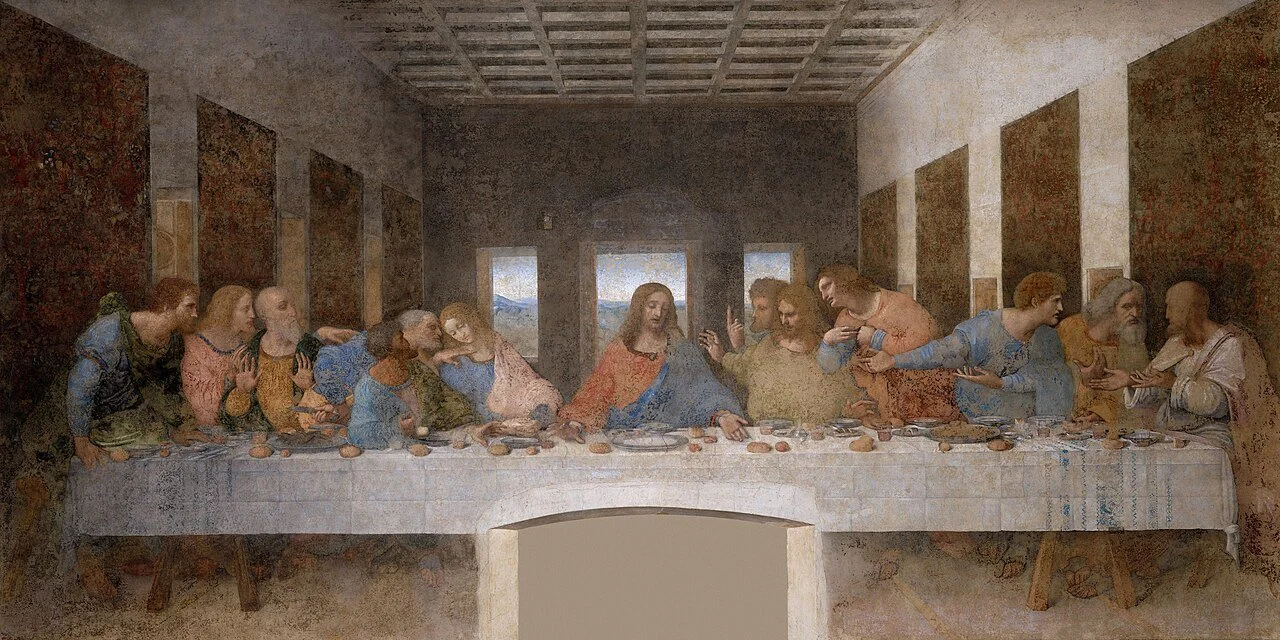
Leonardo da Vinci, The Last Supper, c. 1495-1498, Wikimedia Commons, Public Domain.
Leonardo da Vinci’s fresco of The Last Supper is the most well-known artwork in the West. It is located in the refectory of the Convent of Santa Maria delle Grazie in Milan, Italy. Departing from previous traditional representations of the Last Supper, Leonardo portrayed the moment after Jesus announces that one of the apostles will betray Him. The Last Supper captures the apostles’ dramatic response to this shocking news, and the composition reflects the order and harmonious balancing that came to characterize High Renaissance art, such as the use of linear perspective and organization of the apostles into four groups of three.
2. Pietà by Michelangelo
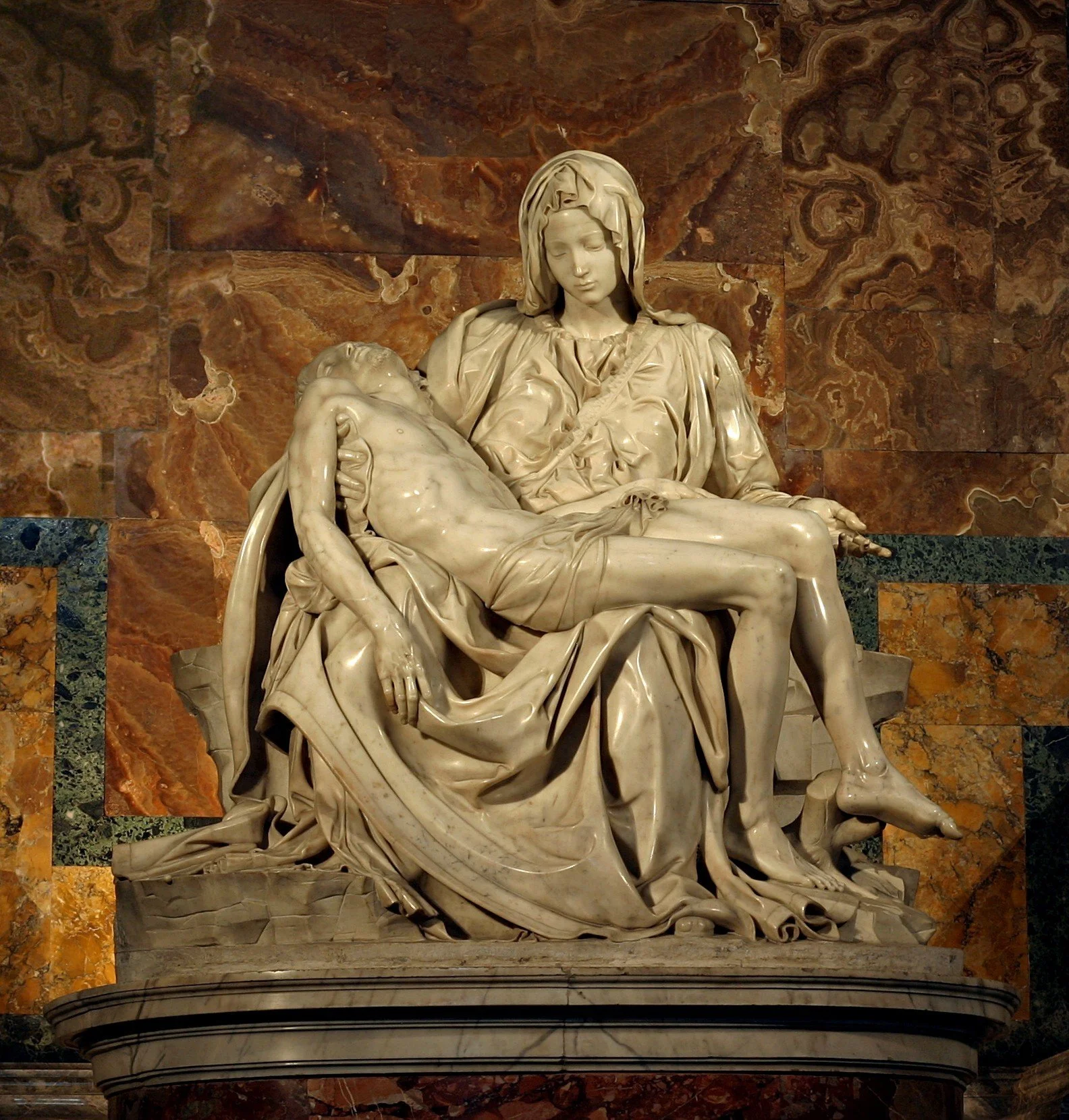
Michelangelo, Pietà, c. 1499, Wikimedia Commons, licensed by Stanislav Traykov under CC BY-SA 3.0.
The marble sculpture of the Pietà is the most famous religious sculpture in the world. Around 10 million visitors to St. Peter’s Basilica in Rome view Michelangelo’s High Renaissance masterpiece every year. The classical style of the sculpture lends a fitting elegance and beauty to the sorrowful scene of Mary holding the lifeless body of her Son.
3. The Creation of Adam by Michelangelo
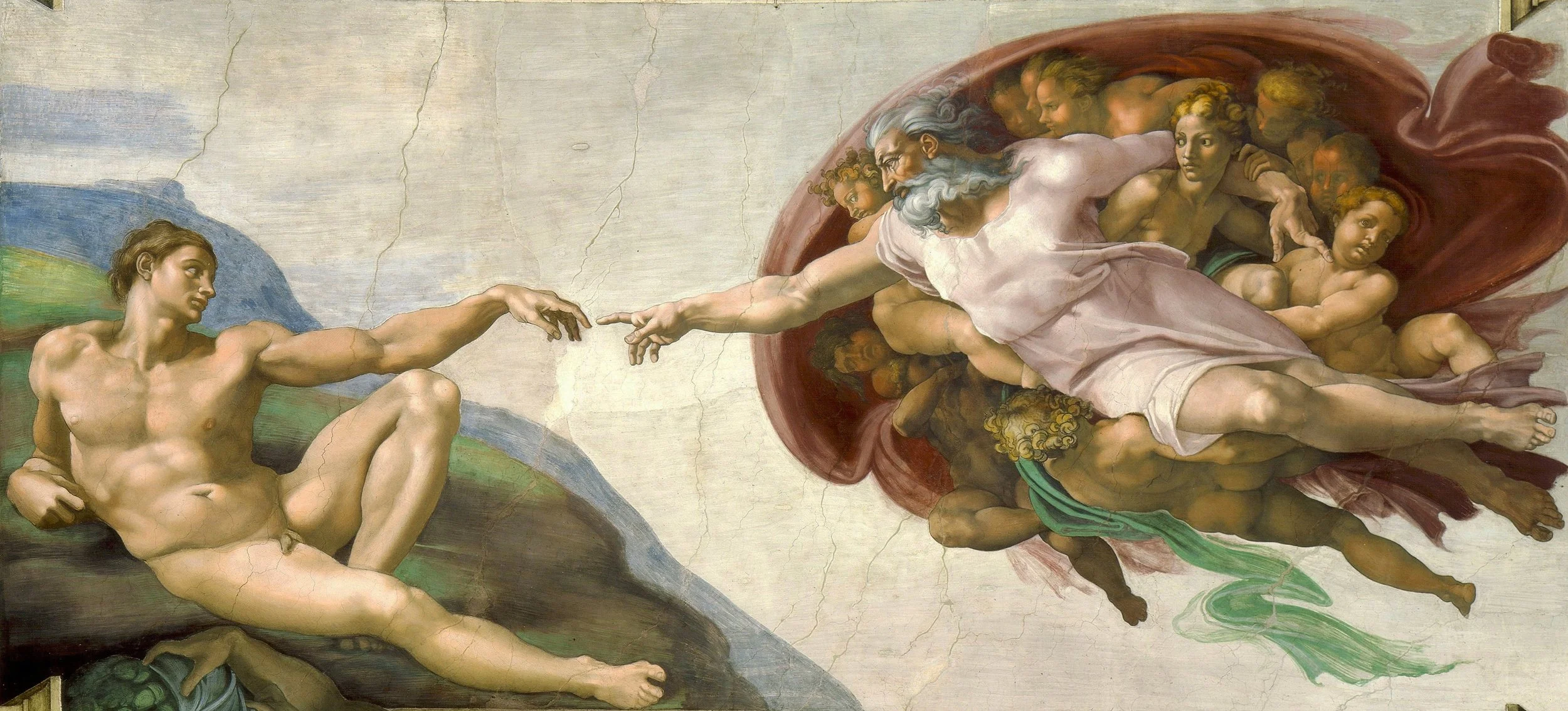
Michelangelo, The Creation of Adam, c. 1511, Sistine Chapel ceiling, Wikimedia Commons, Public Domain.
The Creation of Adam is Michelangelo’s most famous fresco from the Sistine Chapel ceiling. Based on the Book of Genesis, the painting depicts God the Father calling forth the first man into existence. The close-up of the two hands reaching out to one another has become an iconic image in the West, and the painting has become one of the most reproduced religious artworks in the world.
4. The Calling of Saint Matthew by Caravaggio
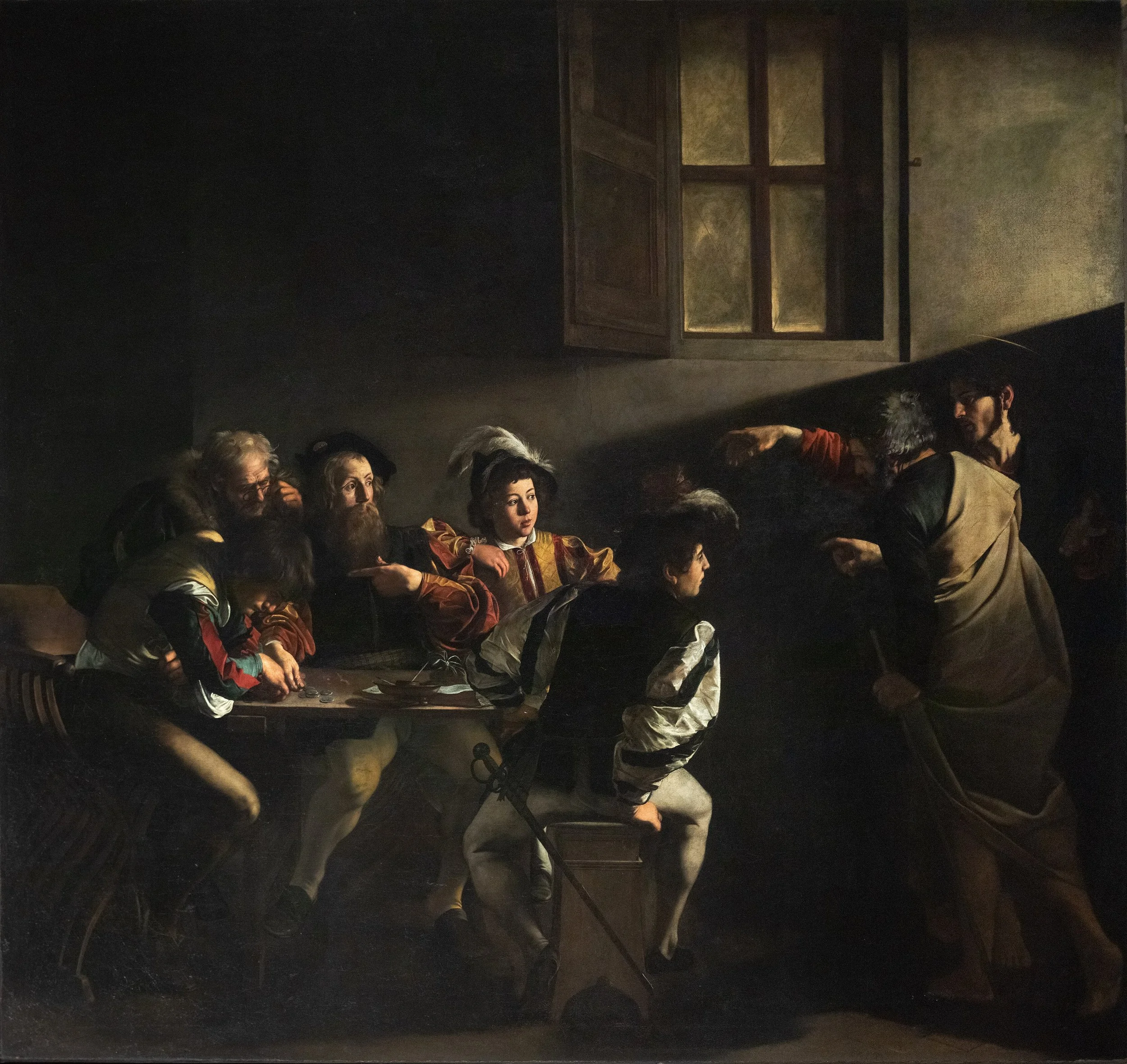
Caravaggio, The Calling of Saint Matthew, 1609, Wikimedia Commons, Public Domain.
The Baroque artist Caravaggio painted The Calling of Saint Matthew for the Contarelli Chapel in San Luigi dei Francesi in Rome. It serves as an excellent example of Caravaggio’s signature use of chiaroscuro, a technique that emphasizes the contrast between light and dark. The painting shows the scene from the Gospel when Christ invites St. Matthew to follow Him. Light pours into the gloomy exterior from above the head of Christ, identifying Christ as the light of the world.
5. The Ghent Altarpiece by Hubert and Jan van Eyck
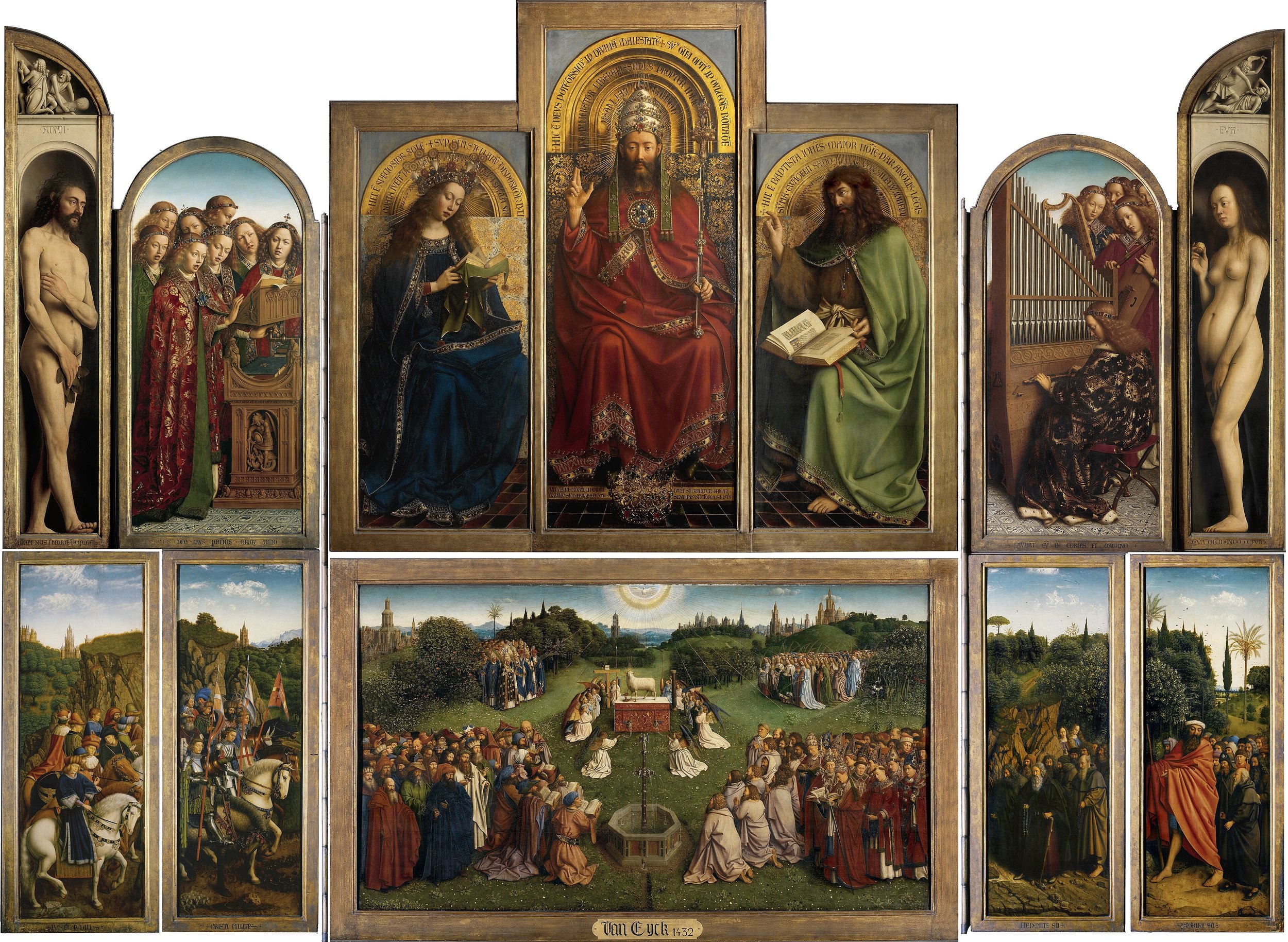
Hubert and Jan van Eyck, Ghent Altarpiece, 1432, Wikimedia Commons, Public Domain.
TheGhent Altarpieceis the largest surviving altarpiece from the 15th century. The painting of the Adoration of the Mystic Lamb based on the Book of Revelation is its most well-known panel. Its vivid color and exquisite details resulted from Jan van Eyck’s skilled use of the recently developed technique of oil painting, which turned oil paint into the preferred medium for generations of painters to come.
6. Christ Pantocrator
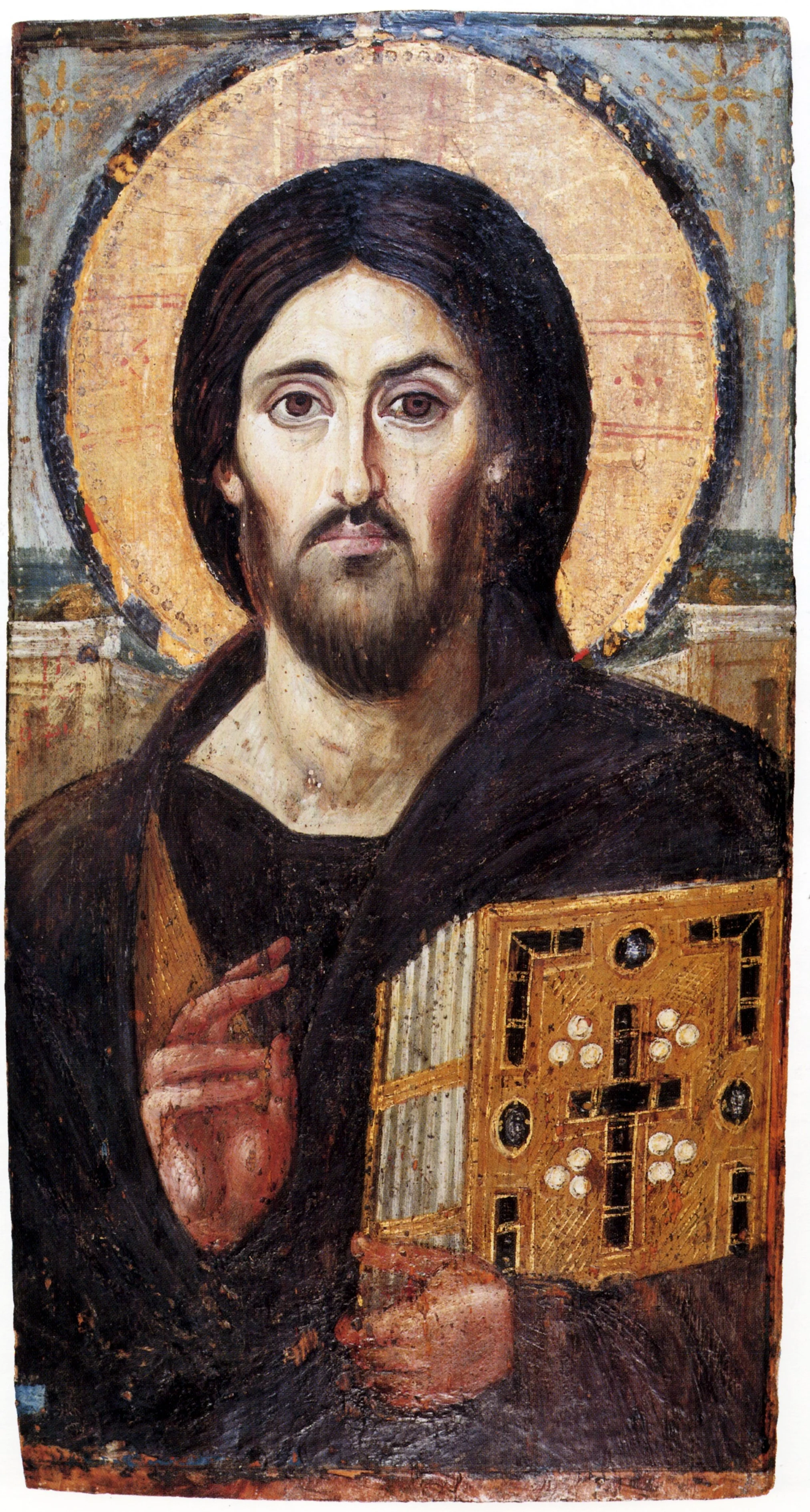
Christ Pantocrator, 6th century, St. Catherine’s Monastery in Sinai, Wikimedia Commons, Public Domain.
The icon of Christ Pantocrator from St. Catherine’s Monastery at Sinai is the oldest surviving painting of Christ as the Pantocrator, or “Ruler of All.” The depiction of Christ Pantocrator dates back to the Early Christian Church, and it is arguably the most popular image of Christ in the Byzantine tradition. The Christ Pantocrator at Sinai remarkably survived two periods of iconoclasm in the Eastern Church that resulted in the destruction of most existing icons. In Christ Pantocrator, the left side of Christ shows Him as a merciful Savior, while the right side portrays Him as the just judge.
7. The Last Judgment by Michelangelo
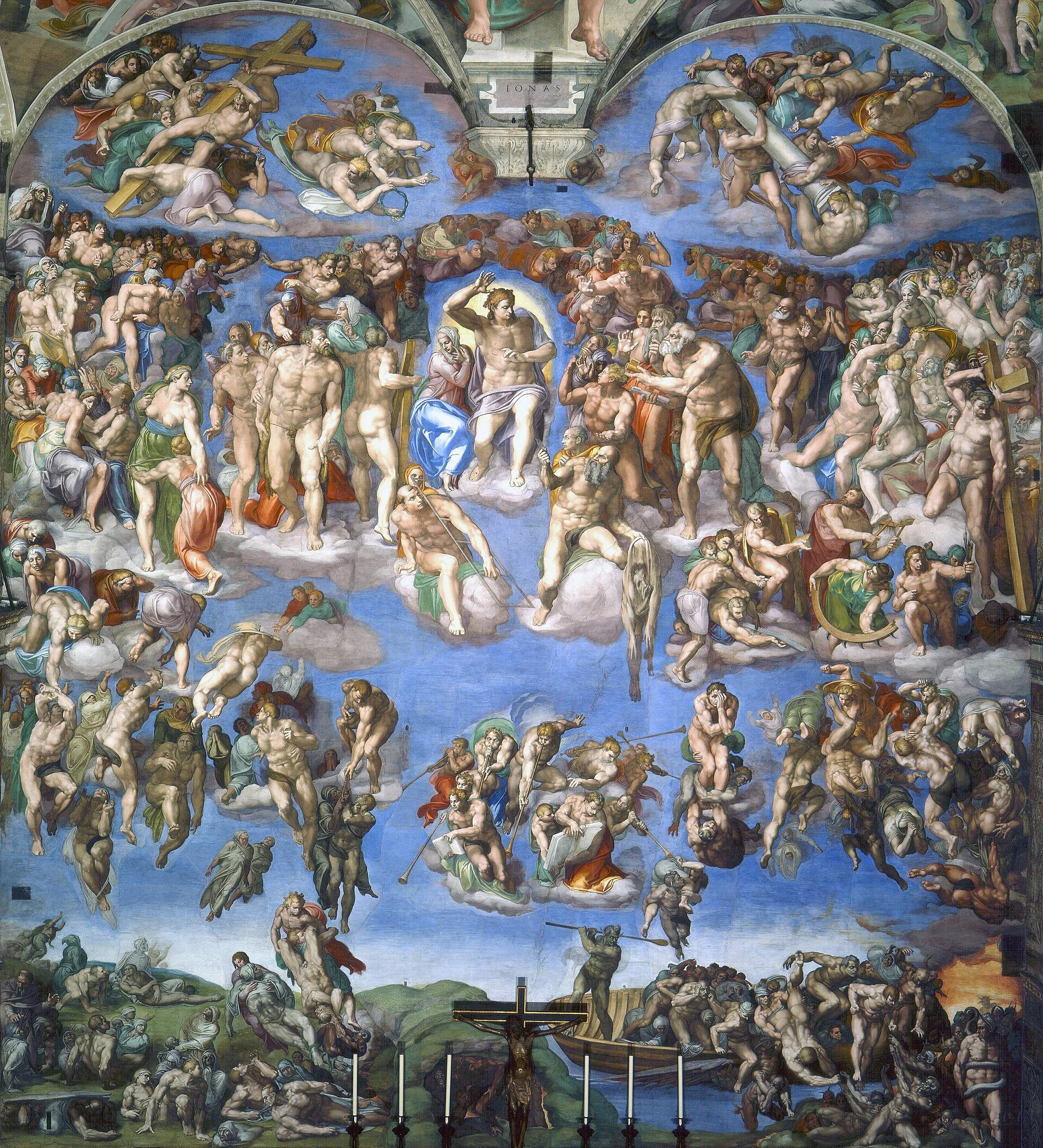
Michelangelo, The Last Judgment, 1536-1541, Wikimedia Commons, Public Domain.
Featuring over 300 figures, Michelangelo’s fresco of The Last Judgment covers the entire altar wall in the Sistine Chapel. The subject of the painting is the Second Coming of Christ, who is painted as a large figure outlined by a yellow light from behind. The consequences of His judgments play out in the scene, as condemned souls descend to hell while saved souls remain with Christ in Heaven.
8. The Return of the Prodigal Son by Rembrandt

Rembrandt van Rijn, The Return of the Prodigal Son, c. 1668, Hermitage Museum, Wikimedia Commons, Public Domain.
The Return of the Prodigal Son by the Dutch Golden Age painter Rembrandt is the most famous painting of a parable scene. The artwork portrays the reception of the wayward son by his forgiving father from Luke 15. The warm light falling on the pair gives the painting a tone of warmth and intimacy. Rich tones of red stand out against the dark backdrop, representing the father’s mercy and love.
9. The Transfiguration by Raphael
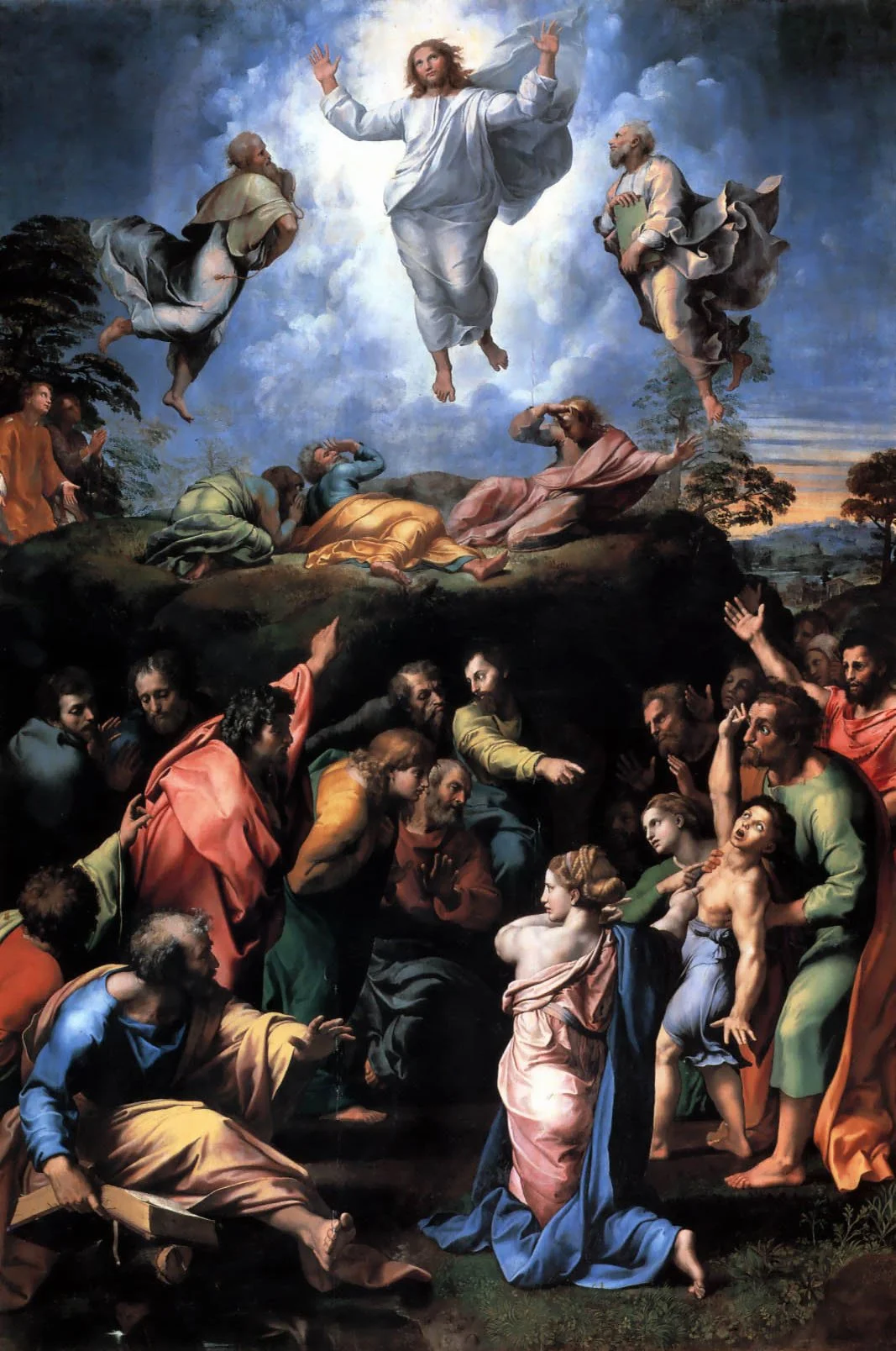
Raphael, The Transfiguration, 1516-1520, Pinacoteca Vaticana, Wikimedia Commons, Public Domain.
One of the most famous oil paintings in the world, Raphael’s Transfiguration was the last work completed by the High Renaissance painter before his early death. The painting contains two events from Matthew 17. The upper half depicts the Transfiguration of Christ on Mount Tabor before Peter, James, and John. The bottom half shows the attempted exorcism of a possessed boy by the remaining apostles. Raphael’s masterly use of chiaroscuro and complex arrangement of human forms make the work dramatic and psychologically intense.
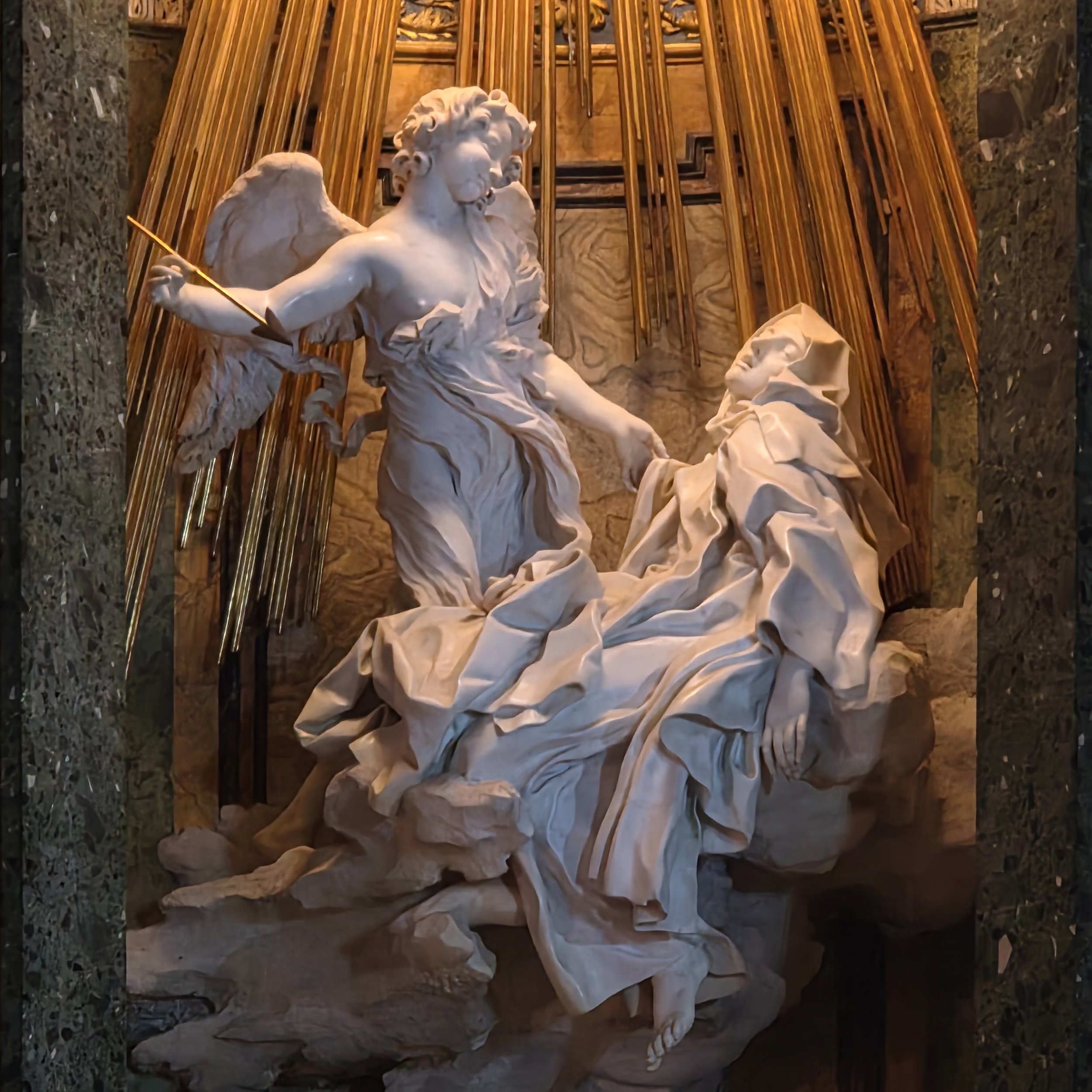
10. Ecstasy of Saint Teresa by Bernini


.jpg)


.jpg)


Gian Lorenzo Bernini, Ecstasy of Saint Teresa, 1647–1652, Wikimedia Commons, licensed by NateBergin under CC BY 4.0.

The Ecstasy of Saint Teresa is considered the sculptural masterpiece of the Baroque period. Gian Lorenzo Bernini made the sculpture as an altarpiece for the church Santa Maria della Vittoria in Rome. The sculpture shows a spiritual experience recounted in the writings of St. Teresa of Avila, a Spanish Carmelite nun from the 16th century. The figures of Teresa and the angel stand frozen in white marble. The angel is about to pierce her soul with a spear of love, and Teresa falls backwards in religious ecstasy.
For the next ten greatest works of sacred art, check out Part 2 of this blog series.