
10 More Famous Madonna and Child Paintings
The Madonna and Child is one of the most important subjects in Christian art history. Many religious artists painted the Virgin Mary and Child Jesus at some point in their lives. Raphael and Botticelli are perhaps the names most often associated with the Madonna. Some of their works were included in a previous article in this series, and you will find several more in this article. Without further ado, here are ten more famous Madonna and Child paintings, featuring artists such as Fra Angelico, Giovanni Bellini, and Cimabue.
1. Madonna of the Book by Sandro Botticelli
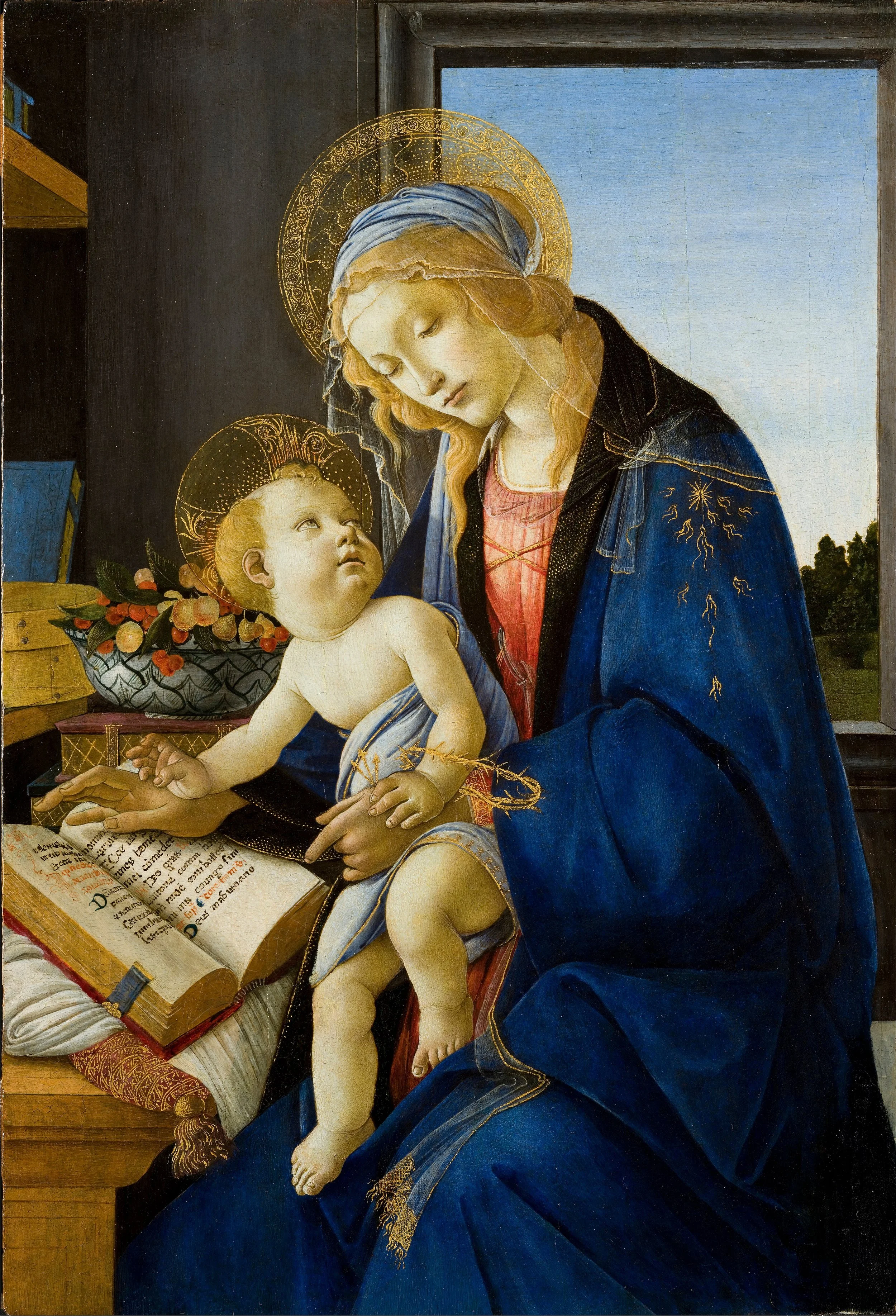
Sandro Botticelli, Madonna of the Book, c. 1480-1481, Museo Poldi Pezzoli, Wikimedia Commons, Public Domain
Sandro Botticelli’s Madonna of the Book depicts the Virgin Mary and Christ Child seated before an open window. They are reading what appears to be a Book of Hours, a popular devotional book among Christians during the thirteenth to sixteenth centuries. Jesus holds three nails and a crown of thorns hangs from His left arm, symbolizing His Passion. The bowl of fruit in the background also has meaning—the cherries represent the Precious Blood, the plums the tender love between Mother and Son, and the figs the Resurrection. The Early Renaissance artist likely created this artwork for a wealthy patron, considering the pure gold details and brilliant lapis lazuli used for Mary’s mantle.
2. The Madonna of Humility by Fra Angelico
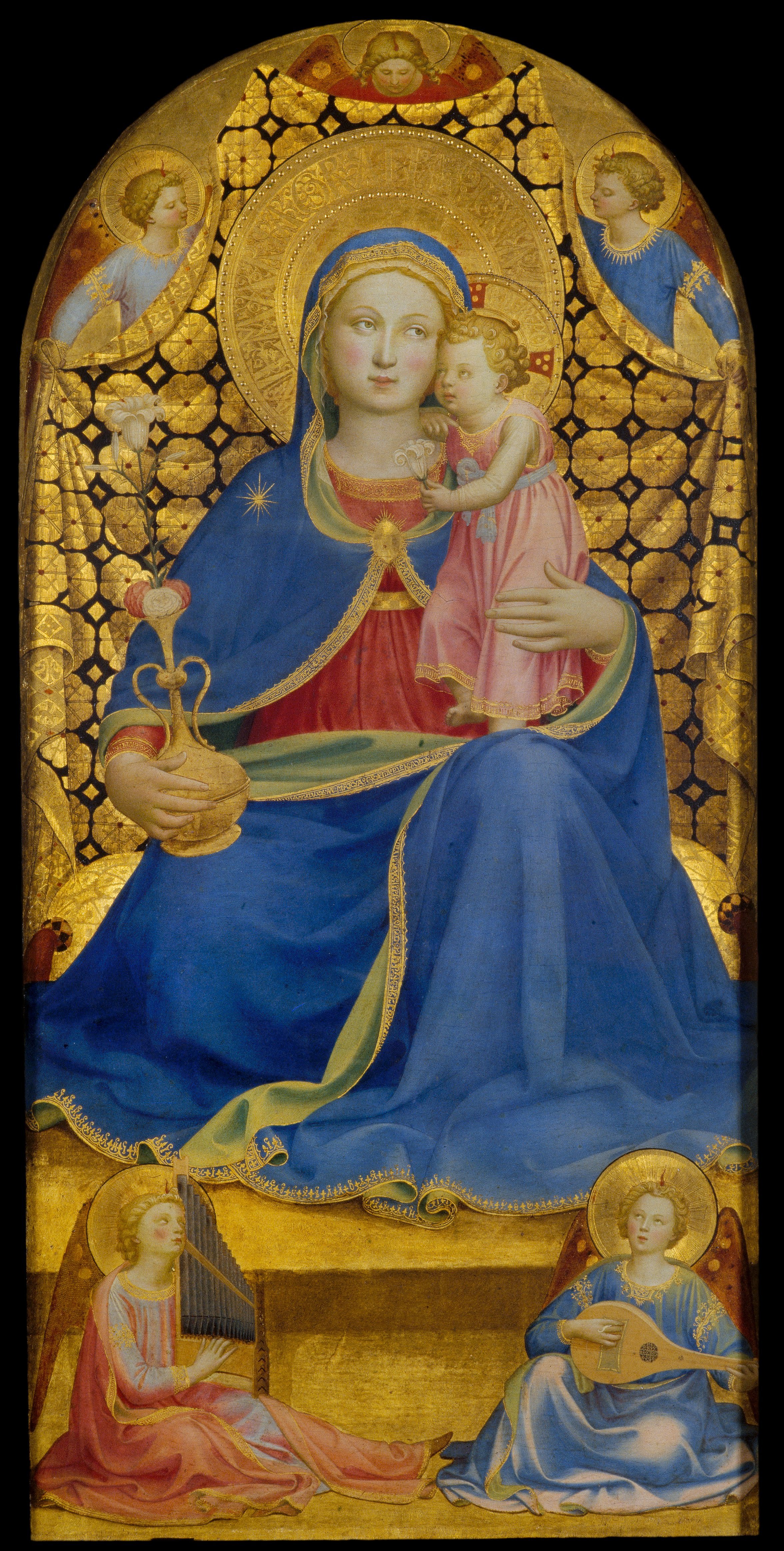
Fra Angelico, The Madonna of Humility, c. 1433-1435, Thyssen-Bornemisza National Museum, Wikimedia Commons, Public Domain
The Virgin of Humility is a subject that Fra Angelico portrayed several times during the Early Renaissance. The version housed by the Thyssen-Bornemisza National Museum is considered one of his finest renditions of this particular type of Madonna painting. The Virgin Mary sits upon a cushion on the ground, indicating her humility. The Christ Child holds a lily close to her face, emphasizing the Blessed Mother’s purity and virginity. Mary likewise grasps a vase with a tall lily and three roses. The latter allude to her perfect charity, spiritual beauty, and traditional title of “Mystical Rose.”
3. Benois Madonna by Leonardo da Vinci
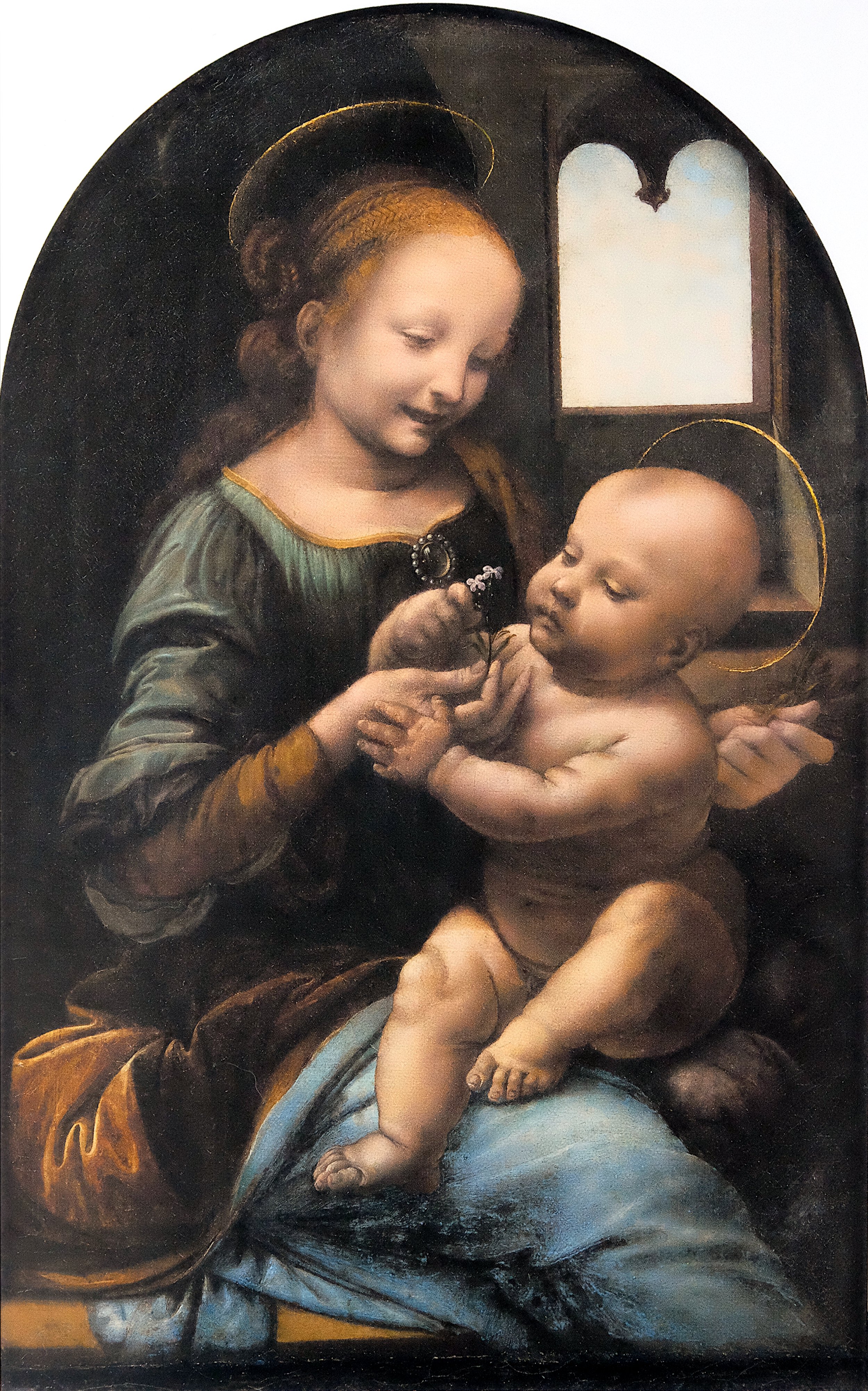
Leonardo da Vinci, Benois Madonna, c. 1475-1478, Hermitage Museum, Wikimedia Commons, Public Domain
Completed between 1475 and 1478, Leonardo da Vinci’s Benois Madonna is believed to be one of his first paintings created independently from his teacher, Andrea del Verrocchio. Also known as the Madonna and Child with Flowers, the composition shows the Christ Child reaching toward a sprig of flowers held by the Virgin Mary. The flowers make a cruciform shape, pointing to Christ’s Passion. This work by Leonardo was used as a model by many young painters, such as Raphael for his Madonna of the Pinks.
4. San Zaccaria Altarpiece by Giovanni Bellini
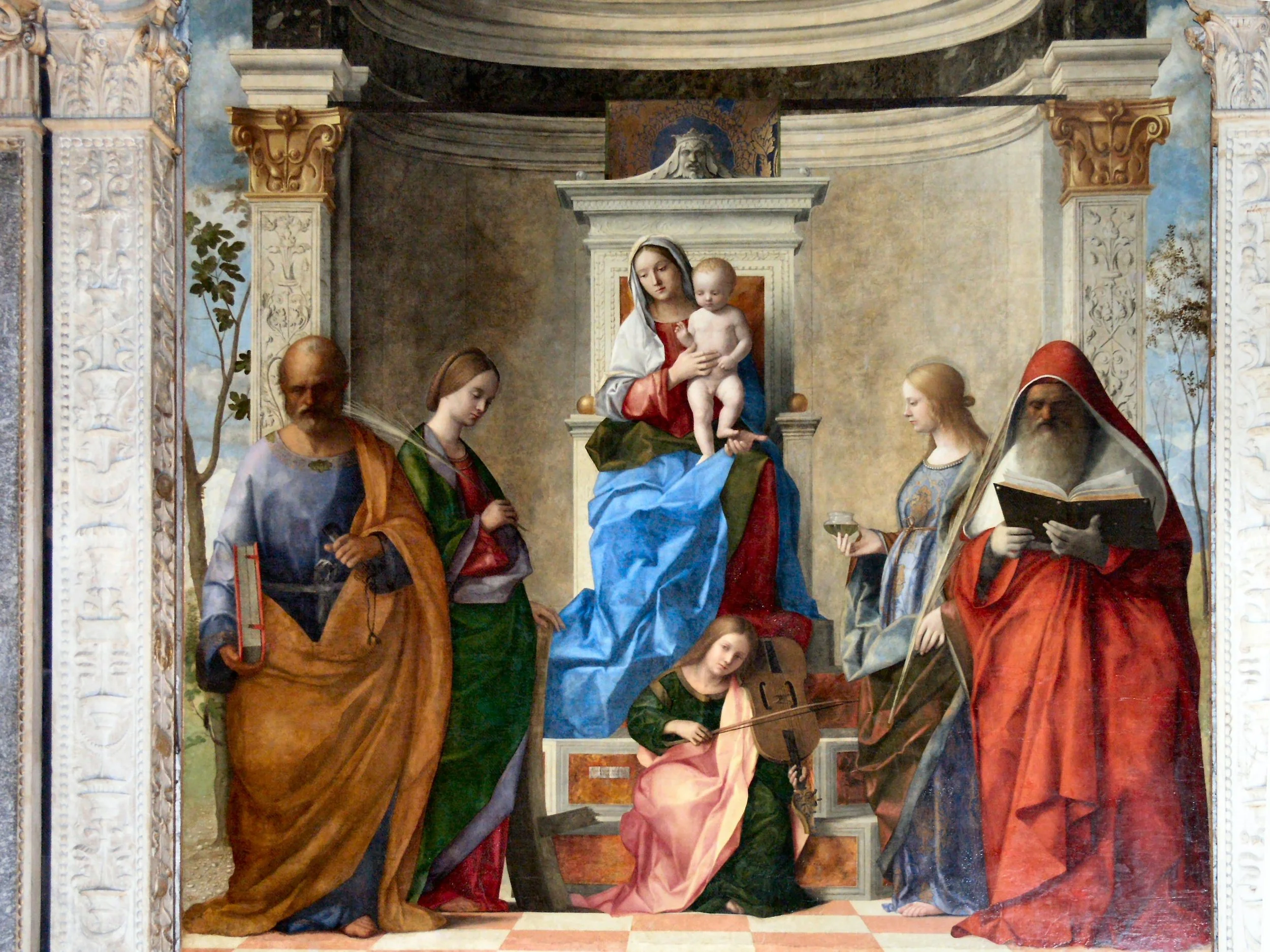
Giovanni Bellini, San Zaccaria Altarpiece, 1505, Wikimedia Commons, Public Domain
The San Zaccaria Altarpiece is a notable example of a sacra conversazione (sacred conversation) scene, a painting genre that was popular during the Renaissance. The Venetian artist Giovanni Bellini made this composition for a side altar in the Church of San Zaccaria in Venice. He is known for creating dozens of paintings depicting the Madonna and Child. In this altarpiece from 1505, the figures are arranged in a pyramidal structure. The Virgin Mary and Jesus form the apex, as they are elevated above the others on a throne. A pair of saints stands on either side of the dais: St. Peter and St. Catherine of Alexandria on the left, and St. Lucy and St. Jerome on the right.
5. Maestà by Duccio
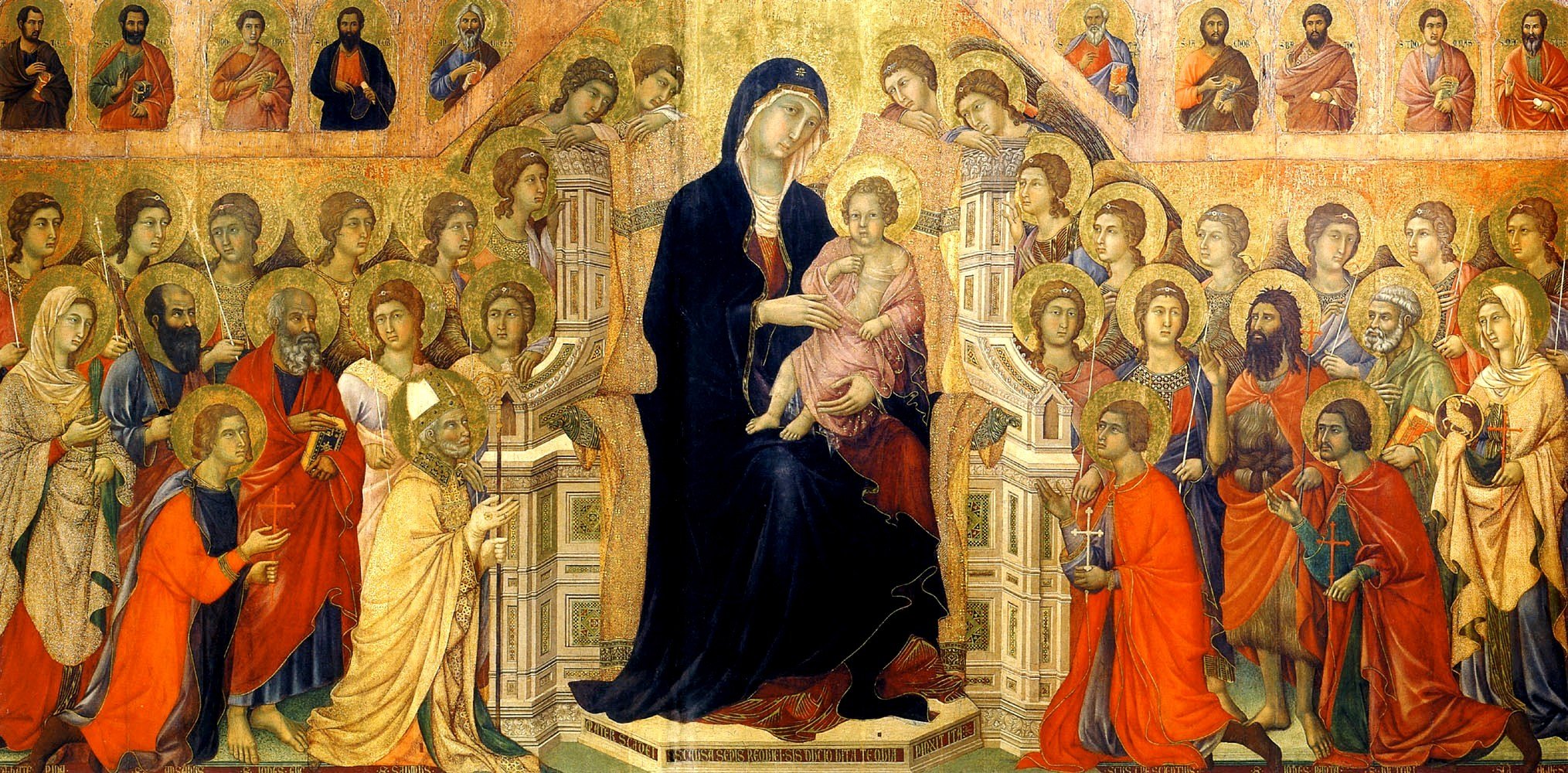
Duccio, Maestà, 1308-1311, Wikimedia Commons, Public Domain
Art historians widely consider Duccio’s Maestà to be his masterpiece. It is the earliest surviving altarpiece to have both a front and back. The Sienese painter created this large commission for the Siena Cathedral between 1308 and 1311, about twenty years after completing his Rucellai Madonna. The front of the Maestà depicts the Madonna and Child enthroned and surrounded by a crowd of saints and angels. It reveals a greater departure from the Byzantine style that characterized his earlier Madonnas, since this Maestà contains more individualized faces and spatial depth.
6. Santa Trinita Maestà by Cimabue
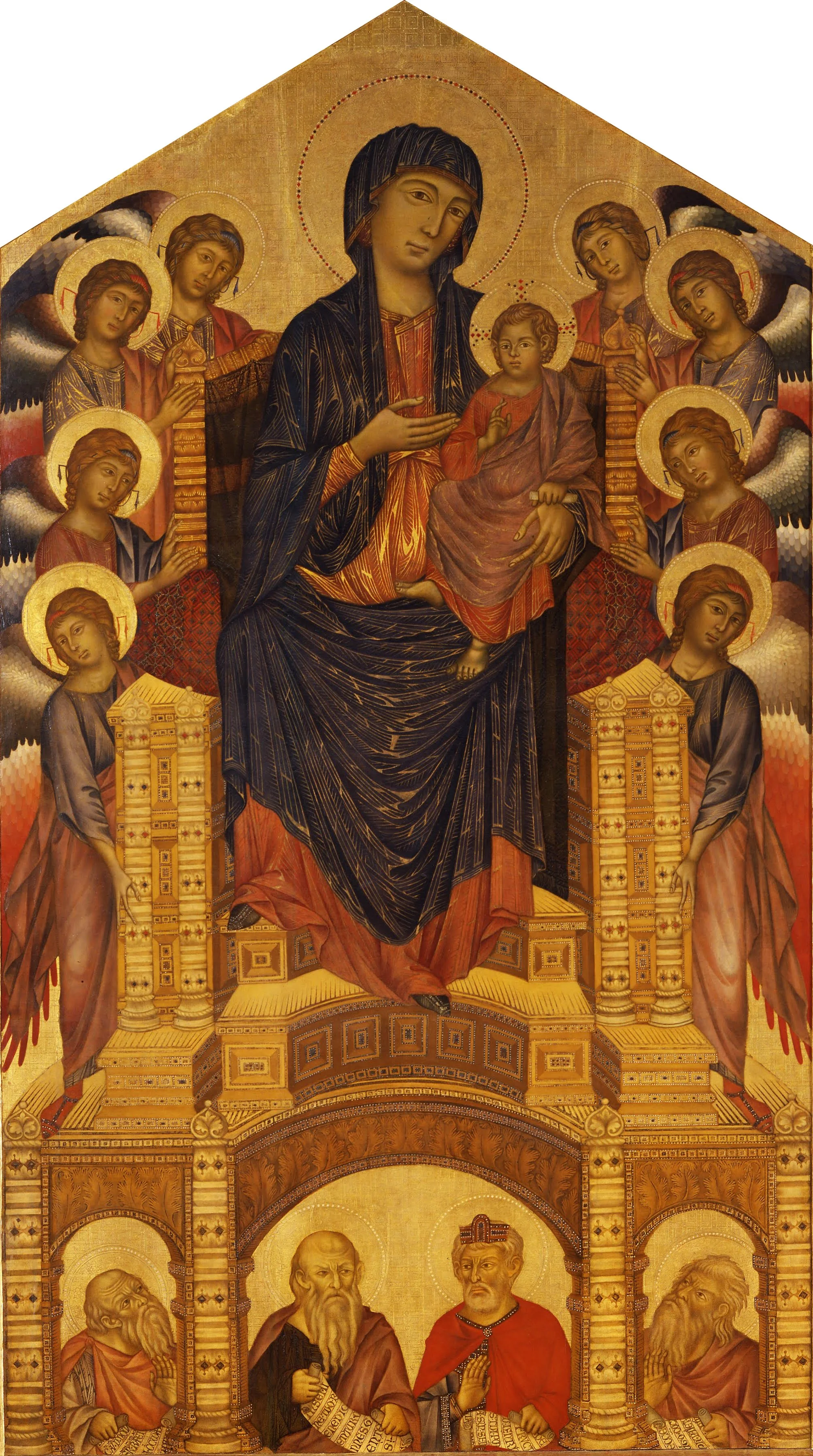
Cimabue, Santa Trinita Maestà, c. 1290-1300, Uffizi Gallery, Wikimedia Commons, Public Domain
A prominent thirteenth-century painter from Florence, Cimabue created the Santa Trinita Maestà for the church of Santa Trinita in his home city. He depicted the Virgin Mary as the Virgin Hodegetria, a Byzantine type that shows Mary holding the Child Jesus and pointing to Him as the way to salvation. Jesus is dressed like an ancient philosopher and clutches a closed scroll in His left hand. Eight angels surround the throne upon which Mary and Jesus are seated. Four Old Testament prophets are portrayed at the bottom of the work: Jeremiah, Abraham, David, and Isaiah (from left to right). This was an unusual addition for a Madonna and Child painting, but the scrolls in their hands refer to the prophecies of the Incarnation and Mary’s virginity found in Scripture.
7. Madonna del Granduca by Raphael
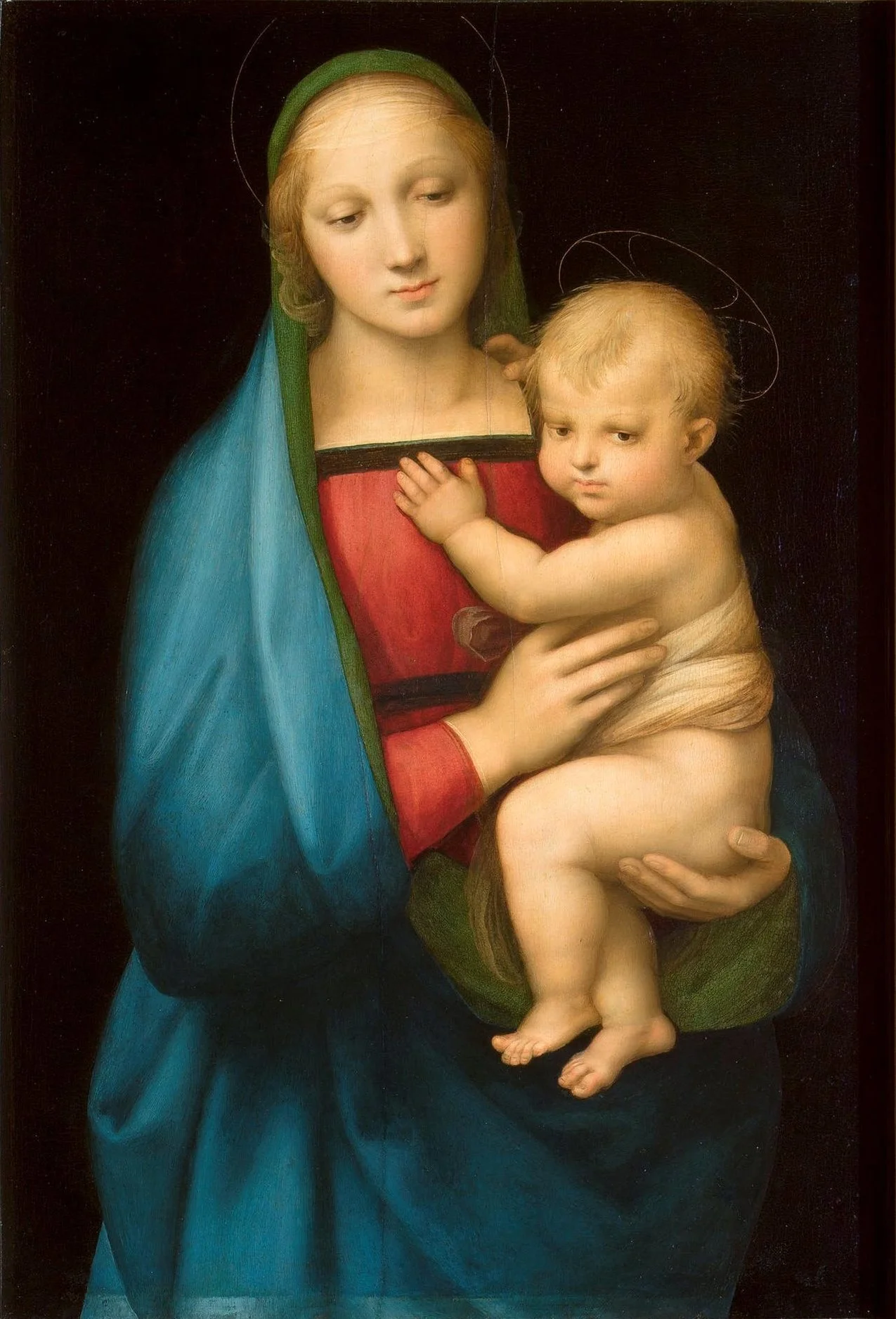
Raphael, Madonna del Granduca, 1506-1507, Uffizi Gallery, Wikimedia Commons, Public Domain
Raphael produced the Madonna del Granduca between 1506 and 1507, shortly after his arrival in Florence. The composition reveals the influence of Leonardo da Vinci’s sfumato technique on his younger contemporary: Raphael softens the outlines of the figures to make them seamlessly merge into the dark background. In the painting, the Virgin Mary appears to gently offer the Child Jesus for the viewer’s contemplation. Her eyes are cast downward, infusing the work with a sense of melancholy. The deep bond of love between Mother and Son is palpable, but there is a suggestion of the sorrow that will one day pierce her heart—Christ’s sacrifice on the Cross.
8. Madonna with the Long Neck by Parmigianino
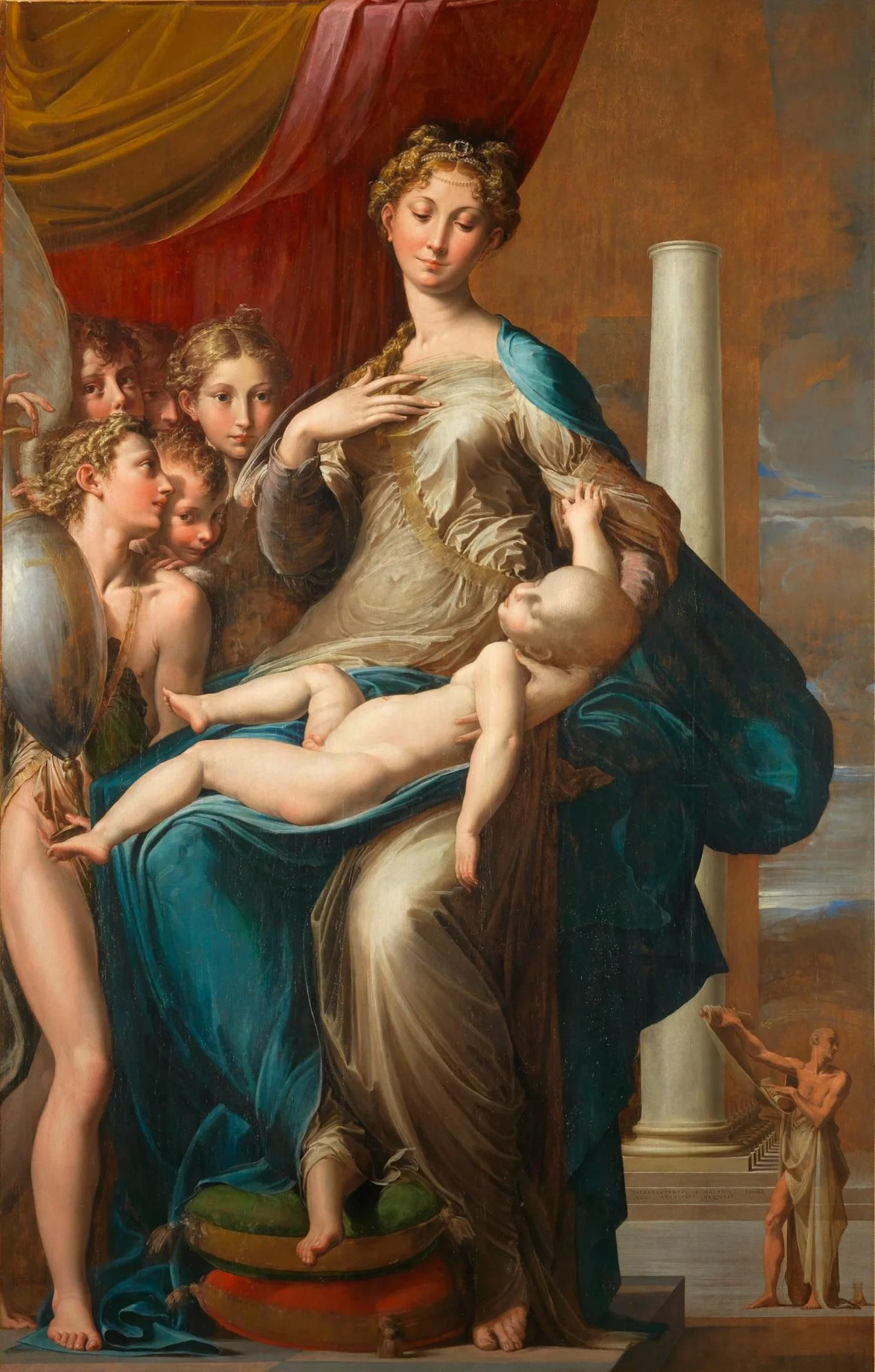
Parmigianino, Madonna with the Long Neck, 1534-1540, Uffizi Gallery, Wikimedia Commons, Public Domain
Parmigianino’s Madonna with the Long Neck is among the most famous examples of Mannerism in Christian art history. Mannerism is an artistic style that emerged during the sixteenth century. One of its major characteristics is the elongation of human figures, which can clearly be seen in Parmigianino’s Madonna painting. The Virgin Mary not only has a long neck, but also seems unnaturally tall, as does the Christ Child on her lap. His pose prefigures the Pietà—the moment when Mary would hold the body of her dead Son after the Crucifixion. A group of angels hovers around the Mother and Son on the left, and a tiny, distant figure of St. Jerome stands to the right. Parmigianino began this work in 1534, but it remained incomplete at the time of his death in 1540.
9. Madonna of the Meadow by Raphael
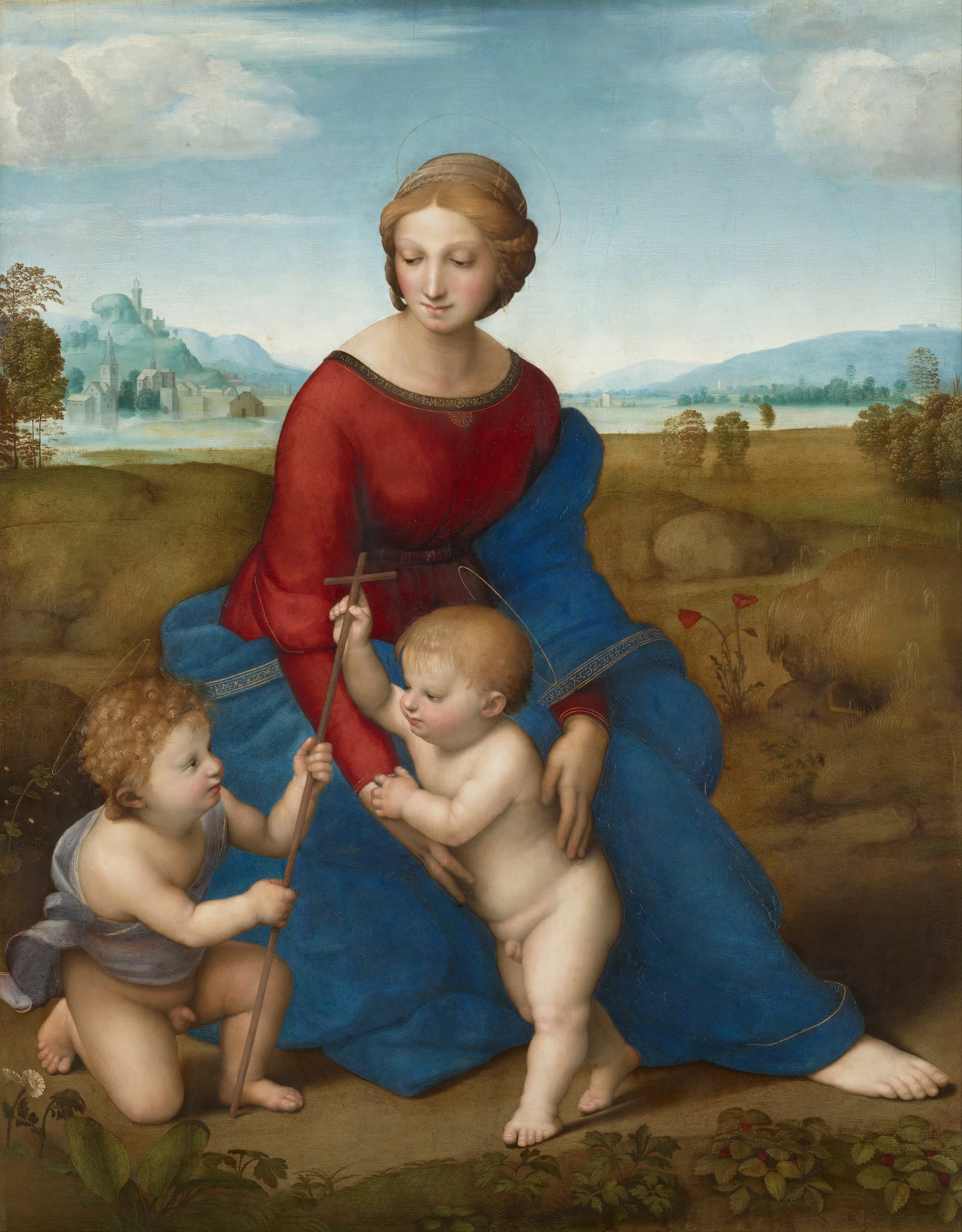
Raphael, Madonna of the Meadow, 1505-1506, Kunsthistorisches Museum, Wikimedia Commons, Public Domain
Like the Madonna del Granduca, the Madonna of the Meadow is another painting created by Raphael soon after his arrival in Florence. Completed between 1505 and 1506, this latter Madonna painting features a pyramidal composition, once again indicating the influence of Leonardo da Vinci. The Virgin Mary supports the Child Jesus as He stands and interacts with His cousin, the young St. John the Baptist. Jesus touches the small cross held by John, foreshadowing Christ’s Passion. The red poppies to the right of Mary are another subtle detail that alludes to the future suffering and death that awaits her Son.
10. The Virgin with Angels by William-Adolphe Bouguereau
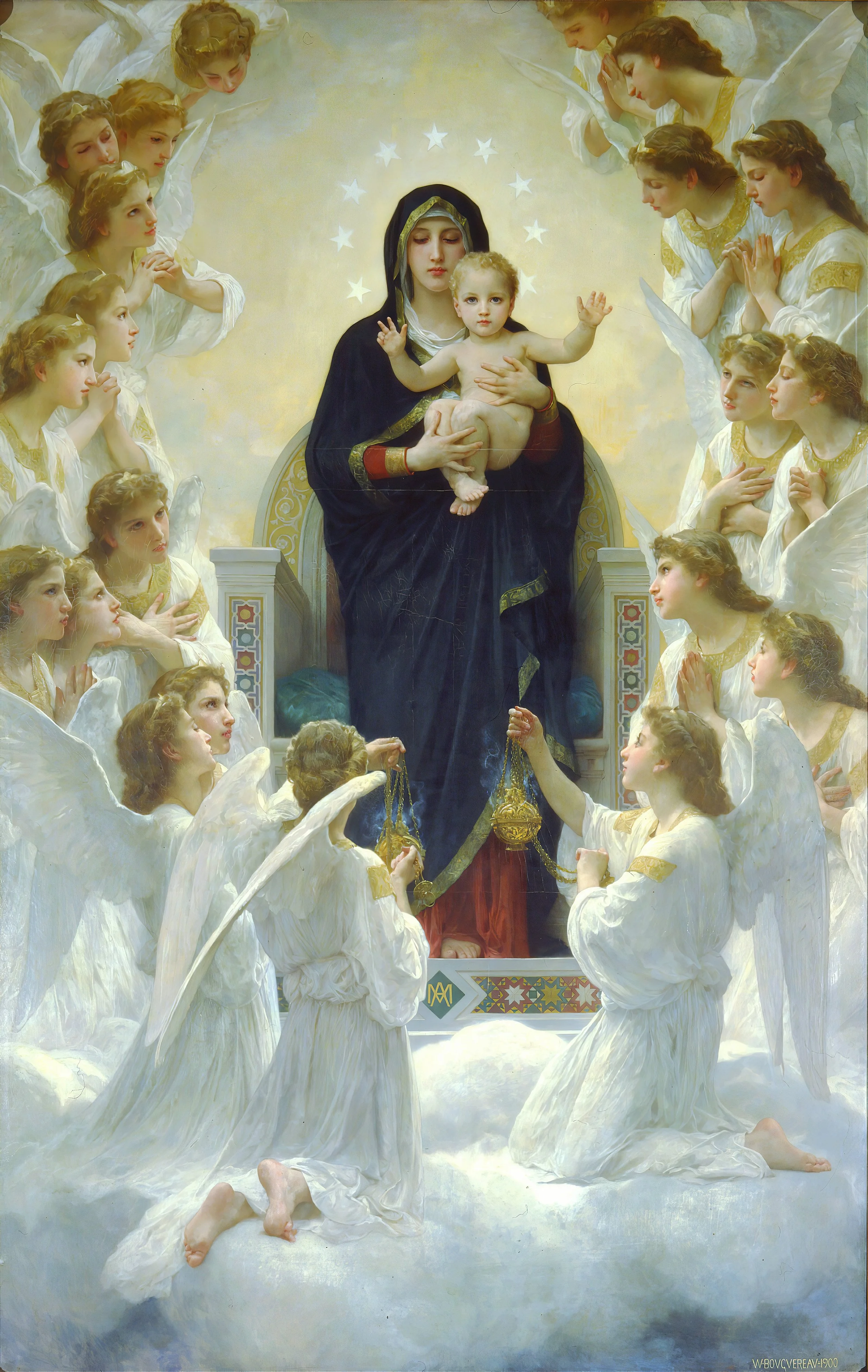
William-Adolphe Bouguereau, The Virgin with Angels, 1900. Petit Palais, Public Domain
The Virgin with Angelsis a depiction of the Madonna and Child by William-Adolphe Bouguereau, a French academic painter from the nineteenth and early twentieth centuries. His Madonna paintings continue to enjoy widespread popularity in Catholic devotion. In this work, the Virgin Mary and the Christ Child stand before a majestic throne with Byzantine motifs, echoing the style of the Maestà paintings by Cimabue and Duccio mentioned earlier in this series. Angels line the border of the composition, and the two at the bottom swing censers with incense. The right hand of Christ is lifted up in a traditional gesture of blessing, with three fingers raised and two lowered.
Conclusion
Many religious artists have painted the Madonna and Child, from Cimabue and Duccio in the Proto-Renaissance to William-Adolphe Bouguereau in the nineteenth and early twentieth centuries. These famous paintings of the Virgin Mary and Child Jesus capture something truly profound and beautiful about the intimate love shared between a mother and son. On a spiritual level, these sacred artworks also capture something of the mystery of the Incarnation—the incredible truth that God became man and entered human history through a human mother. Each painting invites the viewer to contemplate this great mystery through the image of the Madonna and Child.
Did you miss the first article in this series? Discover ten famous paintings of the Madonna and Child.