
Top 20 Greatest Works of Christian Sacred Art (Part 2)
In Part 2 of this blog series, we’ll take a look at the next ten greatest works of sacred art. Part 1 included several of the most famous religious artworks, such as Leonardo da Vinci’s The Last Supper and Michelangelo’s Pietà. The sacred art selected for Part 2 is generally less well-known, but these paintings still stand as a major contribution in the tradition of Christian art.
11. The Descent from the Cross by Peter Paul Rubens
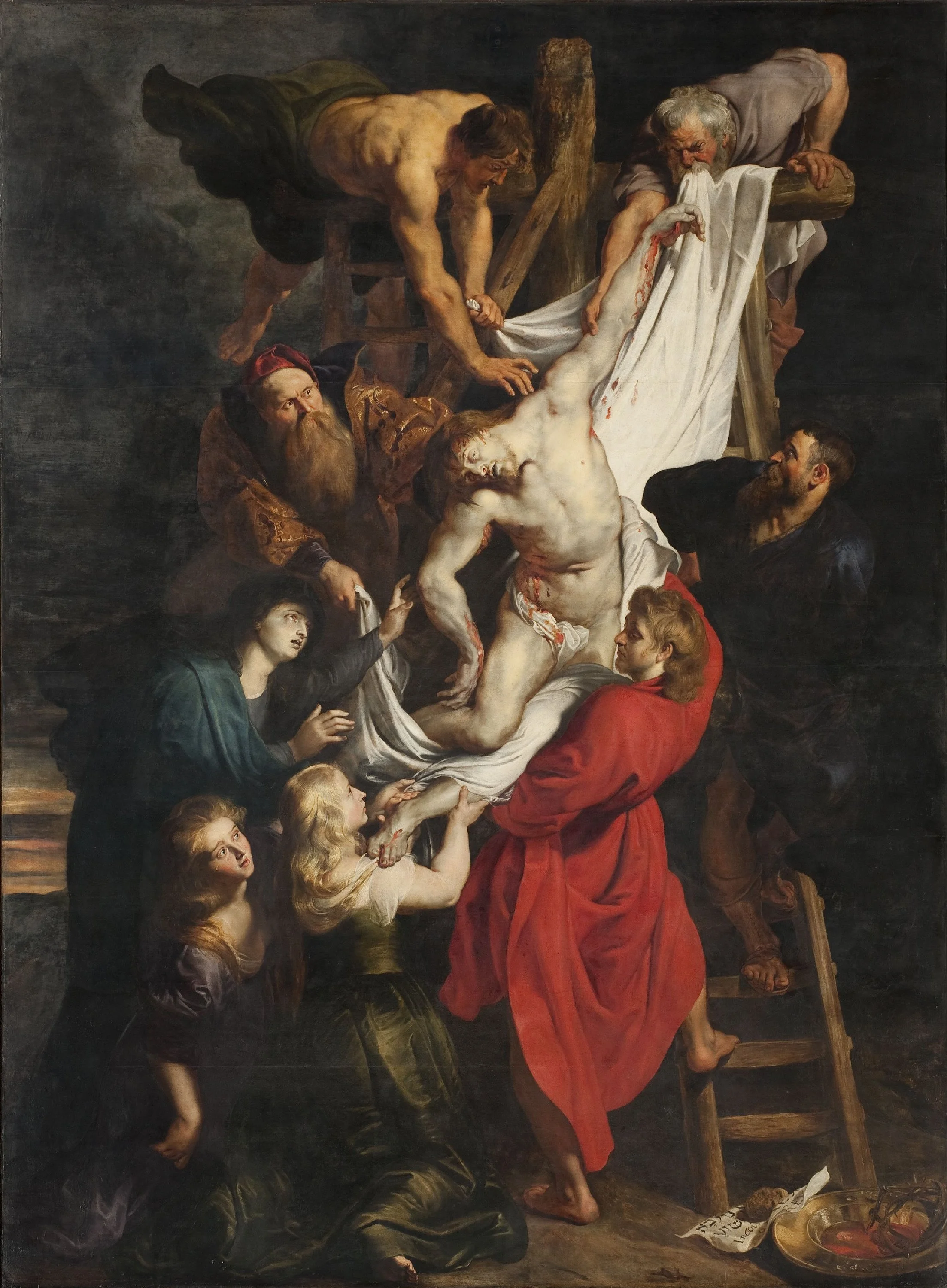
Peter Paul Rubens, The Descent from the Cross, 1612-1614, Wikimedia Commons, Public Domain.
Peter Paul Rubens painted The Descent from the Cross for the Cathedral of Our Lady in Antwerp, Belgium as part of a triptych. The Baroque painter portrayed Christ’s descent (or deposition) from the Cross multiple times throughout his career, but this particular rendition is counted among his masterpieces. The Descent serves as an example of Rubens’ emphasis on Christ’s Passion and death in his artwork, which invited viewers during the Counter-Reformation to contemplate Christ’s ultimate sacrifice on the Cross.
12. Salvator Mundi by Leonardo da Vinci
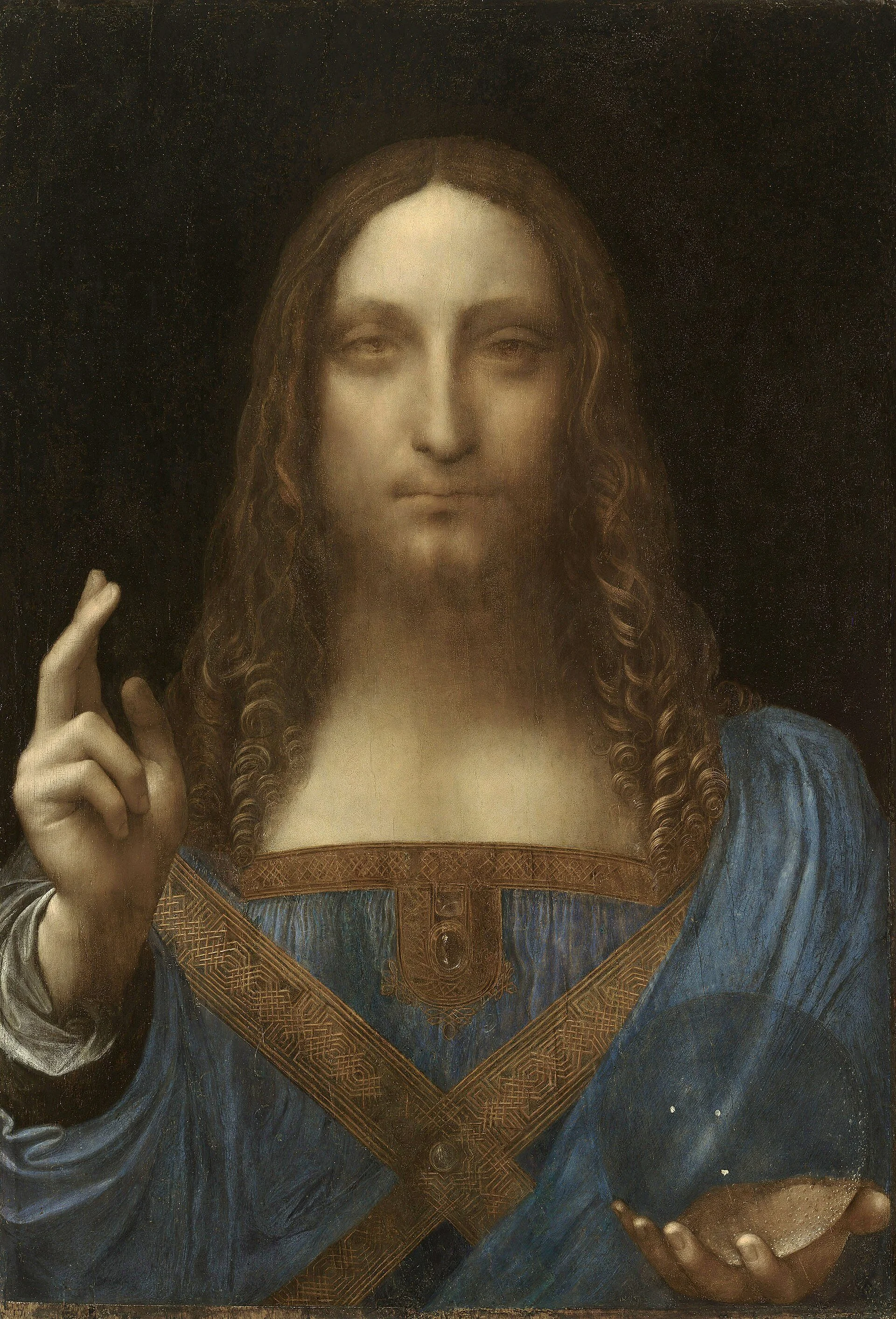
Leonardo da Vinci, Salvator Mundi, c. 1500, Wikimedia Commons, Public Domain.
Salvator Mundi (“Savior of the World”) numbers among less than 20 surviving paintings attributed to Leonardo da Vinci. It was rediscovered in 2005 and underwent extensive restoration to remove overpaint and damage. The painting shows Jesus making a gesture of blessing and holding a clear orb that represents the universe. The sale of Salvator Mundi for $450.3 million at Christie’s in 2017 makes it the most expensive painting ever sold at public auction.
13. Annunciation by Fra Angelico
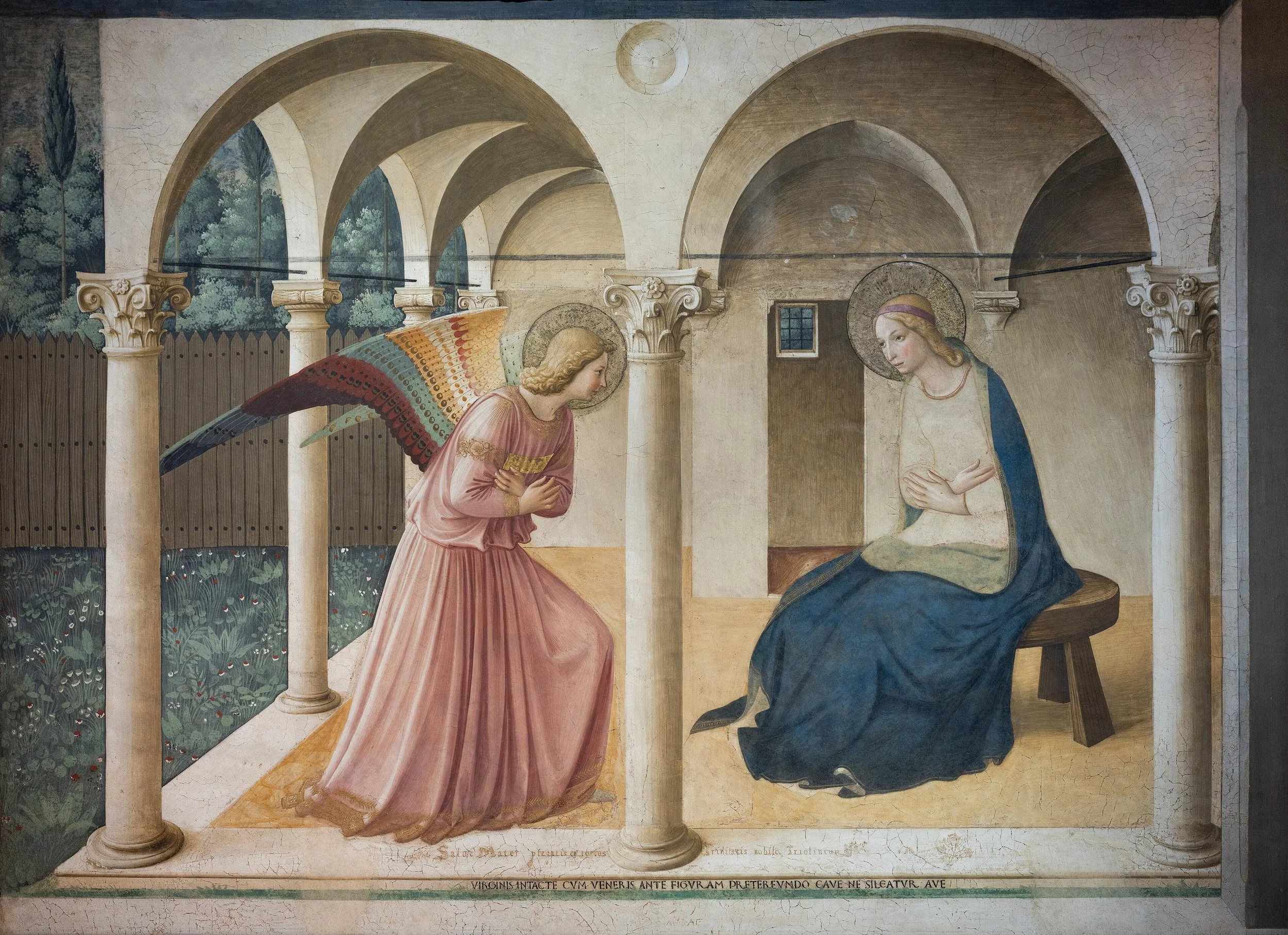
Fra Angelico, Annunciation, c. 1440-1445, Museum of San Marco, Wikimedia Commons, Public Domain.
The Early Renaissance painter Fra Angelico was commissioned to create around 50 frescoes for the Convent of San Marco in Florence, Italy. The Annunciation is his most famous fresco from the series, although it is not his first depiction of Gabriel’s visitation to the Blessed Virgin Mary. The Annunciation is a characteristic example of the balance between simplicity and elegance that Fra Angelico achieves in his artwork.
14. The Wedding at Cana by Paolo Veronese
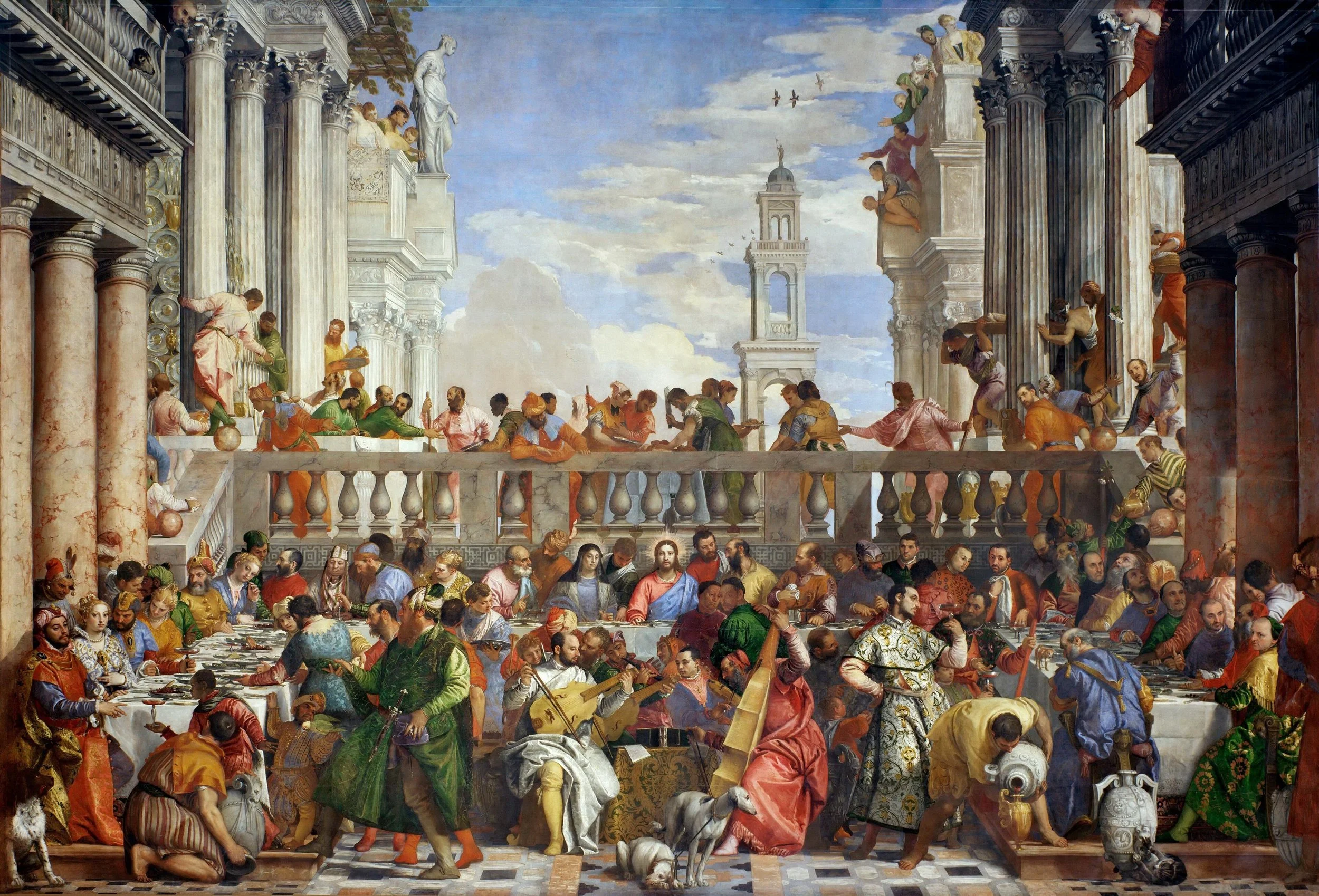
Paolo Veronese, The Wedding at Cana, 1562-1563, Louvre Museum, Wikimedia Commons, Public Domain.
The gigantic proportions of The Wedding at Cana by Paolo Veronese make it the largest painting in the Louvre collection, measuring roughly 22 by 32 feet. Veronese completed it as a commission for the refectory of the San Giorgio Maggiore monastery in Venice. Apart from its massive size, the painting bears the marks of a typical Venetian painter during the Renaissance: vibrant color and light. The Wedding at Cana also features over 130 human figures. Jesus and Mary sit at the center of the table.
15. Assumption of the Virgin by Titian
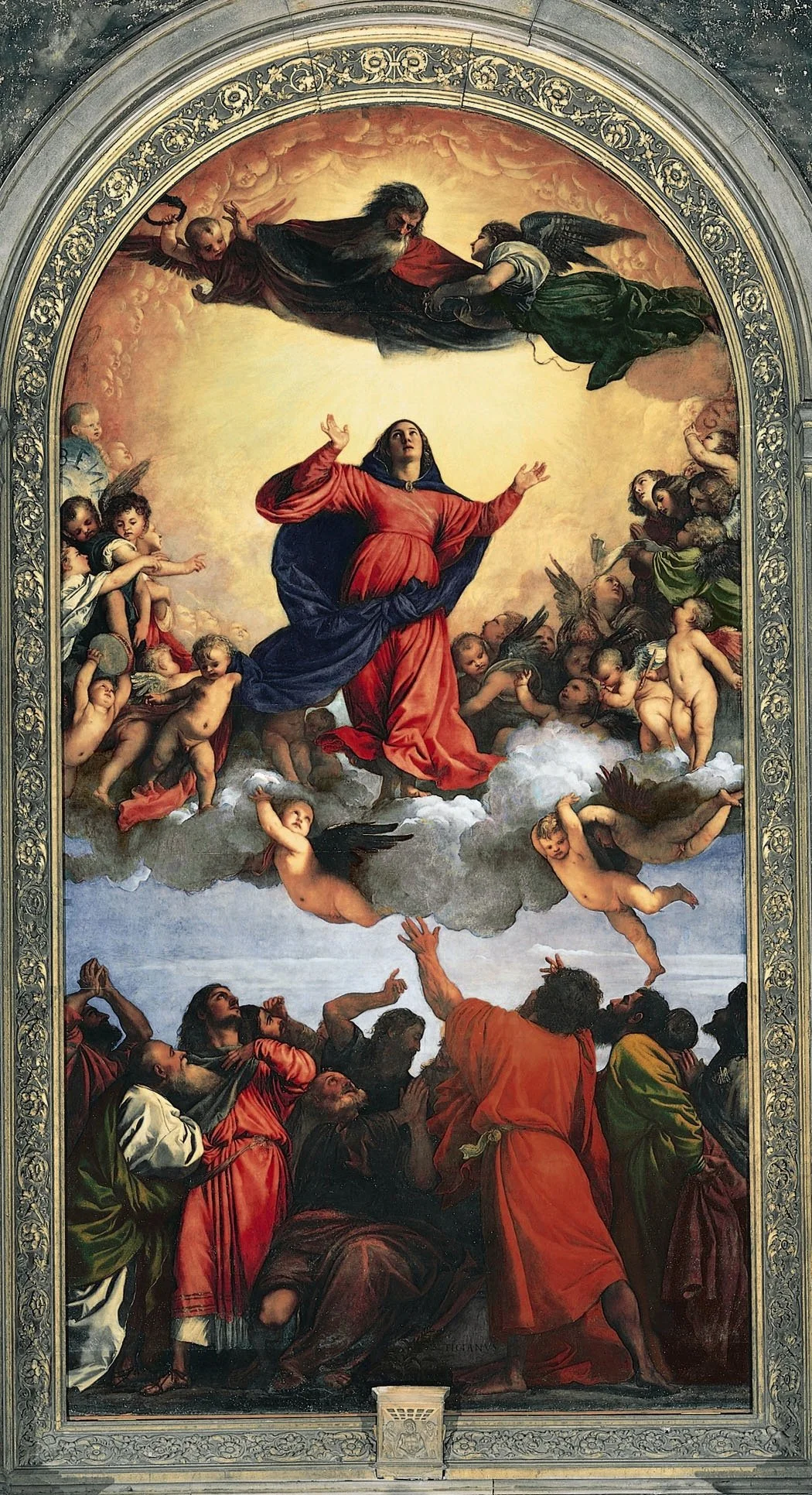
Titian, Assumption of the Virgin, 1516-1518, Wikimedia Commons, Public Domain.
Titian painted the Assumption of the Virgin for the high altar of the Basilica di Santa Maria Gloriosa dei Frari in Venice. The altarpiece is the largest in the city, and it placed Titian on the same footing as Michelangelo and Raphael. The Assumption remains in its original location today. The upward motion of the human and angelic figures adds a dynamic element to the painting. The Blessed Virgin Mary is positioned in the middle of a glowing circle of light, making her the focus of the composition.
16. Isenheim Altarpiece by Matthias Grünewald
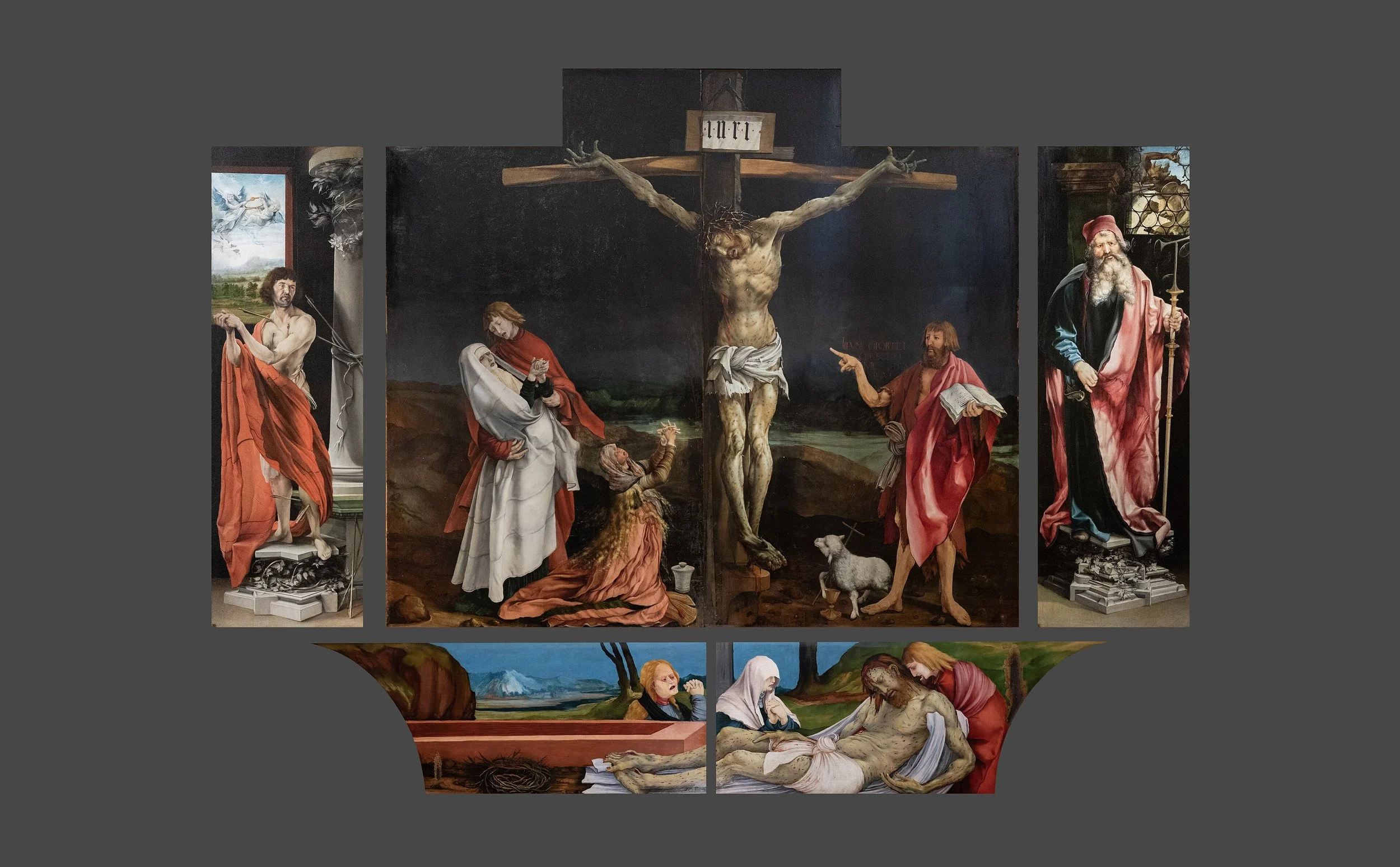
Matthias Grünewald, Isenheim Altarpiece, c. 1512-1516, Unterlinden Museum, Wikimedia Commons, Public Domain.
The Isenheim Altarpiece is one of the greatest works of German art. Commissioned for a monastery hospital in France, it varies significantly from the religious artwork of the Italian Renaissance being made at the time. Matthias Grünewald depicted the Crucifixion in all its horror, covering Christ’s body in sores and thorns. The physical markings on Christ’s body referenced the disease afflicting many of the patients of the hospital, prompting them to unite their sufferings with those of Christ on the Cross. The Isenheim Altarpiece remains one of the most famous paintings of the Crucifixion in the West.
17. Lamentation (Mourning of Christ) by Giotto
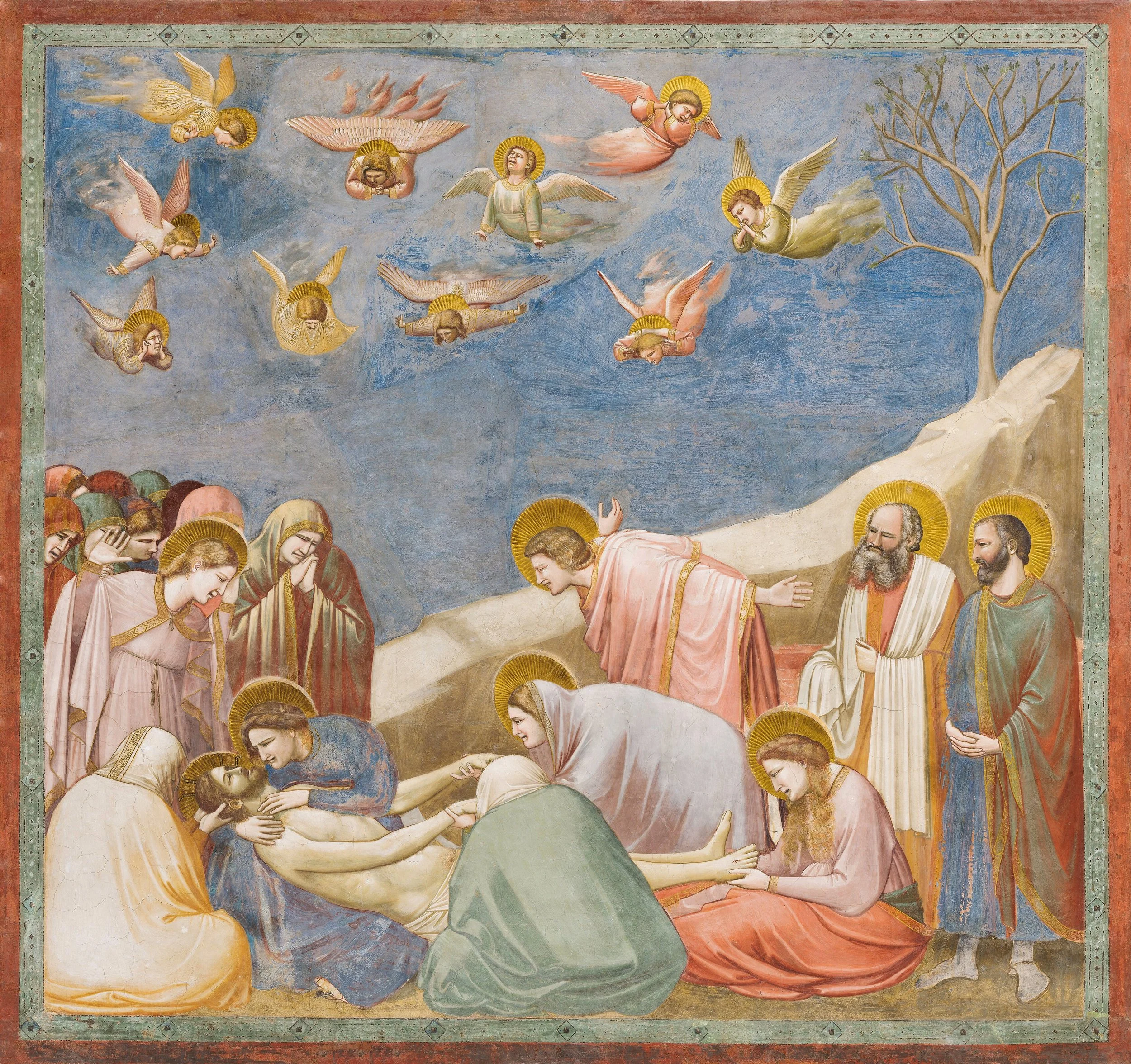
Giotto, Lamentation (Mourning of Christ), c. 1304-1306, Wikimedia Commons, Public Domain, licensed by Gennadii Saus i Segura under CC BY-SA 4.0.
Giotto created the Lamentation as part of a cycle of frescoes in the Scrovegni Chapel in Padua, which consisted of 37 scenes from the life of Christ. The Lamentation is an excellent example of how Giotto earned his historical reputation as a Proto-Renaissance artist. He shifted away from the static and stylized nature of Byzantine art, experimenting with naturalism, emotion, and the illusion of three-dimensional space. His Lamentation includes all three of these elements, bringing the biblical scene to life as it had never been done before.
18. Maestà by Duccio
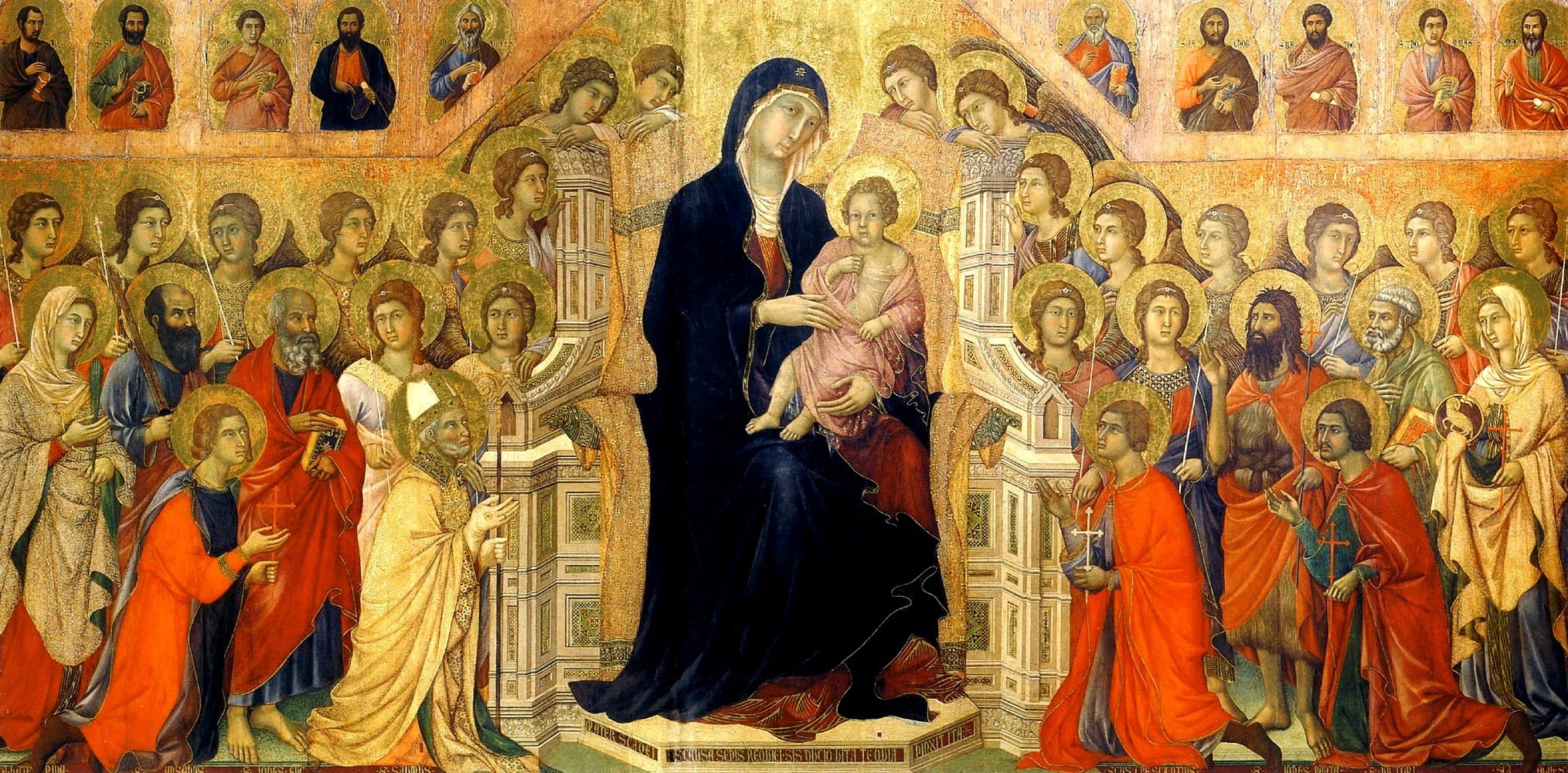
Duccio, Maestà, 1308-1311, Museo dell'Opera Metropolitana del Duomo, Wikimedia Commons, Public Domain.
The Maestà is the greatest work by the Sienese painter Duccio. The first altarpiece to have a front and back side, the Maestà was also groundbreaking in paving the way for a departure from the Italo-Byzantine style alongside the contemporaneous work of Giotto. The front panel shows the Madonna enthroned with the Christ child on her lap, surrounded by angels and saints. The back panel contains 43 panels with scenes from the lives of Mary and Jesus.
19. Conversion on the Way to Damascus by Caravaggio
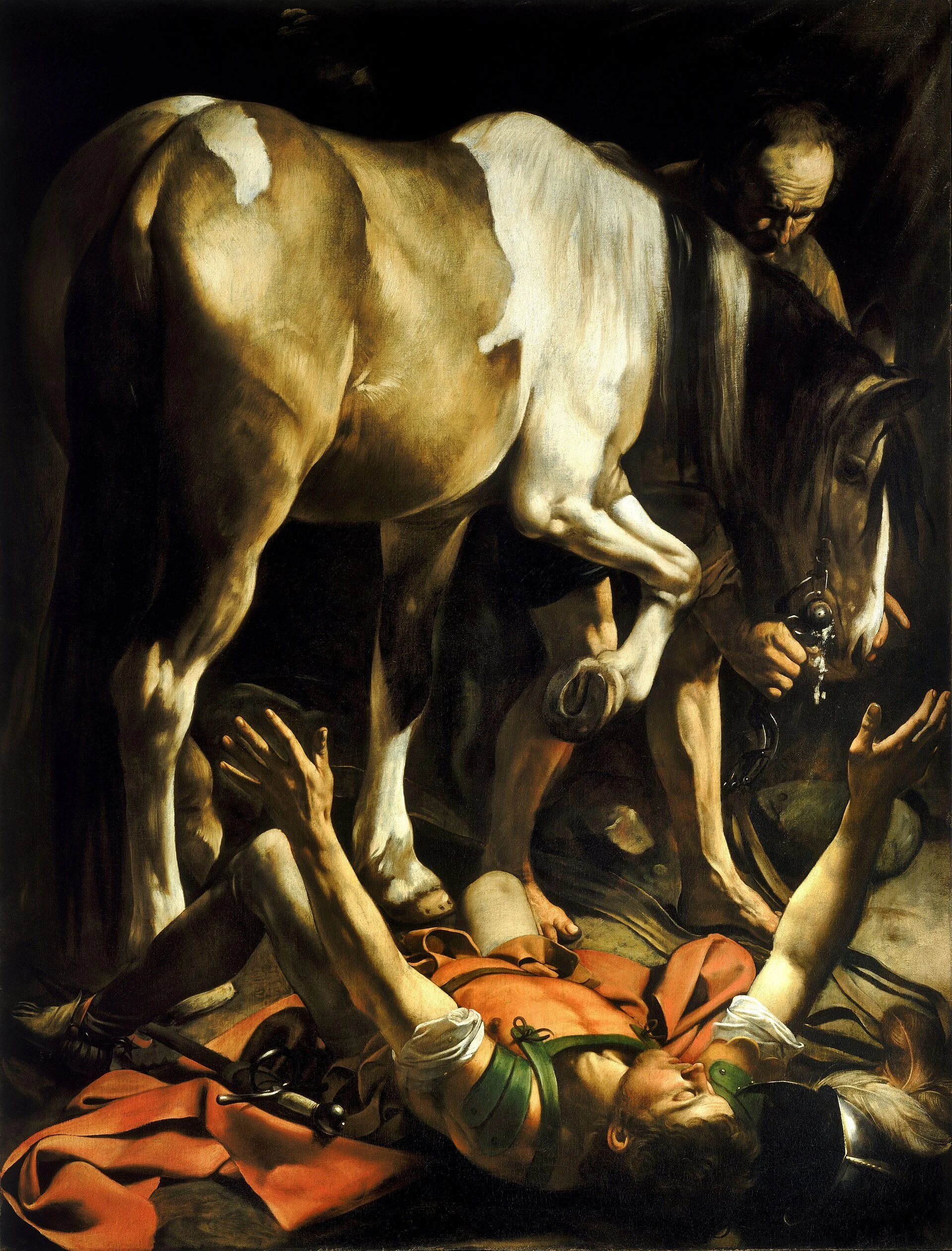
Caravaggio, Conversion on the Way to Damascus, c. 1600-1601, Wikimedia Commons, Public Domain.
Caravaggio painted the Conversion on the Way to Damascus for the Cerasi Chapel of the church of Santa Maria del Popolo in Rome. The painting depicts the moment in Acts of the Apostles when Saul is blinded by a great light and admonished by God for persecuting the Christians. Caravaggio intended the Conversion to be seen from a low angle, enabling the viewers to imagine themselves on the ground with St. Paul. The Conversion is an outstanding example of religious art from the Baroque period. Caravaggio combines chiaroscuro, or dramatic contrast between light and darkness, with realism and emotion to create a dramatic version of the biblical scene.
20. Christ of Saint John of the Cross by Salvador Dalí

.,_c._1613.jpg)


.jpg)
Salvador Dalí, Christ of Saint John of the Cross, 1951, Wikimedia Commons, Public Domain.

As indicated by its title, Salvador Dalí’s Christ of Saint John of the Cross is based on a drawing by St. John of the Cross, a 16th-century Spanish friar and mystic. Dalí’s painting is significant for its unique perspective of the Crucifixion, portraying the Cross from a top-down angle. The crucified Christ hangs suspended over the world, and perhaps Dalí omitted the traditional features of the Crucifixion—blood, nails, and the crown of thorns—to emphasize the dramatic angle in the painting.