
10 Christian Symbols in Renaissance Art (With Examples)
Throughout art history, religious artists have incorporated Christian symbols into their work. Some of the meanings behind these symbols derive from Scripture and theological tradition, while others arose from popular cultural beliefs and folktales. During the Renaissance, many artists used animals, flowers, fruits, and other objects to represent different aspects of the Christian faith, particularly the suffering and death of Christ. Here are ten religious symbols in Renaissance art that commonly refer to Christ, His Passion and the Christian faith.
1. Goldfinch
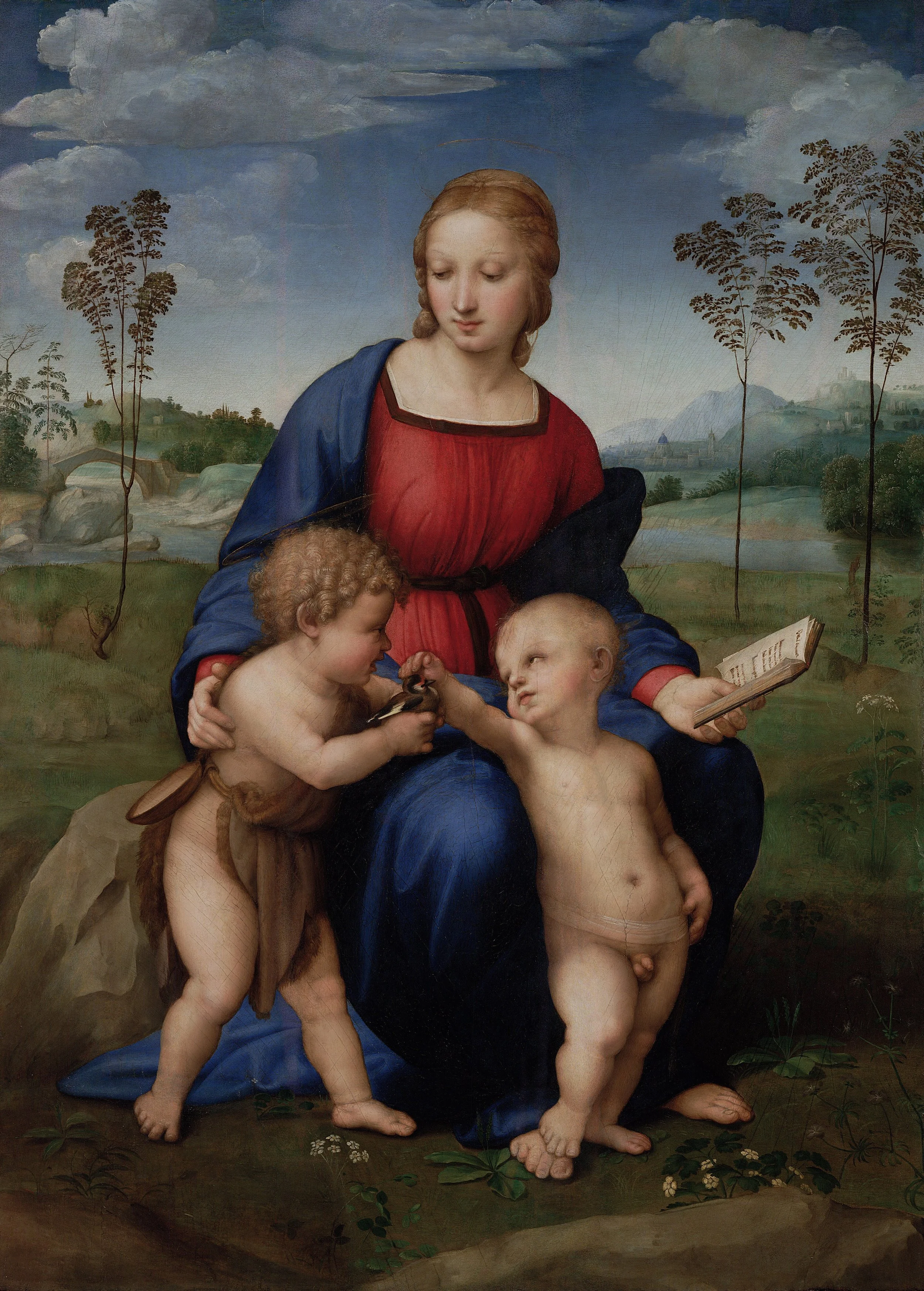
Raphael, Madonna of the Goldfinch, 1506, Uffizi Gallery, Wikimedia Commons, Public Domain
The meaning of the goldfinch in Renaissance art is largely connected to a medieval legend about the Passion of Christ. According to this legend, the European goldfinch received the bright red coloring on its face while trying to pluck a thorn from Christ’s crown. A drop of His blood fell upon the bird, leaving a permanent stain. This legend became an important part of Christian sacred art, and Renaissance artists used the goldfinch to symbolize Christ’s suffering and crucifixion. For example, in Raphael’s Madonna of the Goldfinch, the young St. John the Baptist offers a goldfinch to the Christ Child, foreshadowing Christ’s Passion.
2. Lily
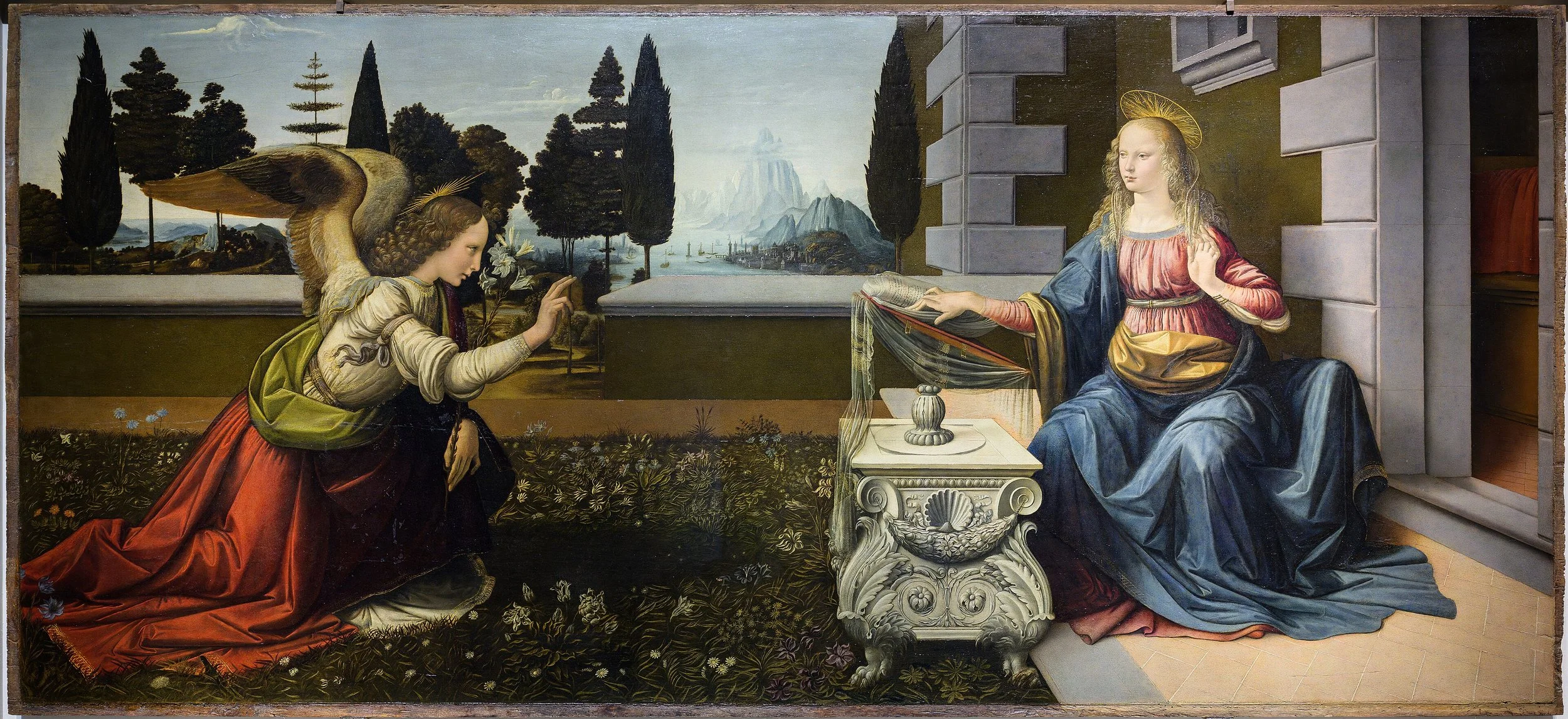
Leonardo da Vinci, Annunciation, c. 1472, Uffizi Gallery, Wikimedia Commons, Public Domain
The white lily is one of the most recognizable flowers in Christian art. Often associated with the Blessed Virgin Mary, the lily symbolizes purity, chastity, and virginity. The Archangel Gabriel is frequently portrayed holding white lilies while greeting Mary in Annunciation paintings, emphasizing her purity and virginity. In Leonardo da Vinci’s Annunciation, Gabriel offers Mary a lily. The white lily also appears in depictions of other saints known for their chastity, such as St. Catherine of Siena and St. Joseph.
3. Rose
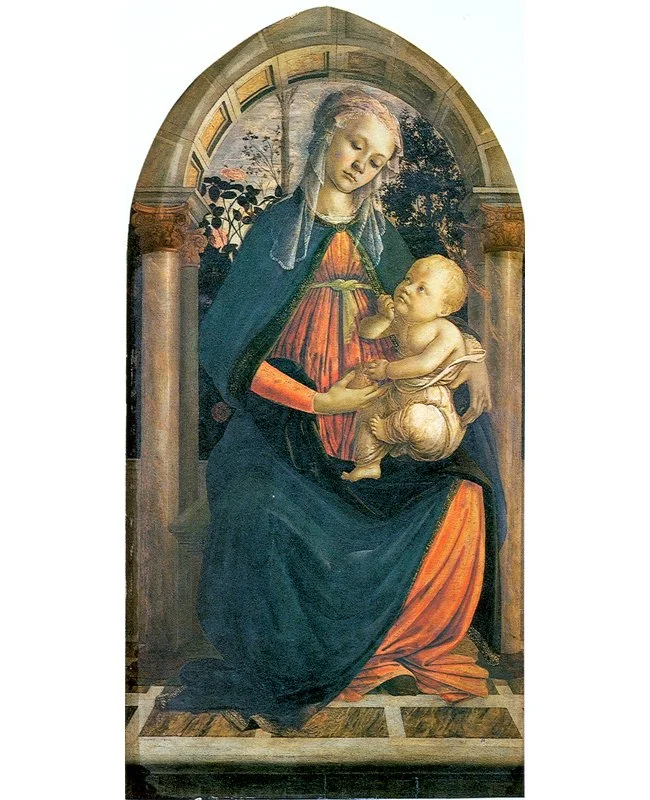
Sandro Botticelli, Madonna of the Rose Bower, c. 1470, Uffizi Gallery, Wikimedia Commons, Public Domain
The rose is another flower frequently found in Christian depictions of the Blessed Virgin Mary. The rose points to her perfect charity and beauty. In the eleventh century, St. Bernard of Clairvaux helped develop the imagery of Mary as a rose in his writings and sermons. Renaissance artists may have also had the Marian title Rosa Mystica, or Mystical Rose, in mind when including roses in their compositions. The colors of roses can even carry symbolic meaning: red or pink roses may allude to the Passion of Christ, while white roses signify purity. In Botticelli’s Madonna of the Rose Bower, thornless roses may further indicate Mary’s freedom from the stain of original sin.
4. Pomegranate
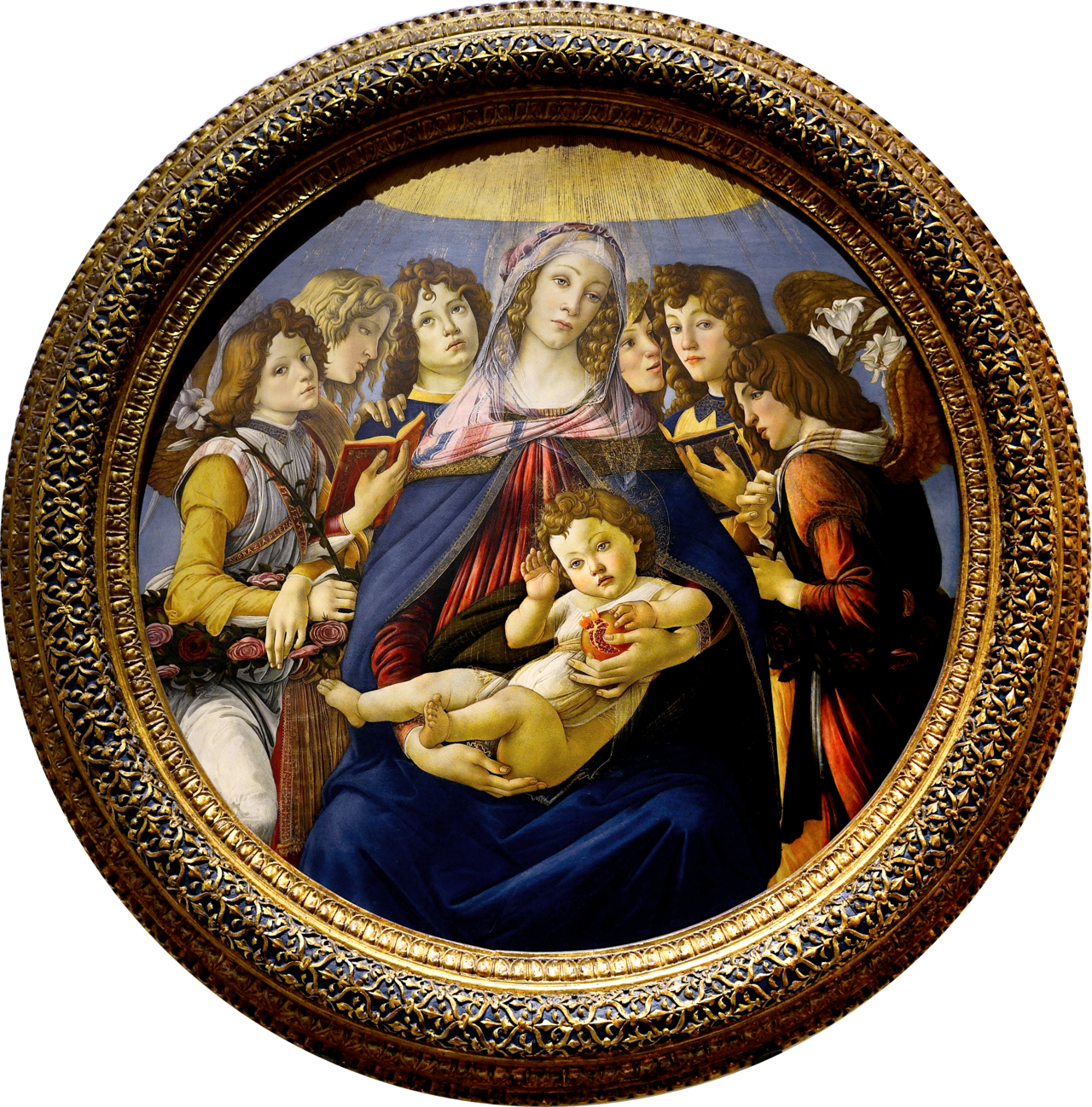
Sandro Botticelli, Madonna of the Pomegranate, c. 1487, Licensed under CC BY-SA 4.0 by Nanae on Wikimedia Commons
In Renaissance art, the meaning of the pomegranate is tied to Christ’s suffering and death. The split-open fruit reveals an abundance of red seeds, pointing to the Precious Blood shed by Christ during His Passion. The pomegranate was sometimes used by Christian artists such as Fra Angelico and Sandro Botticelli in paintings of the Madonna and Child, prefiguring the suffering that Christ would undergo. In his Madonna of the Pomegranate, Botticelli showed the Virgin Mary and Christ Child holding the round fruit with its jewel-like seeds. Some art historians also link the pomegranate to the Resurrection—the seeds bursting forth may represent Christ coming forth from the tomb.
5. Peacock

Fra Angelico and Fra Filippo Lippi, The Adoration of the Magi, c. 1440/1460, National Gallery of Art, Washington, D.C.
Since ancient times, the peacock has been associated with immortality. One long-standing belief held that its flesh did not decay after death. Christians adopted this belief and continued to associate the bird with immortality in light of Christ’s Resurrection. St. Augustine discussed the bird’s supposed incorruptibility in The City of God. In Christian art, the peacock became a symbol of the resurrection and eternal life. During the Renaissance, artists such as Fra Angelico and Fra Filippo Lippi incorporated the peacock into religious compositions. In their Adoration of the Magi, a peacock perches on the roof of the stable, where it may represent paradise or immortality.
6. Lamb
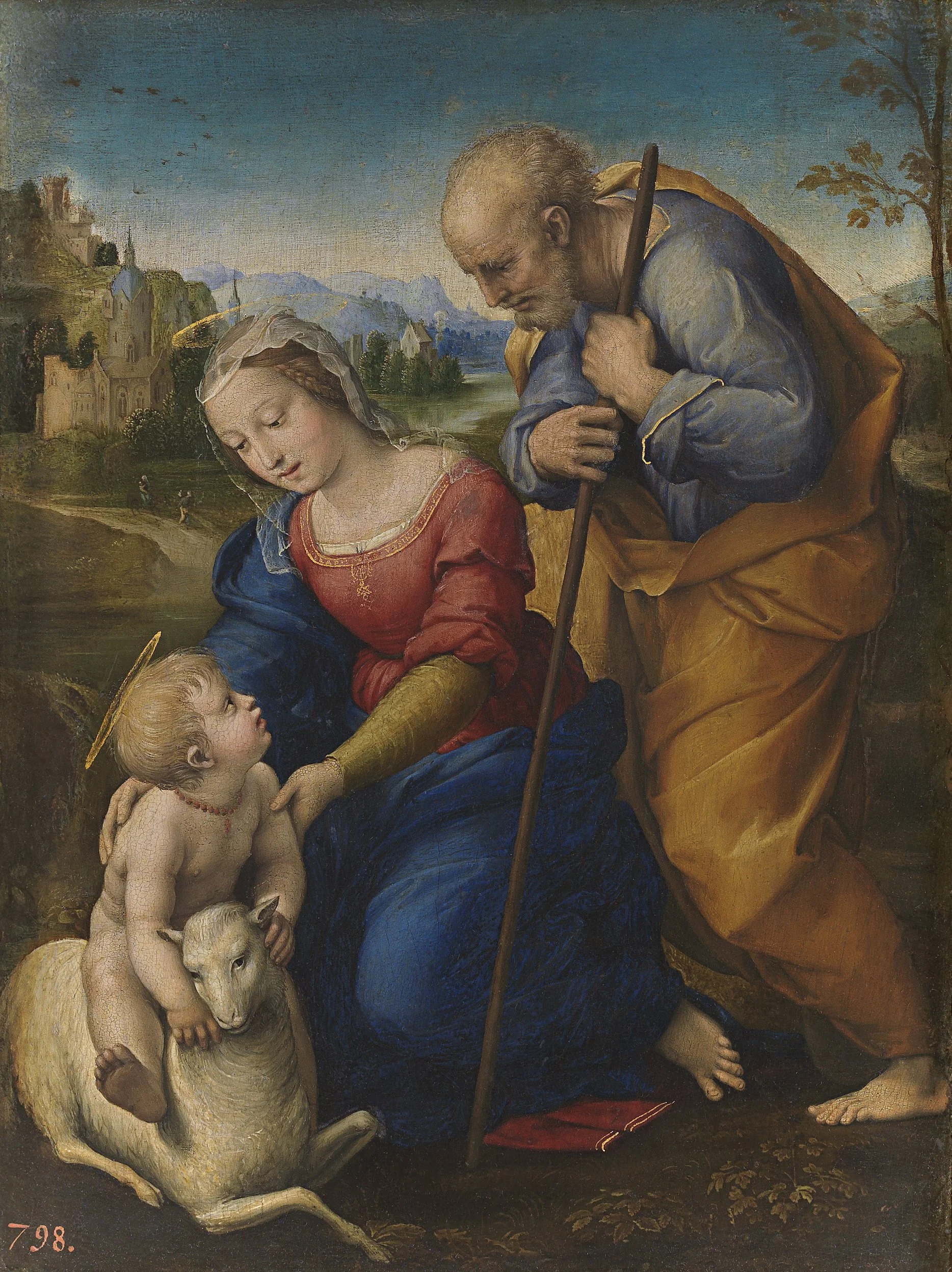
Raphael, The Holy Family with a Lamb, 1507, Museo del Prado, Wikimedia Commons, Public Domain
The lamb is a common symbol for Christ in theology and art. According to Christian theological tradition, Scripture presents Christ as the sacrificial Lamb who died to save humanity from sin and death. St. John the Baptist calls Jesus the “Lamb of God,” and the Book of Revelation also describes Jesus as a lamb. Renaissance paintings of Christ feature a lamb to indicate His purity, innocence, and the ultimate sacrifice of His life on the Cross. Raphael’s Holy Family with a Lamb, for example, portrays the Child Jesus astride a lamb.
7. Grapes
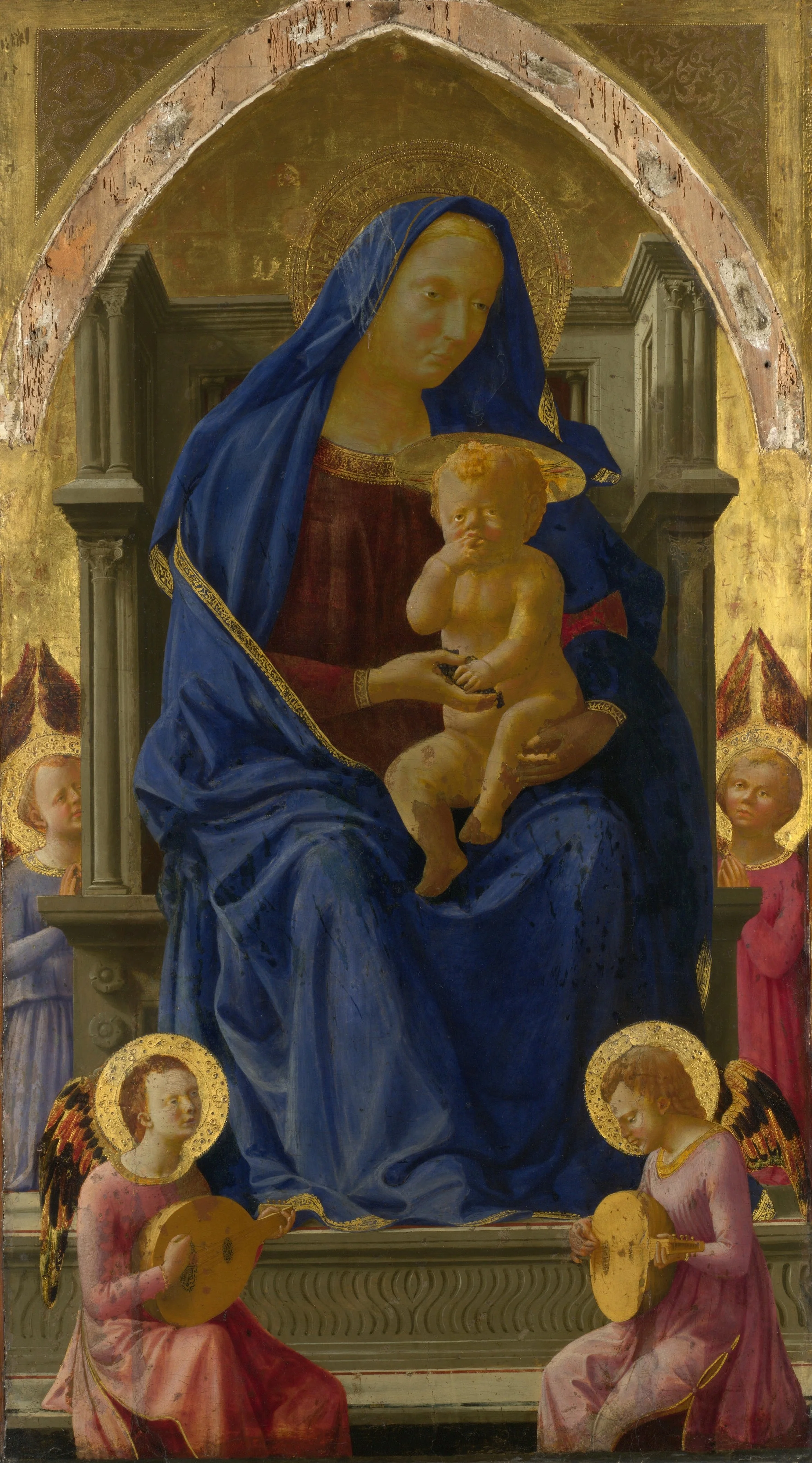
Masaccio, The Virgin and Child, 1426, National Gallery, London, Wikimedia Commons, Public Domain
In Christian art, grapes represent the Blood of Christ. The crushing of grapes calls to mind His suffering and crucifixion. Catholic teaching holds that the wine becomes the Blood of Christ during the consecration at Mass. This tradition stems from Christ’s own words at the Last Supper, spoken over a chalice of wine: “This is my blood” (see Matthew 26:28). Masaccio’s Virgin and Child shows the Child Jesus eating a bunch of grapes on His Mother’s lap, creating Eucharistic imagery that corresponds to the Crucifixion scene that once hung above this panel.
8. Apple
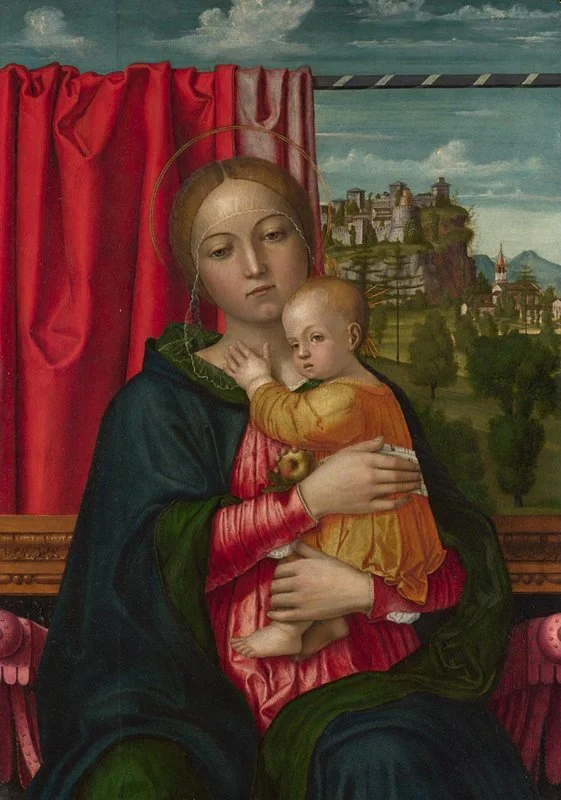
Francesco Morone, The Virgin and Child, c. 1520-1529, National Gallery, London, CC BY-NC-ND 4.0
The apple has a twofold meaning when depicted in Renaissance paintings. In many instances, it symbolizes the disobedience of Adam and Eve in the Garden of Eden. The serpent tempted Eve to eat the forbidden fruit, and she in turn convinced Adam to try it. While Scripture does not explicitly identify the fruit as an apple, tradition has established it as such. As a result, the apple stands for original sin and the Fall of Man. In paintings of the Madonna and Child, the apple may conversely symbolize the salvation of mankind, since Christ is understood to be the Second Adam. This latter meaning is implied in The Virgin and Child by Francesco Morone, which portrays the Child Jesus grasping an apple in one hand.
9. Dove
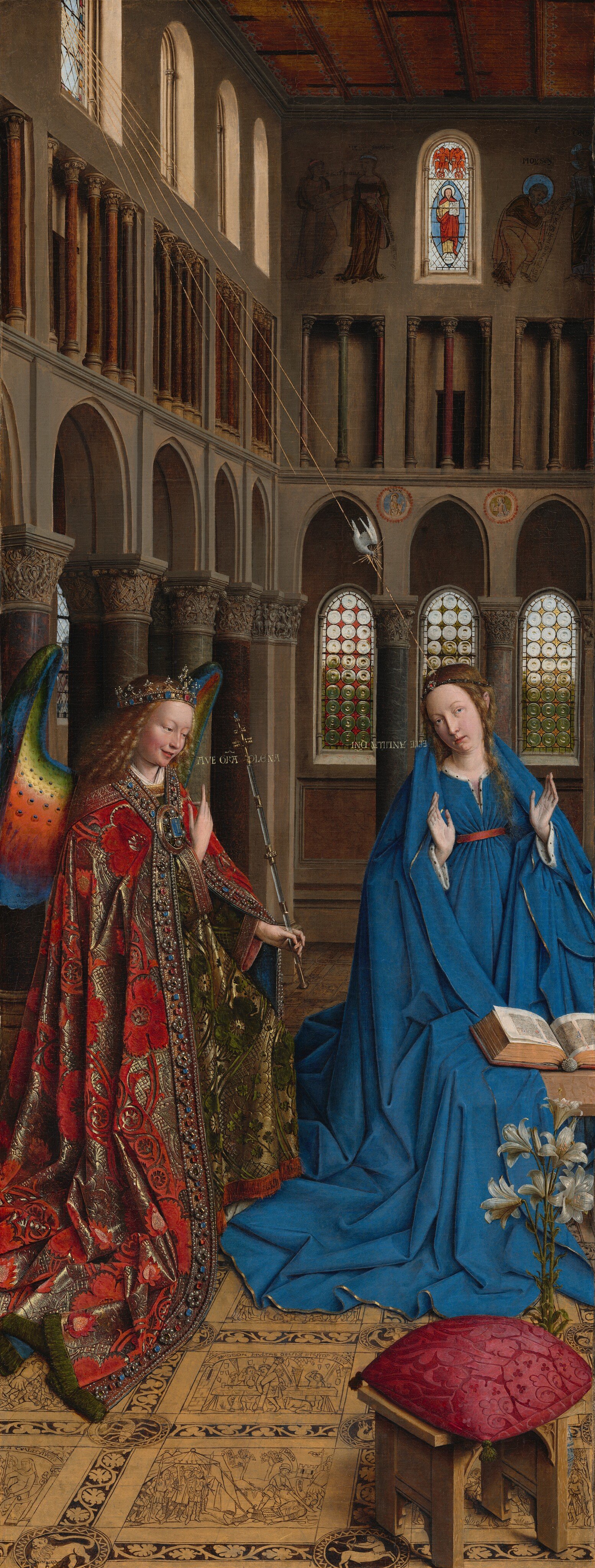
Jan van Eyck, The Annunciation, c. 1434/1436, National Gallery of Art, Washington, D.C.
Since early Christian times, artists have used the dove to represent the Holy Spirit. Renaissance artists continued this tradition, particularly in compositions of the Annunciation and Baptism of Christ. The imagery of the dove comes directly from Scripture. During Christ’s Baptism, the Holy Spirit descended upon Him like a dove (see Matthew 3:16). The white plumage of the bird also symbolizes purity and grace. Jan van Eyck, best known for the Ghent Altarpiece, depicted the Holy Spirit flying toward the Virgin Mary in both of his surviving Annunciation panels. This shows that the divine presence is coming down upon her, enabling her to miraculously conceive Jesus Christ, the Second Person of the Holy Trinity.
10. Carnation
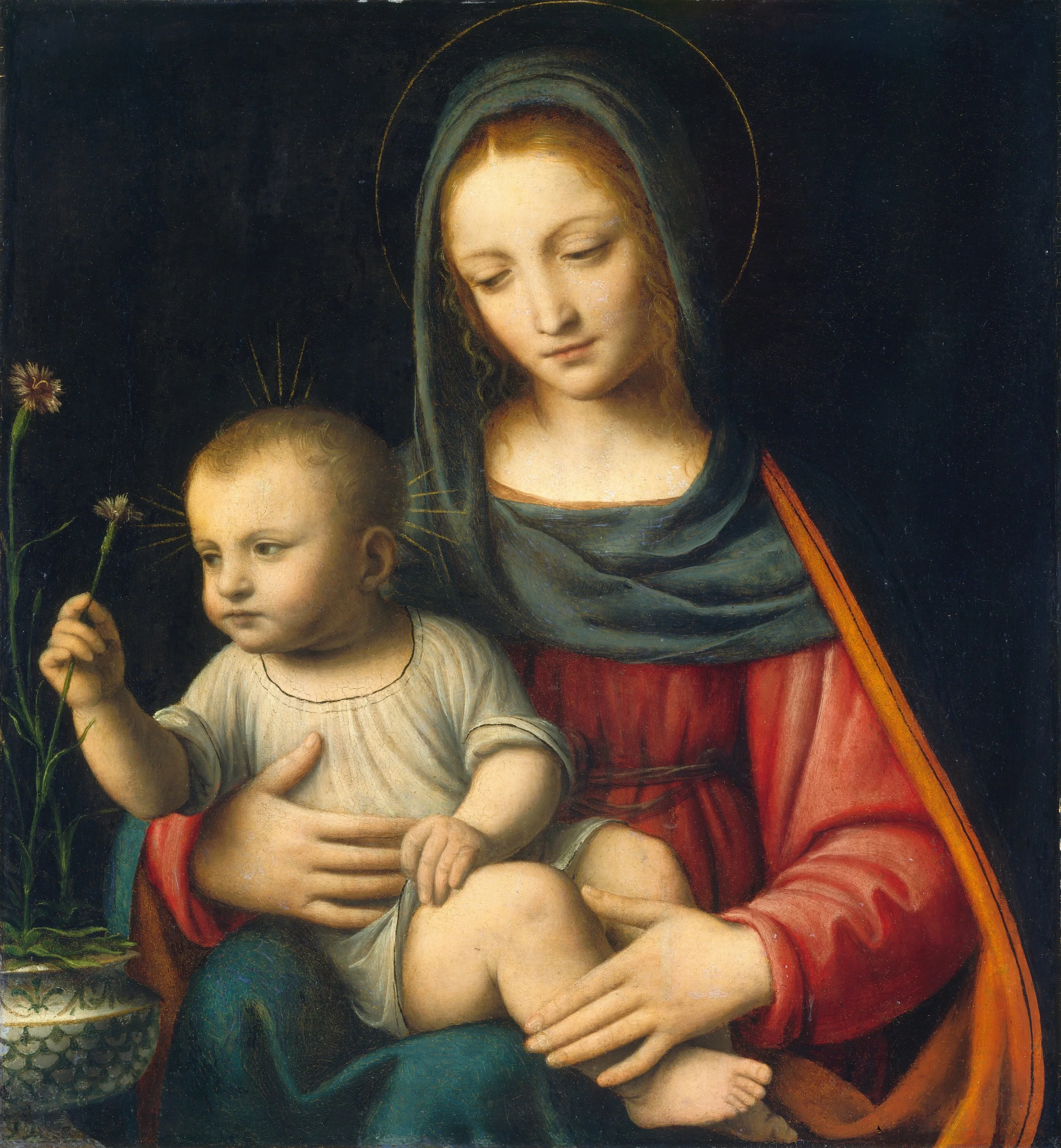
Bernardino Luini, The Madonna of the Carnation, c. 1515, National Gallery of Art, Washington, D.C.
Carnations with red or pink coloring can represent the divine love that characterized Christ’s sacrificial offering on the Cross. The scientific name for the carnation is Dianthus, which comes from the Greek words meaning “divine flower.” This flower recalls the eternal love of God, who sent His only Son to save mankind. Carnations also symbolize betrothal and marital love. In paintings of the Madonna and Child, carnations may refer to Christ as the Bridegroom and Mary as the personification of the Church as the Bride of Christ. The Madonna of the Carnation by Bernardino Luini portrays the Child Jesus holding a carnation stem.
Conclusion
Renaissance artists often used common flowers, animals, fruits, and other items to communicate deeper theological meanings. These objects could represent core beliefs of the Christian faith, including the Passion of Christ. By learning to recognize these symbols, we are able to understand Renaissance paintings more fully and appreciate what artists are trying to communicate about Christ and the Christian faith.