
3 Reasons Every Catholic Home Needs Sacred Art
People care deeply about making their house into a home—a space that is both functional and beautiful. Perhaps this is why interior decorating and home renovation TV shows have risen to global prominence over the past few decades. They reflect an interior desire for order and beauty, as well as a place where families can make memories in the years to come.
For Catholics, the home takes on even greater significance because the Christian family is a domestic church. The Christian family is made up of believers united in the Body of Christ. They are called to become a community of life and love, and the home plays a role in affirming and shaping this identity. A Catholic should be mindful of this mission when decorating the home.
The Catholic Church has a tradition of sacred art that can serve the Christian family. For centuries, the Church has cultivated and preserved a vast treasury of sacred art. These works are meant to strengthen the faith of believers and direct their attention toward God. For Christian families, this is particularly helpful in supporting their identity as the domestic church. Here are three reasons why sacred art belongs in every Catholic home:
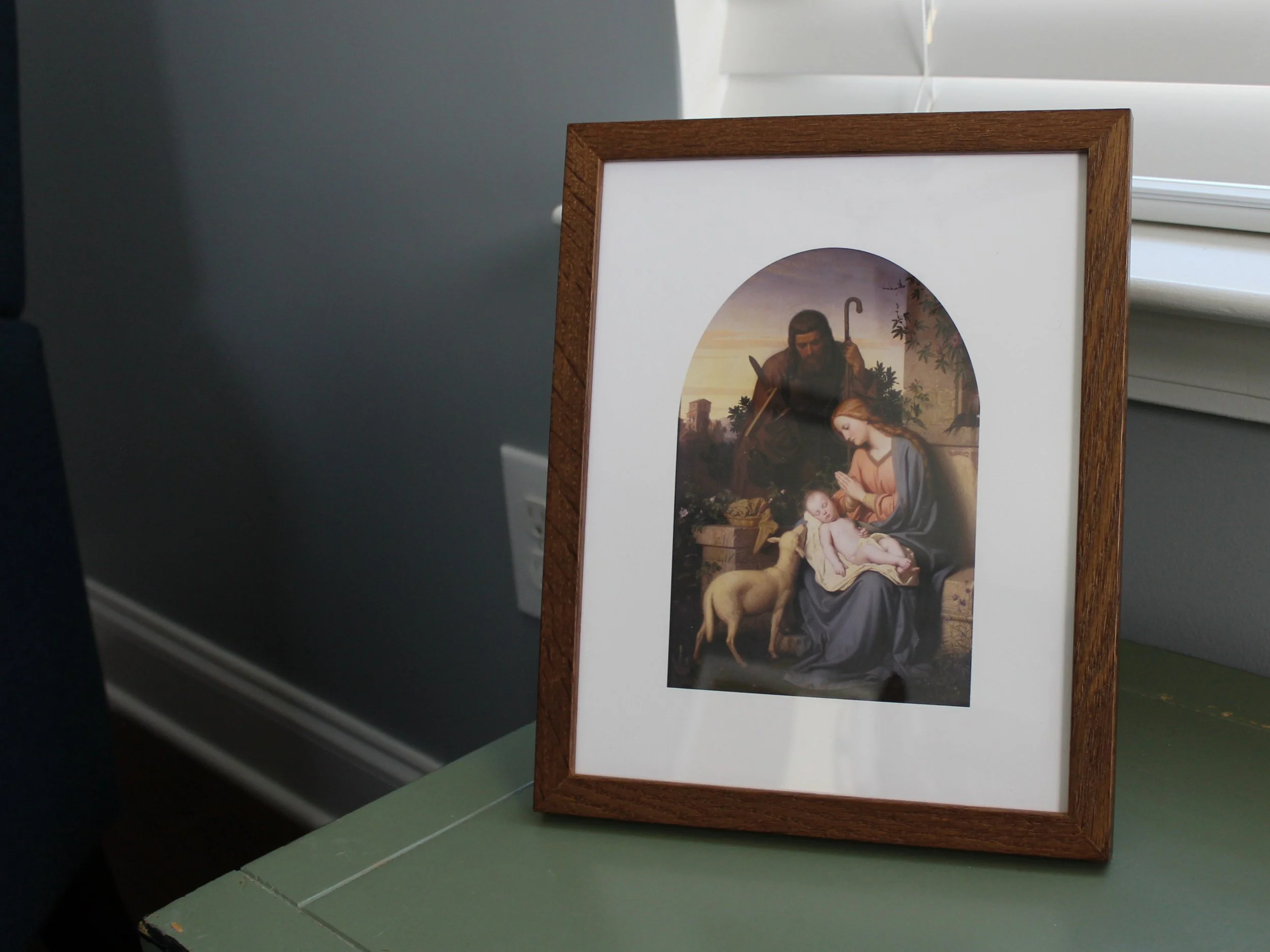
1. Sacred art reminds us to pray.
Paintings, statues, mosaics, stained glass windows, crucifixes, and other works of sacred art are a familiar sight to those entering a Catholic church. The Church encourages the decoration of sanctuaries, recognizing its value in fostering devotion among the faithful. Humans are visual creatures, and we easily become distracted. Sacred art helps channel our attention toward the sacrifice of the Mass, enabling us to enter more deeply into a reality that we cannot physically see—Heaven touching earth as the Eucharist makes Christ present among us.
In a similar way, it is useful to have holy objects at home that prompt us to lift our minds and hearts to God. Daily life comes with a seemingly endless stream of tasks and worries. By intentionally placing religious statues and images around the home, we remember to pray throughout the day. This could take a simple form, such as offering up our suffering or invoking Mary’s intercession for a special intention. Having sacred art within the Catholic home helps place Christ at the center of all its activity, making Him the King of that dwelling place. In this way, He comes to reign in the hearts of all who live there, particularly through prayer.
2. Jesus, Mary, and the saints are our family.
It is typical for people to have pictures of their family in their homes. We like to be reminded of our loved ones, especially when they are absent. As members of the Body of Christ, we also have a family in Heaven. Through Baptism, God welcomes us into His family as His adopted sons and daughters. Jesus, Mary, and the saints are all part of that family, and they desire to have a relationship with us.
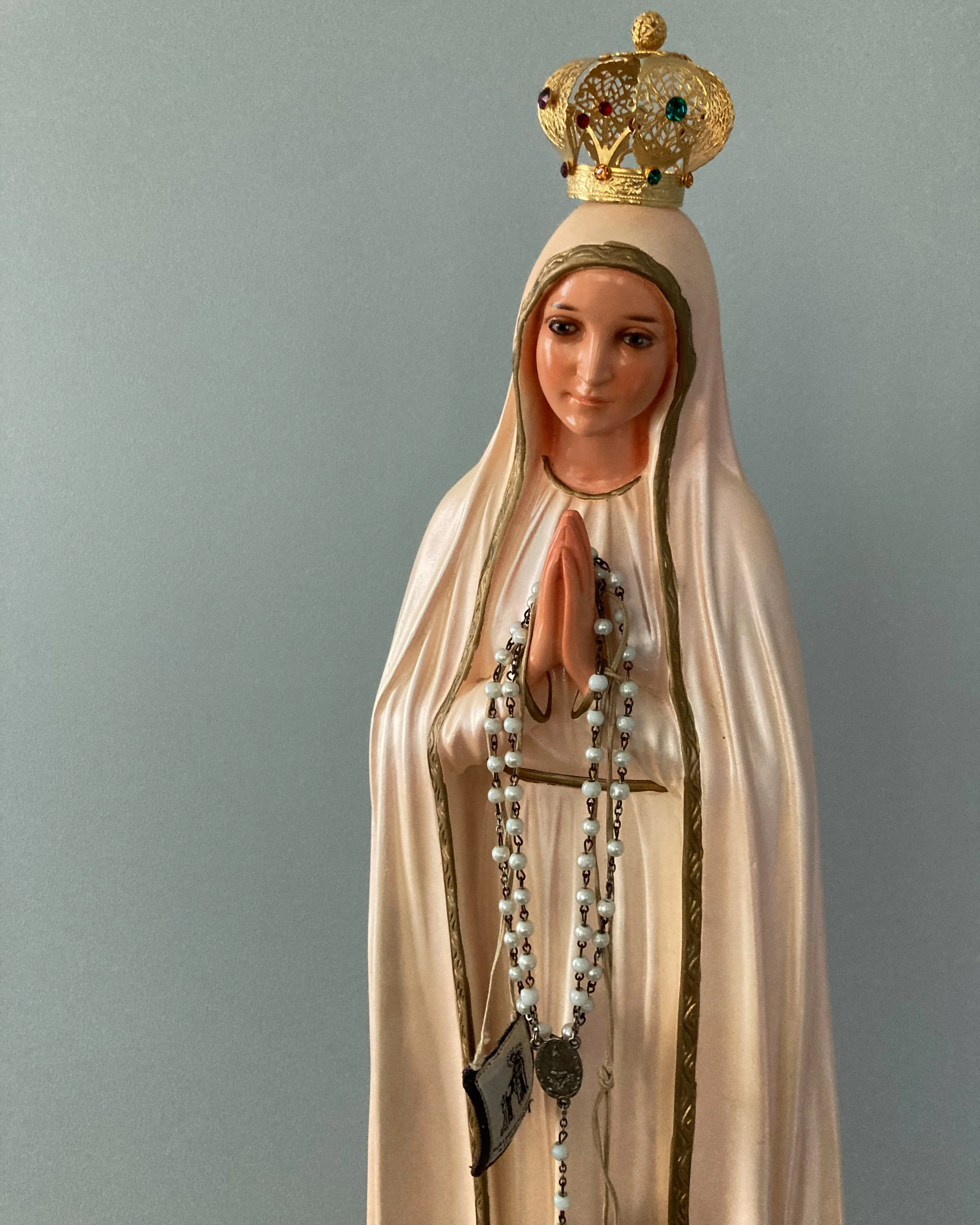
While we cannot see the communion of saints, we are spiritually united to them. Having Catholic fine art prints or statues of Jesus, Mary, and our patron saints prompts us to seek their intercession and become closer to them now, as we will one day be with them in Heaven. Sacred art therefore gives visible expression to the communion of saints, reminding us that our Catholic faith is lived in union with the Church in Heaven and on earth.
3. Sacred art reflects divine beauty.
People decorate their homes because they have an innate desire for beauty. Sacred art possesses a divine beauty because it directs us beyond the created world toward God. It depicts Jesus, the Second Person of the Trinity, and Mary, who is the tota pulchra (all-beautiful). Statues and images of the saints represent men and women transformed by grace. As a result, sacred art allows a glimmer of divine beauty to break through into our everyday lives. This beauty contributes to an environment of tranquility, joy, and hope. It communicates truth and goodness that strengthens our faith, even amid the hardships that afflict us as individuals and within our families.
What Next?
Once the decision is made to include sacred art in a Catholic home, more questions arise. How much? What kind? The options can be overwhelming, especially with the numerous Catholic shops available online. On the other hand, the amount of choice allows families to find sacred art that suits their particular tastes and decorating styles. The growing number of AI-generated images circulating on the Internet can also make the selection process more difficult. It’s important to learn how to recognize AI-generated images and seek out artwork created by human artists instead.
Decorating a Catholic home does not need to be a one-and-done job. It should involve discernment and intentionality, as well as a willingness to wait for the right items. A good place to start might be with the holy objects traditionally found in Catholic homes: a crucifix, a statue of the Blessed Virgin Mary, and images of the Sacred Heart of Jesus and Immaculate Heart of Mary. Beyond that, choosing sacred art can reflect the special devotions of family members, such as Divine Mercy, Our Lady of Guadalupe, St. Joseph, or other saints.
Having sacred art in the Catholic home supports the mission of the family as the domestic church. More than just decoration, sacred art ultimately reminds the Catholic family that their earthly dwelling is not their final home. Rather, its members are journeying together toward a common destination: Heaven. Sacred art encourages us to pray without ceasing along the way, directing our inner gaze toward those who await us there: the Blessed Virgin Mary, the angels and saints, and God Himself.