
Fra Angelico’s San Marco Frescoes
From 1438 to 1443, the Convent of San Marco in Florence was the site of a vast artistic project headed by Fra Giovanni of Fiesole, a Dominican friar known as Fra Angelico (c. 1395–1455). Reconstruction of the monastery had begun in 1437 at the direction of Cosimo il Vecchio de’ Medici, a powerful Florentine banker, politician, and patron of the arts. He had hired his architect, Michelozzo di Bartolomeo, to renovate the pre-existing medieval monastery in the Renaissance style. Cosimo commissioned Fra Angelico and his assistants to decorate the Convent of San Marco with frescoes, which numbered about fifty in total upon completion.
Who painted the San Marco frescoes?
The San Marco frescoes were painted by Fra Angelico and his workshop. Born in Tuscany around 1395, Angelico’s birth name was Guido di Pietro. As a youth, he received artistic training in Florence. He later became a Dominican friar at the Convent of San Domenico in Fiesole. Angelico painted frescoes for the friary, including the Fiesole altarpiece, along with other private commissions.
In 1436, Angelico and a group of Dominican friars moved from Fiesole to the Convent of San Marco. They lived in huts when Michelozzo began reconstruction of the dilapidated buildings the following year. As soon as the new walls were ready, Angelico and his assistants went to work on sacred art for the monastery. They executed the San Marco frescoes over the course of the following years.
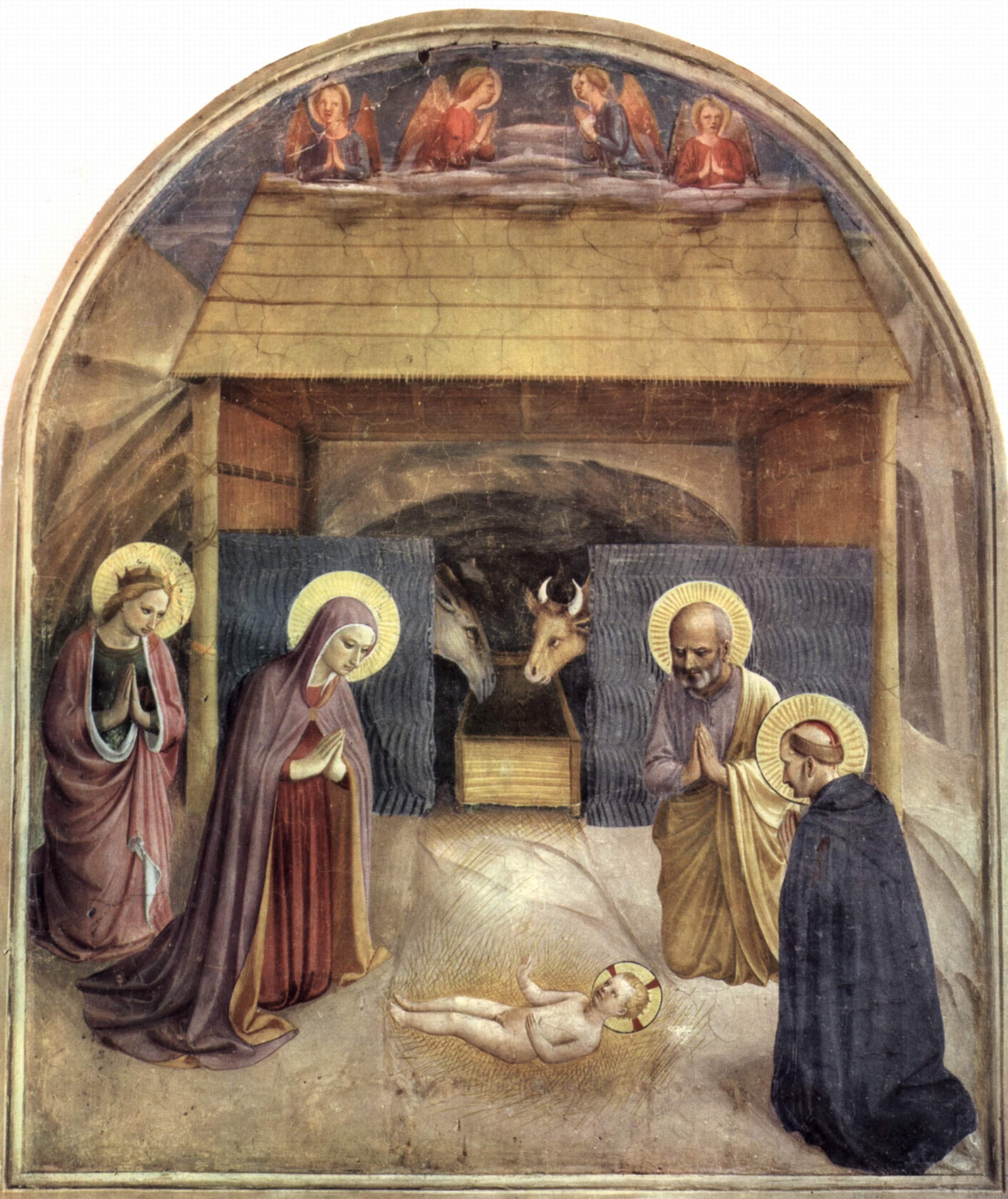
Fra Angelico, Nativity, c. 1440-1441, Museum of San Marco, Wikimedia Commons, Public Domain
How many frescoes are in the Convent of San Marco?
There are around fifty frescoes in the Convent of San Marco. The surviving frescoes are located throughout the convent, including the cloister, chapter house, corridors, and forty-four dormitory cells on the upper floor. The purpose of the San Marco frescoes was to create an environment that fostered meditation on the mysteries of the Christian faith. The friars would have scenes from the Gospel before their eyes as they went about their daily tasks, enabling them to direct their thoughts to spiritual realities and prayer.
Art historians generally attribute about eleven to thirteen frescoes exclusively to Angelico. One of his most recognizable frescoes is The Annunciation, a depiction of the Archangel Gabriel announcing the birth of the Savior to the Blessed Virgin Mary. Two other significant frescoes completed by Angelico’s hand are The Transfiguration and The Mocking of Christ. All three of these paintings are located in dormitory cells. The friars may have contemplated these scenes while praying the Rosary, a Catholic devotion that became closely associated with the Dominican order. This prayer involves meditating on major events from the life of Christ, which are referred to as Mysteries. The San Marco frescoes were rooted in Dominican spirituality and intended to support the friars' prayer and contemplation.
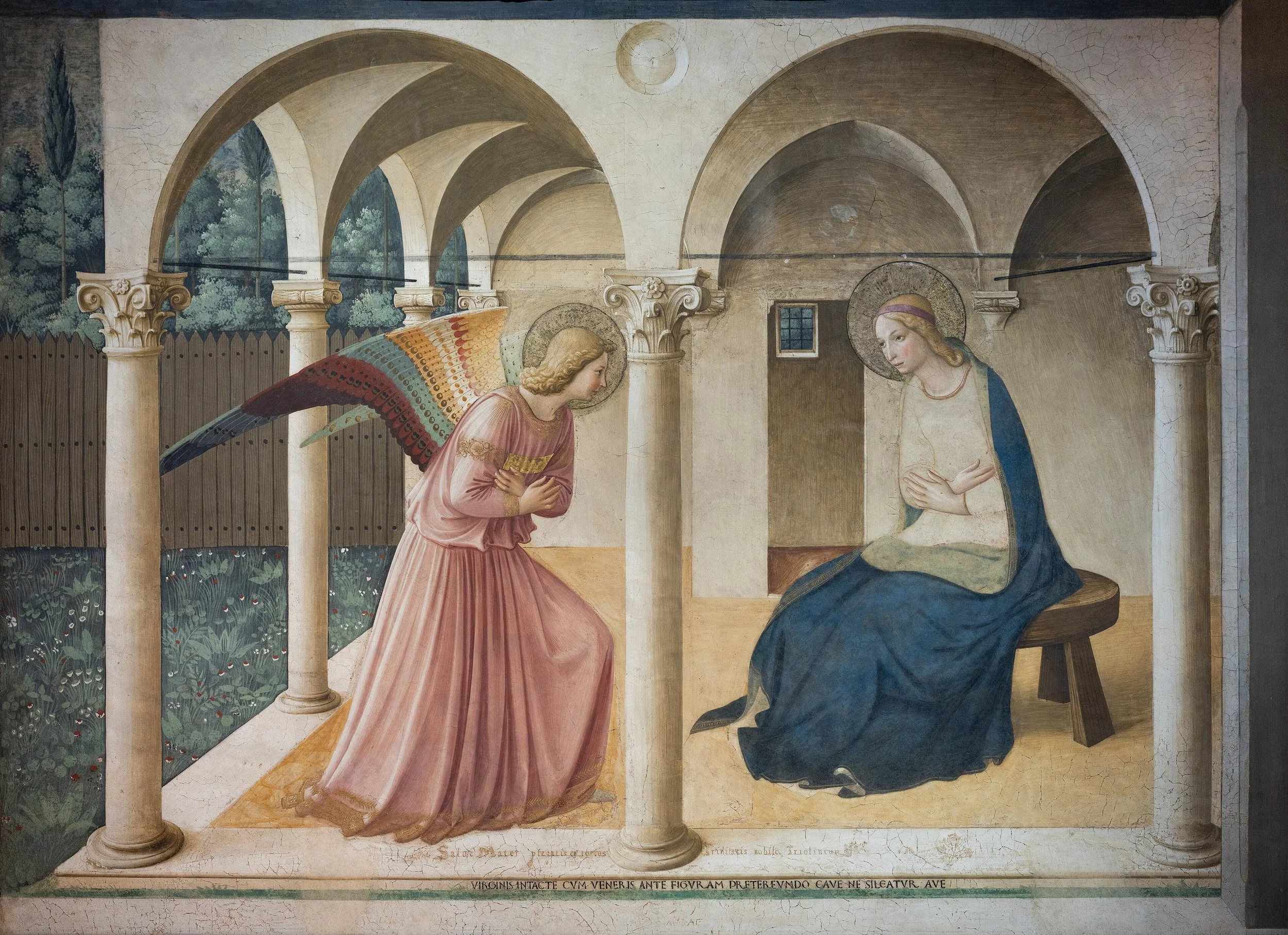
Fra Angelico, The Annunciation, c. 1440-1442, Museum of San Marco, Wikimedia Commons, Public Domain
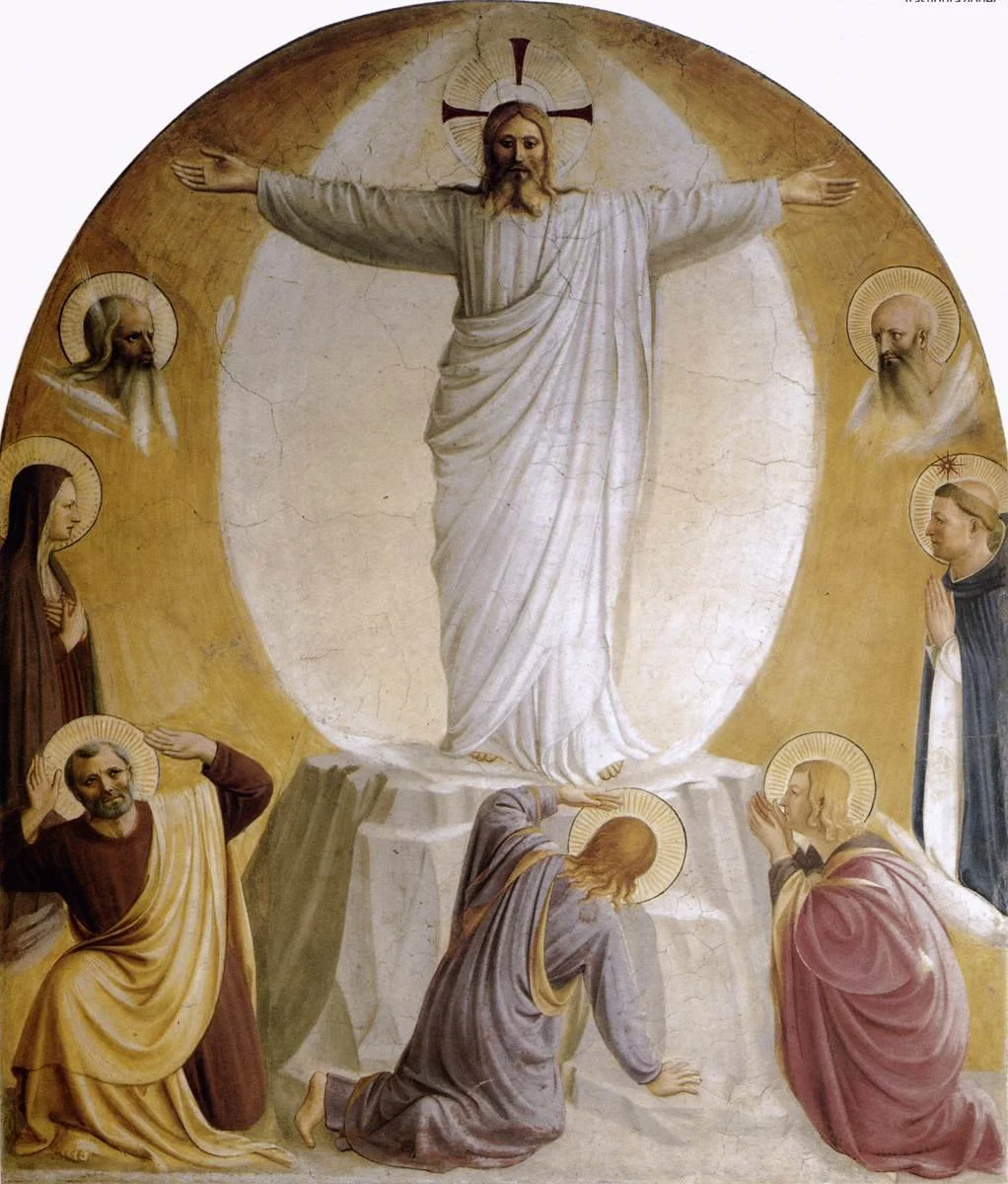
Fra Angelico, The Transfiguration, c. 1438-1439, Museum of San Marco, Wikimedia Commons, Public Domain
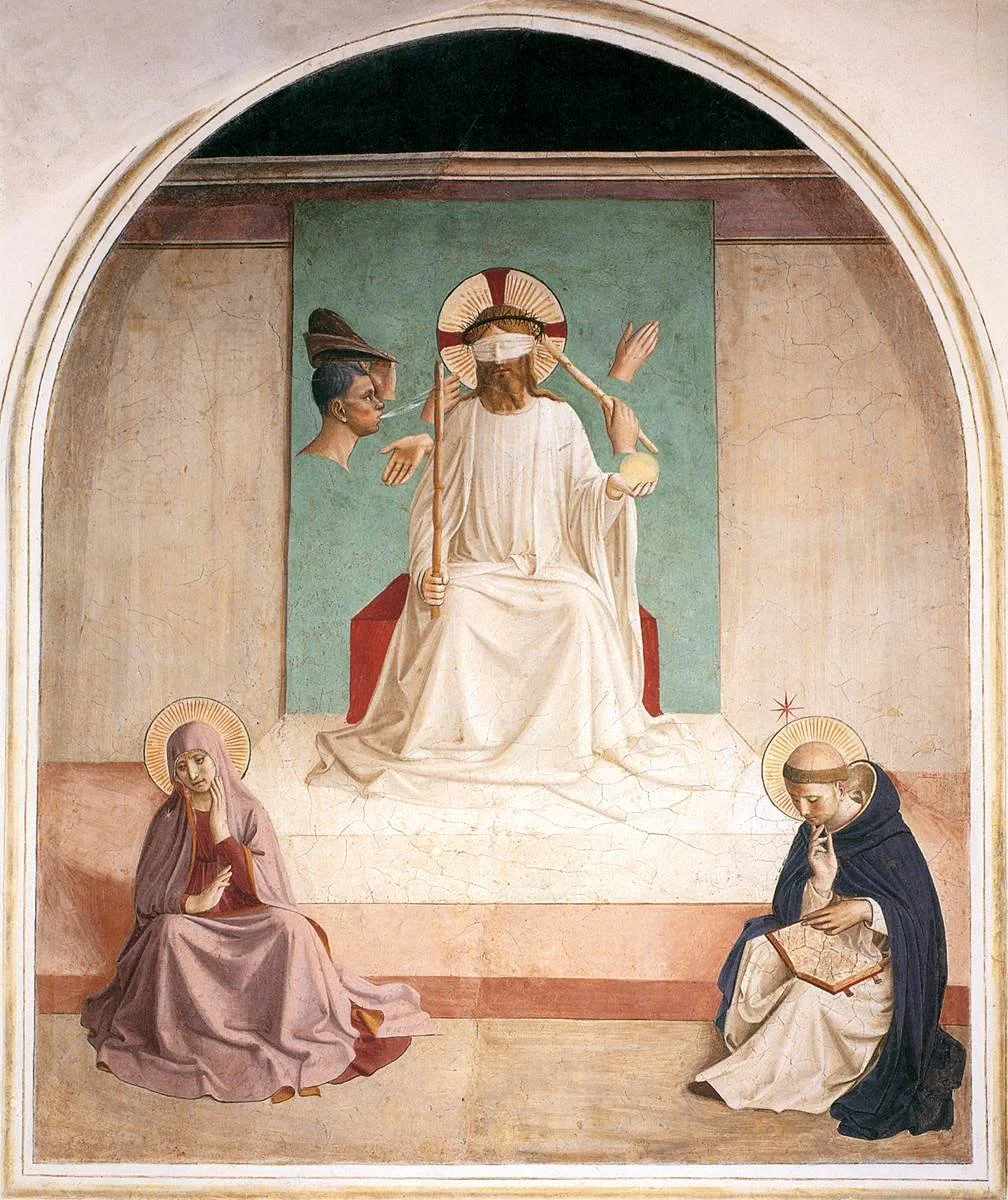
Fra Angelico, The Mocking of Christ, c. 1438-1439, Museum of San Marco, Wikimedia Commons, Public Domain
About ten to fifteen frescoes were likely rendered by Angelico in collaboration with his assistants. He probably painted the most important figures, like Christ and the Virgin Mary, while his workshop completed the other portions. The young painter Benozzo Gozzoli was among the artists connected with Angelico's workshop and is believed to have contributed to the San Marco project.
Angelico’s workshop largely completed the remaining twenty to twenty-five frescoes in San Marco, including those in the dormitory cells for novices. They relied on drawings of the compositions designed by Angelico. Seven cells in the novices’ dormitory featured a depiction of St. Dominic praying before the Crucified Christ.
Why are the San Marco frescoes important?
The San Marco frescoes are important because they are considered one of the most extensive surviving decorative programs made for a religious community in Western art. The paintings are especially remarkable because most of them are preserved in their original location. While many works of Renaissance art have been moved from churches to museums, the majority of the San Marco frescoes can be viewed exactly where they were painted.
Angelico’s frescoes at San Marco also contain elements that mark the transition from the International Gothic style toward the early Renaissance. He used linear perspective in his compositions to create three-dimensional spaces populated by human figures modeled with convincing volume. His frescoes also exhibit a naturalism without detracting from their sacred character, enabling viewers to encounter the life of Christ and the saints in a more personal way.
Conclusion
Fra Angelico and his workshop made a series of frescoes for the Convent of San Marco as part of its renovation, which was financed by Cosimo de’ Medici. The paintings are a beautiful example of sacred art from the fifteenth century. The depictions of Christ, the Virgin Mary, and the saints were intended to direct the minds and hearts of the Dominican friars toward God, leading them into prayer and contemplation. Today, visitors can view the frescoes at the Museo di San Marco, which occupies the original Dominican convent in Florence.