
Visio Divina: History, Meaning and How to Pray with Sacred Art
A Latin phrase meaning “divine seeing,” visio divina is a form of prayer that involves meditating on sacred art. The practice of visio divina is rooted in the Catholic Church’s rich tradition of sacred art. Since early Christian times, sacred art has served a devotional and catechetical purpose, visually guiding the faithful to more deeply contemplate and understand the mysteries of the faith.
Visio divina is not meant to replace meditation on Scripture, the Word of God. Rather, it is meant to complement it. The Catechism states that art is a “form of practical wisdom, uniting knowledge and skill, to give form to the truth of reality in a language accessible to sight or hearing” (CCC 2501). Sacred art must therefore be inspired by the deposit of faith, aiming to communicate truth through beauty. Throughout the centuries, Catholic artists have relied on Scripture and Tradition to guide their choice of religious subjects and how to depict them.
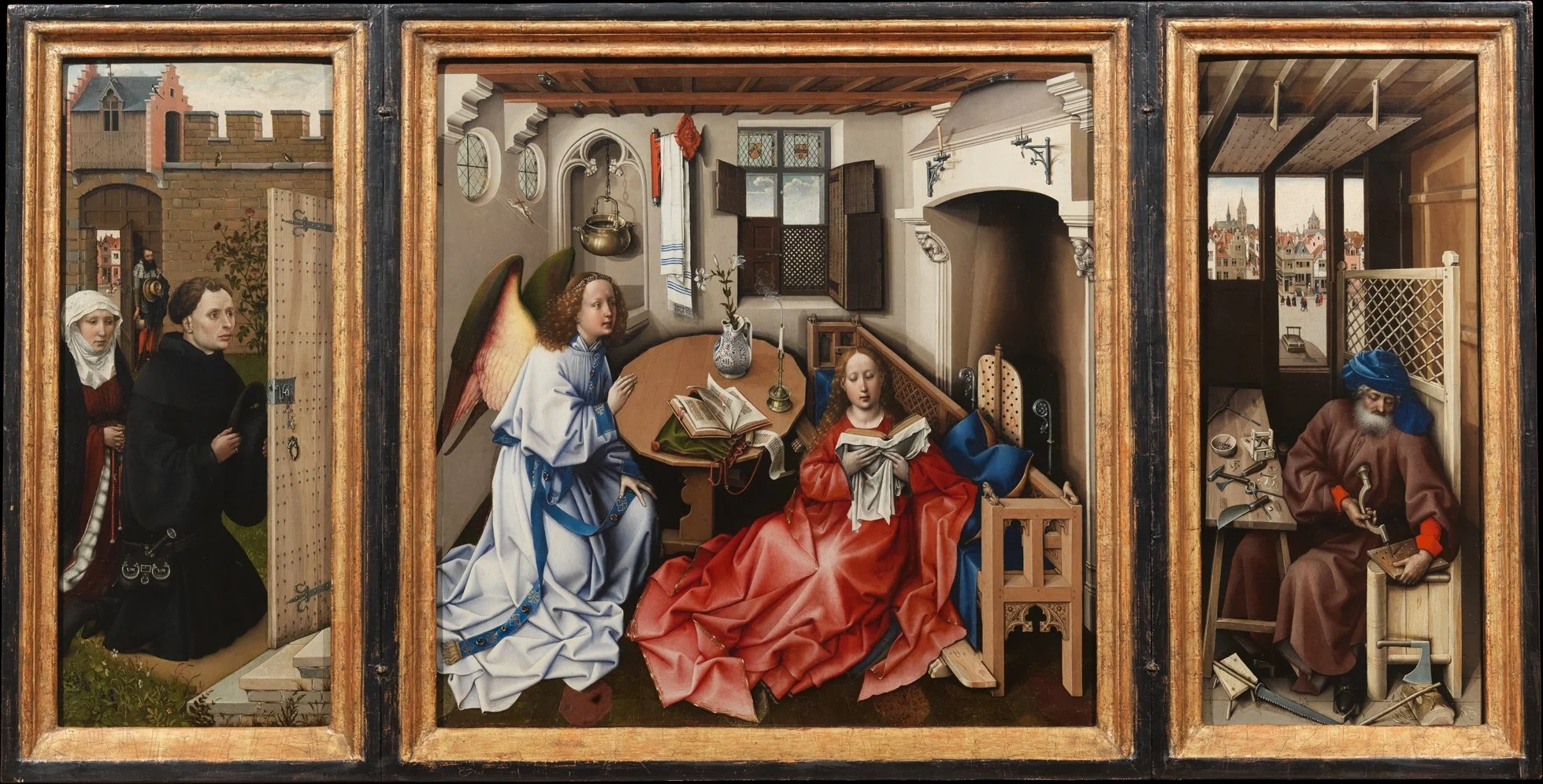
The Merode Altarpiece by the Workshop of Robert Campin is an example of a religious artwork commissioned for private devotion (The Metropolitan Museum of Art).
The History of Visio Divina
While large altarpieces, such as the Ghent Altarpiece, take the most prominent place in Christian art history, an abundance of personal devotional art shows that sacred art was not confined to public spaces of worship. During the Middle Ages, the commissioning of smaller artwork for private devotion increased significantly. Wealthy individuals acquired different types of objects, from diptychs to illuminated manuscripts. These could be used for visio divina, guiding the viewer to contemplate events taken from Scripture.
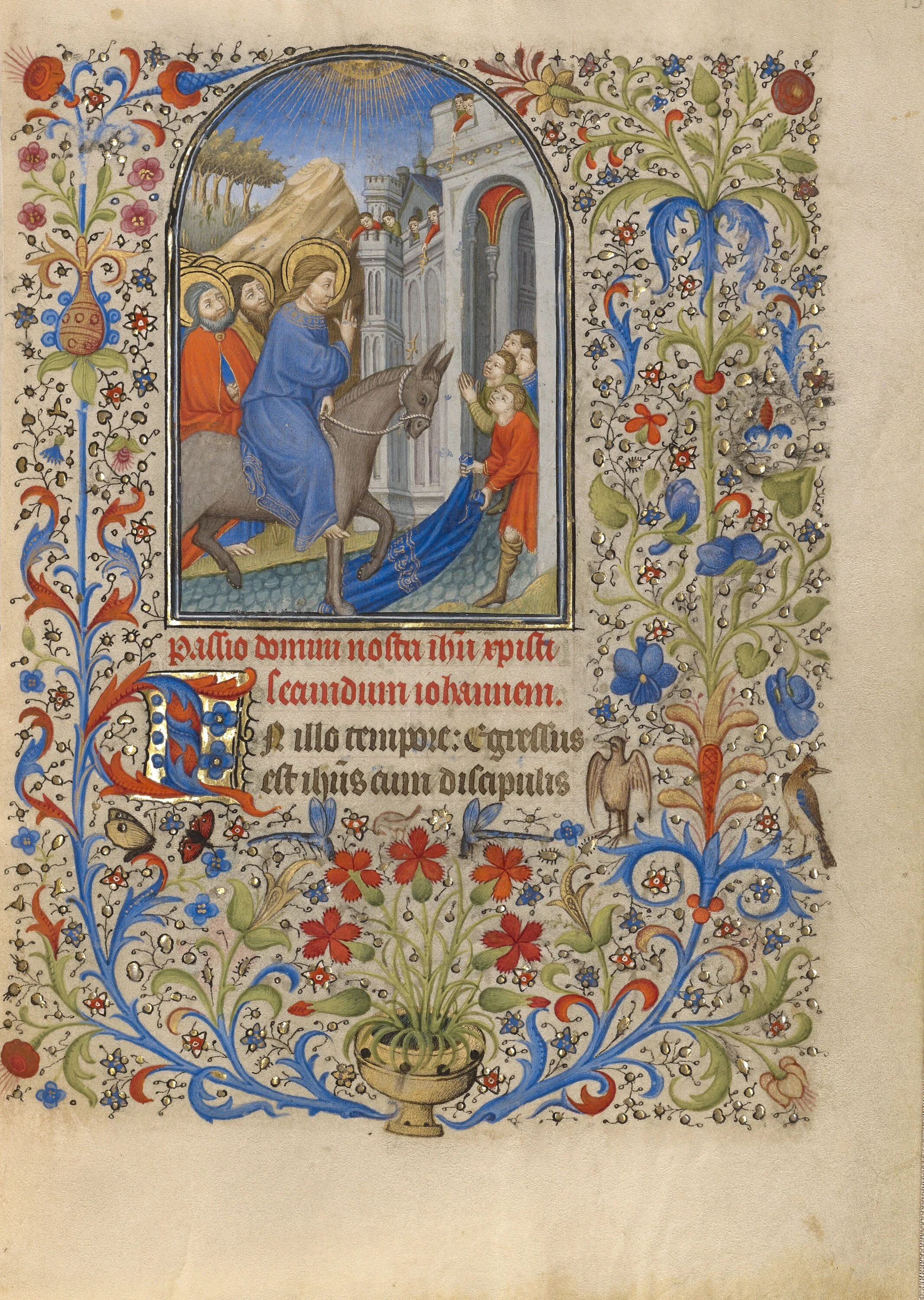
An example of an illuminated manuscript from Paris, c. 1420 (The J. Paul Getty Museum).
In the 17th century, art became more accessible to a larger population. An emerging middle class of European merchants created a new market for private religious artwork, which was made more affordable by mass production and cheaper materials. Prominent artists would set up workshops that made multiple copies of the same composition. For example, the Spanish Baroque painter Francisco de Zurbarán created several versions of the Agnus Dei, or Lamb of God, for private devotional use. From the 17th century onward, the distribution of sacred art continued to expand due to the Industrial Revolution and technological advancements.
Finding Visio Divina Images
Today, sacred art is easily accessible thanks to the Internet and color printing technology. However, it can still be difficult to find and select visio divina images. Many sacred artworks are buried within online museum collections, making works by Catholic masters hard to locate. Part of our mission at Seek What Is Above is to spare you from this time-consuming task. Our blog and shop feature a variety of sacred art, offering a thoughtful selection of images suitable for visio divina. We strive to help people deepen their spiritual life through exposure to the beauty of sacred art.
Visio Divina in Five Steps
The five steps of visio divina are adapted from lectio divina, the traditional practice of prayerful meditation on Sacred Scripture. “Lectio” can simply be swapped for “visio.” Here is an outline of how to pray visio divina with sacred art:
1. Prepare: Select a sacred artwork that you would like to meditate on. Find a quiet place that will enable you to focus and lift your mind and heart to God.
2. Visio: Look at the image. What do you see? What details did the artist include in their depiction? You may also refer to a relevant Scripture passage, although this isn’t required.
3. Meditatio: Meditate and ask God what He may be communicating to you through the sacred image. Is there a particular detail that He is drawing your attention to? Are any memories or emotions coming up for you?
4. Oratio: Respond to God in a prayer. Talk to Him about what He has placed on your heart.
5. Contemplatio: Be still and rest in the presence of God. Finish this time of prayer by simply receiving God’s love and the graces that He desires to give you.
Visio divina is a simple method of praying with sacred art, taking just 10 to 15 minutes. The beauty of sacred art can become a path to encountering God, and visio divina provides a concrete way of walking that path. When Catholic art is firmly rooted in Scripture and Tradition, it conveys truths regarding salvation history and the mysteries of the faith. The Catholic Church continues to preserve and foster its heritage of sacred art for this reason, recognizing its devotional and catechetical value for the faithful.