
7 Famous Paintings of St. Francis of Assisi
For a saint known for his humility, St. Francis of Assisi has inspired an extraordinary number of paintings in Christian art history. Art historians estimate that images of Francis painted after his death number in the tens of thousands. El Greco and his workshop produced over 130 paintings alone, making Francisco de Zurbarán’s roughly 40 depictions look modest. Some of the best paintings of St. Francis of Assisi were created by other prominent religious artists such as Giotto, Jan van Eyck, Caravaggio, and Murillo. A glance at art history suggests that no major Catholic master’s portfolio was complete without depicting St. Francis of Assisi.
Regardless of the hypothetical objections Francis himself would make to his many portraits, it seems fitting that the man heralded as the “Second Christ” has been portrayed so many times. He inspires both Catholics and non-Catholics alike with his selfless and radical love for God, which most notably manifested itself in his poverty and care for creation.
Francis’ life reads like a legend, from his birth in a stable to his rejection of knightly pursuits to serve God. The biographies by Thomas of Celano and St. Bonaventure gave artists plenty of subject matter to choose from. While various events from Francis’ life have been visually represented over the centuries, the iconographic tradition particularly focuses on the culmination of his spiritual journey: the reception of the stigmata.
Now is a fitting time to revisit some of the greatest paintings of Francis, since 2026 is a special Franciscan Jubilee Year. The Catholic Church is commemorating the 800th anniversary of the passing of Francis, also called the Transitus. In honor of this momentous anniversary, here are seven of the best and most famous paintings of St. Francis of Assisi, selected from major art movements and influential Christian artists across Europe.
1. St. Francis Altarpiece by Bonaventura Berlinghieri
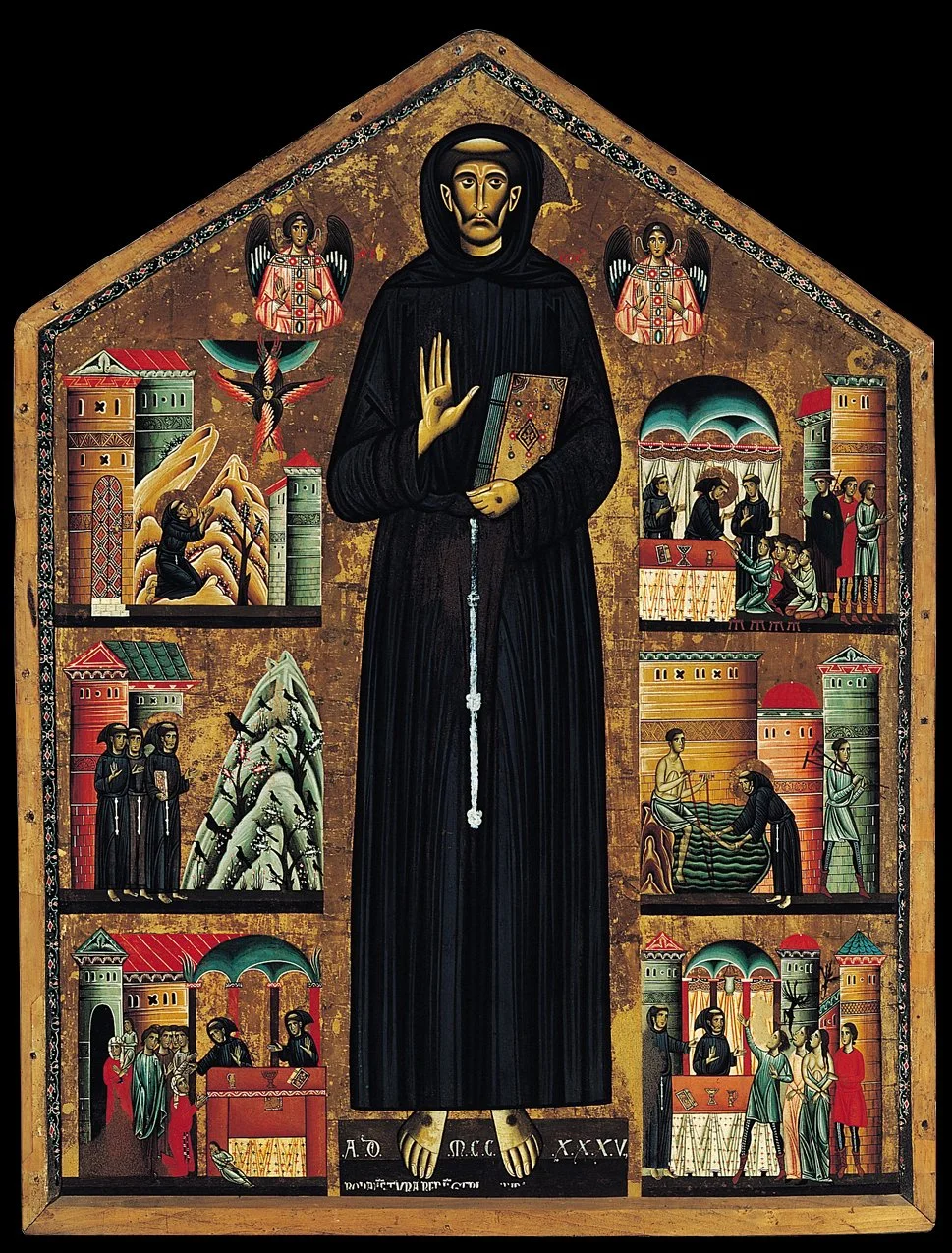
Bonaventura Berlinghieri, St. Francis Altarpiece, 1235, Wikimedia Commons, Public Domain.
Bonaventura Berlinghieri completed the St. Francis Altarpiece just nine years after Francis’ death, making it one of the earliest known iconographic depictions of St. Francis of Assisi. The artwork is executed in the Italo-Byzantine style, which was popular in 13th-century Italy. Francis is rendered in an elongated form, flattened against a gold background. A total of six scenes from his life flank him on either side, including his reception of the stigmata on the upper left. The central figure of Francis also features the stigmata. Today, Berlinghieri’s altarpiece remains in its original location, the Church of San Francesco in Pescia, Italy.
2. Sermon to the Birds by Giotto
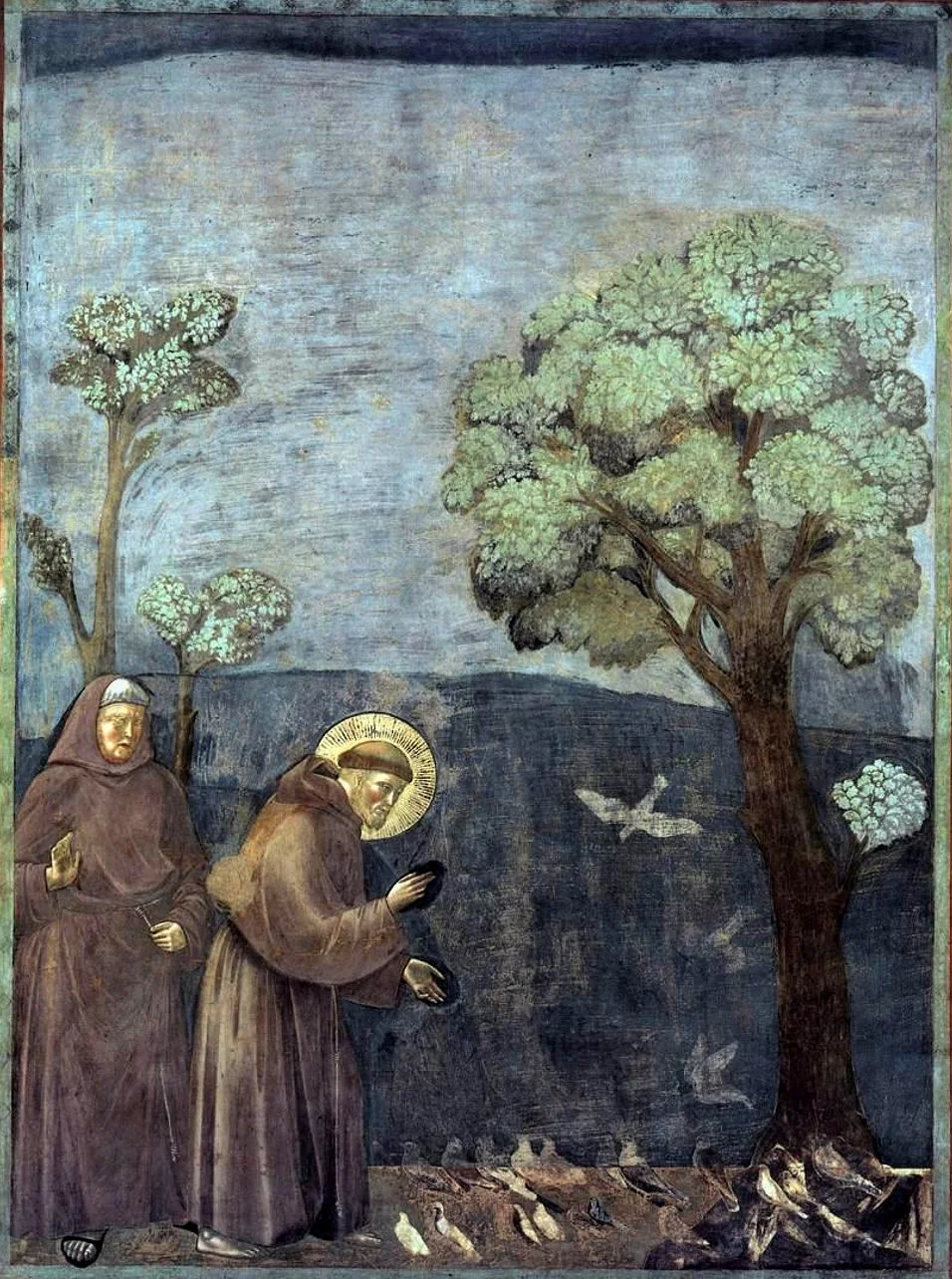
Giotto, Sermon to the Birds, 1297-1299, Wikimedia Commons, Public Domain.
The Legend of St. Francis is a series of 28 frescoes in the Upper Church of the Basilica of San Francesco, Assisi, created between 1297 and 1300. Art historians traditionally credit Giotto for leading the project and making 25 of the frescoes. The Sermon to the Birds is a prime example of Giotto’s artistic style, which helped revolutionize painting through the introduction of naturalism, three-dimensional space, and emotional expression. This fresco illustrates the well-known story of Francis preaching to the birds, an episode preserved in later Franciscan tradition and recorded in The Little Flowers of St. Francis. A flock of birds listened to Francis preaching, and they remained until he dismissed them with a blessing.
3. St. Francis of Assisi Receiving the Stigmata by Jan van Eyck

Jan van Eyck, St. Francis of Assisi Receiving the Stigmata, 1430-1432, Philadelphia Museum of Art.
Widely regarded as one of the earliest Northern Renaissance depictions of St. Francis of Assisi, St. Francis of Assisi Receiving the Stigmata was created by Jan van Eyck. This painting is much smaller than his masterwork, the Ghent Altarpiece, indicating that it was likely used for personal devotion. It portrays Francis kneeling in a rocky landscape, with the remote setting accurately reflecting the location of the event: La Verna, a mountain in the Tuscan Apennines. The painting follows the story related by St. Bonaventure, who describes the apparition of a six-winged Seraph surrounding the crucified Christ. Van Eyck renders the scene with his characteristic mastery of fine details, from the varied textures to the individualized face of Francis.
4. St. Francis in the Desert by Giovanni Bellini
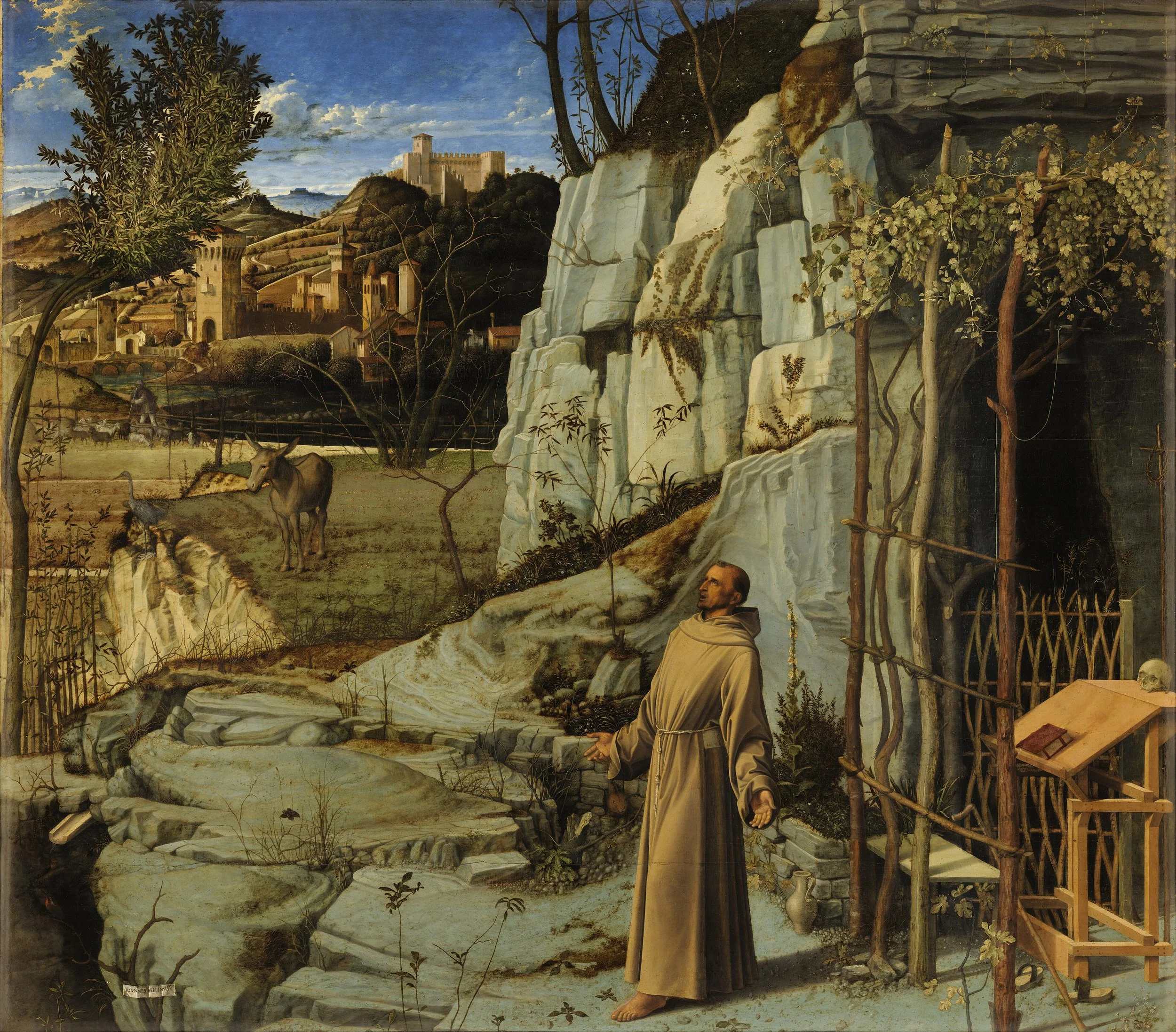
Giovanni Bellini, St. Francis in the Desert, c. 1475-1480, The Frick Collection, Wikimedia Commons, Public Domain.
Giovanni Bellini’s St. Francis in the Desert could be considered the Italian Renaissance counterpart to Van Eyck’s St. Francis of Assisi Receiving the Stigmata. Both artworks were made for personal devotion and feature Francis experiencing a mystical event in a landscape setting. While Bellini’s painting does not include the Seraph-Crucifix, it is generally interpreted as depicting Francis receiving the stigmata. His rendition is larger than Van Eyck’s and is one of the largest landscapes in Renaissance art. Bellini incorporates various symbols throughout the composition, such as the laurel tree and donkey. The former represents the burning bush and links Francis to Moses, while the latter references Francis’ term for his body: “Brother Ass.”
5. St. Francis of Assisi in Ecstasy by Caravaggio
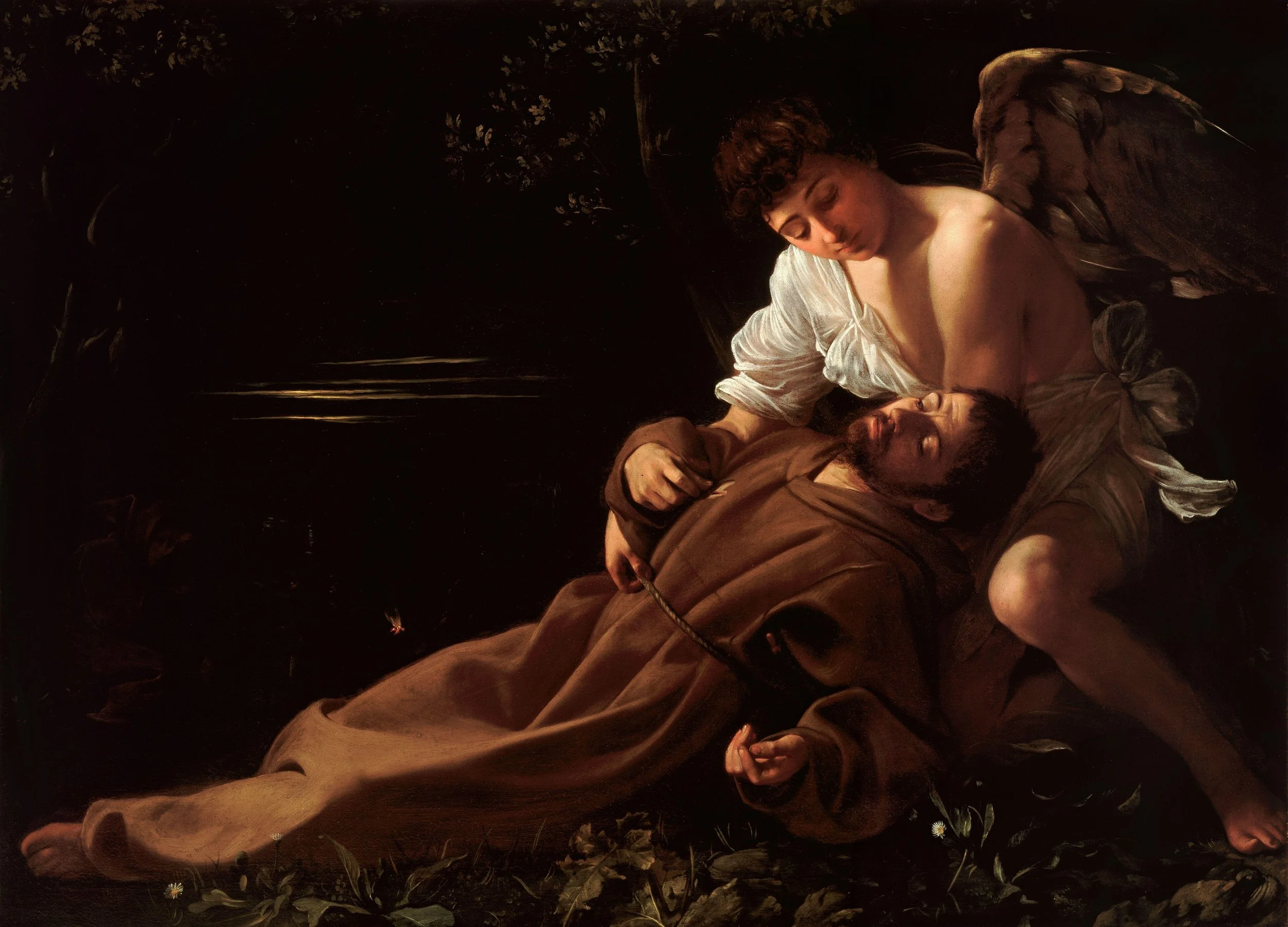
Caravaggio, St. Francis of Assisi in Ecstasy, c. 1595, Wadsworth Atheneum, Wikimedia Commons, Public Domain.
Continuing an established iconographic tradition of Francis in mystical ecstasy, Caravaggio chose this subject for his first religious canvas. He completed the work shortly after joining the household of Cardinal Francesco Maria del Monte, an early patron of the Italian Baroque master. Since Francis was the cardinal’s namesake, it is fitting that he would be Caravaggio’s first choice. He omits several key details from the traditional depiction of Francis’ reception of the stigmata, such as the Seraph-Crucifix and stigmata markings on the hands and feet. Instead, Caravaggio only suggests what has happened by the inconspicuous wound on Francis’ chest. He employs tenebrism, a dramatic contrast between light and dark, to heighten the supernatural aspect of the event.
6. St. Francis Receiving the Stigmata by El Greco
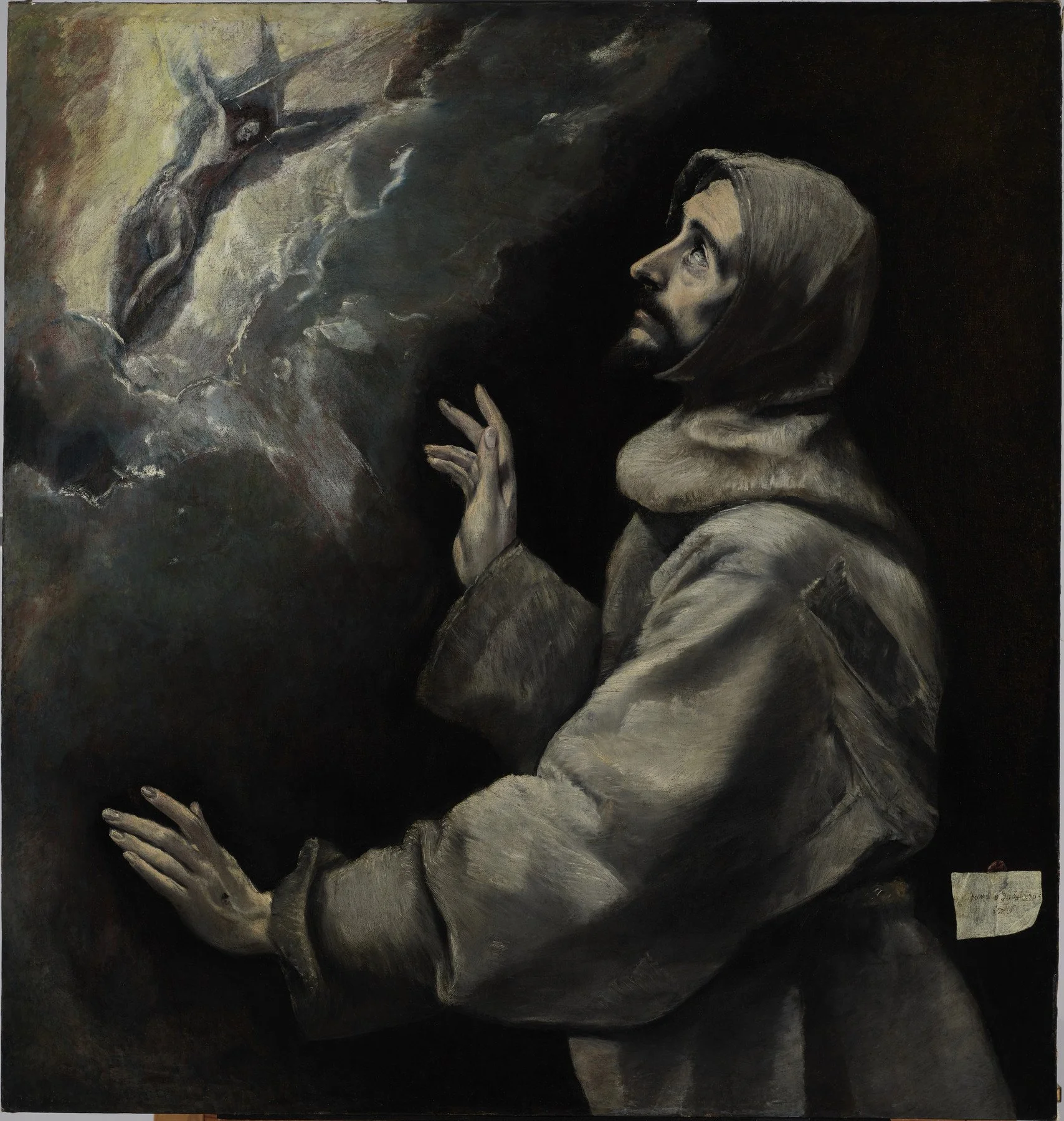
El Greco, St. Francis Receiving the Stigmata, 1585-1590, The Walters Art Museum.
Believed to have been a lay Franciscan, the Spanish Renaissance painter El Greco understandably returned frequently to Francis as a subject. In this painting, El Greco depicts Francis receiving the stigmata as an intense and intimate experience. The darkened background renders the setting undefinable and almost irrelevant. Francis gazes attentively at the Seraph-Crucifix hovering before his eyes. A heavenly aura surrounds the apparition, and the light streaming from it illuminates the kneeling figure. The stigmata is visible on the hand closest to the viewer.
7. St. Francis Embracing Christ on the Cross by Bartolomé Esteban Murillo


.jpg)
Bartolomé Esteban Murillo, St. Francis Embracing Christ on the Cross, c. 1668-1669, Museum of Fine Arts of Seville, Wikimedia Commons, Public Domain.

The Spanish Baroque painter Bartolomé Esteban Murillo created St. Francis Embracing Christ on the Cross as part of a series commissioned by the Capuchins in Seville. The painting is allegorical, showing Francis’ decision to renounce material goods in order to follow Christ unreservedly. Francis pushes away a globe with his right foot while reaching up to place his arms around the crucified Christ, who returns the embrace. On the right, two cherubs hold a Bible open to Luke 14:33: “So therefore, any one of you who does not renounce all that he has cannot be my disciple.”
St. Francis of Assisi in Art
The iconographic tradition of St. Francis of Assisi heavily emphasizes his mystical experience of receiving the stigmata. Other popular stories from his life, such as his famous sermon to the birds, also feature prominently among the visual representations of the saint. The Franciscan Jubilee Year makes it a fitting time to contemplate these paintings of Francis, learning from his example of humility, poverty, and charity. By portraying the “Second Christ,” these great Catholic artists ultimately sought to point viewers to the true source and goal of Francis’ holiness: Jesus Christ Himself.