
The Hidden Meaning in Caravaggio’s “Deposition”
A master of sacred art, Michelangelo Merisi de Caravaggio painted numerous religious subjects during the Baroque period. His artwork is easily recognizable due to his dramatic use of chiaroscuro, a technique that strongly emphasizes the contrast between light and dark.
Caravaggio completed works for prestigious Italian families and Roman churches in the late 16th and early 17th centuries, creating highly realistic pieces characterized by chiaroscuro. The Deposition, also commonly referred to as The Entombment of Christ, particularly stands out among Caravaggio’s remarkable portfolio of religious paintings.
At least 44 artists have copied the Deposition since its completion between 1600 and 1604, demonstrating the artwork’s widespread acclaim. Caravaggio not only portrays Christ’s entombment in the Deposition, but he also communicates a deeper spiritual meaning of life and death through the painting.
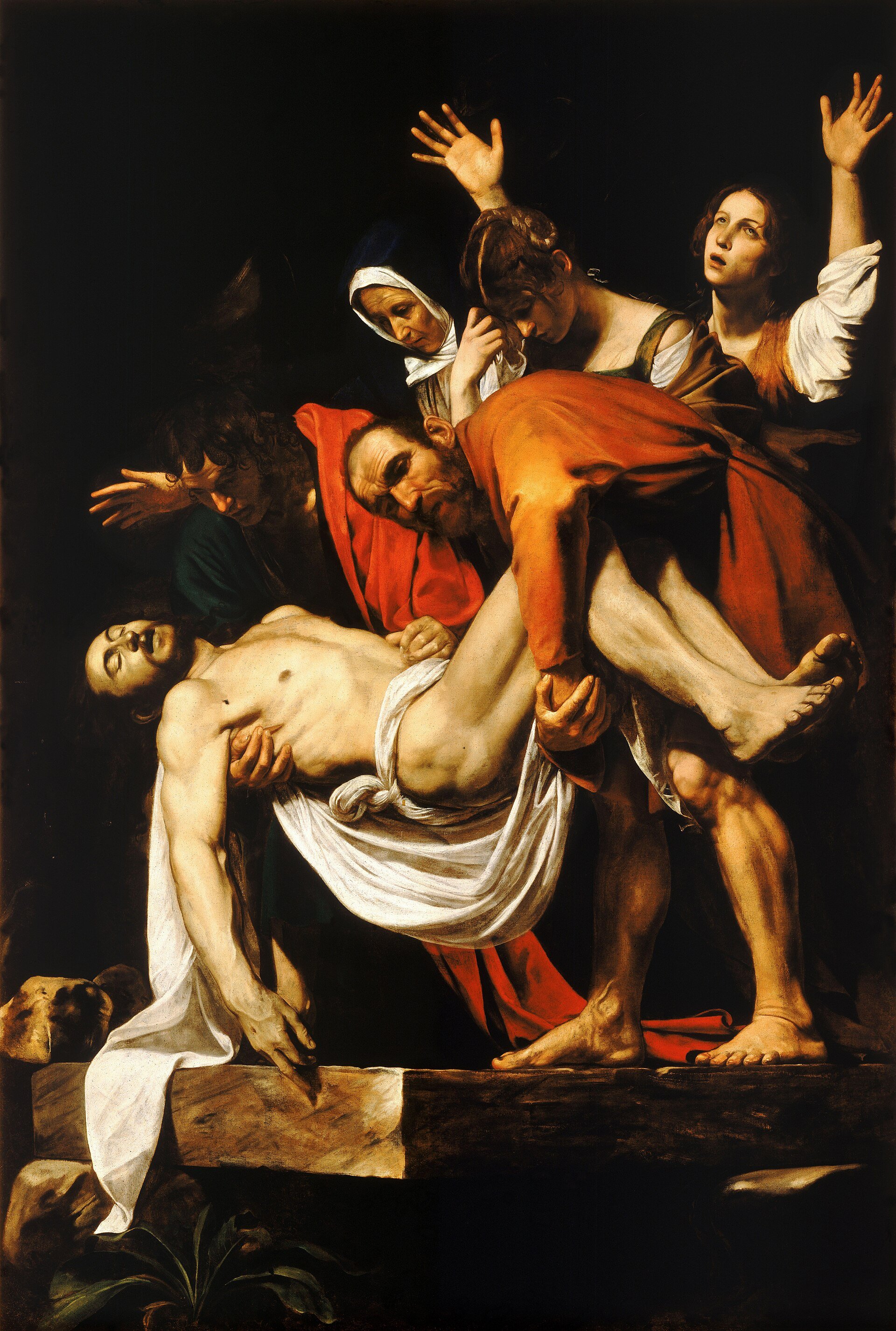
Deposition (Entombment of Christ) by Caravaggio, c. 1600-1604, Vaticana Pinacoteca, Wikimedia Commons, Public Domain
The Entombment of Christ
Caravaggio was commissioned to paint the Deposition for a chapel in the Santa Maria in Vallicella, a church in Rome also called the Chiesa Nuova. Today, the painting is exhibited in the Vatican Pinacoteca.
In the Deposition, Caravaggio used his imagination to elaborate on a moment from the life of Christ only briefly mentioned in Scripture—the burial of Christ following His death on the Cross. The scene depicts Nicodemus carrying Christ’s legs and the faithful apostle John supporting the upper body. Three women follow directly behind the men—the Virgin Mary, Mary Magdalene, and Mary Cleophas (from the viewer’s left to right). The biblical figures involved in the deposition of Christ come alive through Caravaggio’s unmatched artistic abilities.
Life and Death
Caravaggio imbues the Deposition with a deeper spiritual meaningthrough the composition and symbolism of the painting. Examining the position of Christ’s body reveals that Caravaggio may have based his representation on Michelangelo’s Pieta. The horizontality of the limp body clearly conveys its lifelessness. Christ’s arm and hand hang downward, perhaps alluding to His descent into death and even hell, the place from which He traditionally freed the captive souls on Holy Saturday.
The composition of the painting also includes a clear diagonal from the viewer’s bottom left to the top right—a typical feature in artwork from the period. The diagonal culminates with the raised arms of Mary Cleophas, who reaches toward heaven, overcome with grief. The verticality of her arms likely foreshadows the coming Resurrection.
Another reference to the Resurrection appears in the plant discreetly placed in the bottom left corner of the painting. The plant’s seeds represent death since they descend into the dark earth, and the sprouting plant is a symbol of the new life that eventually emerges from the depths of the soil. This subtly hints that Christ’s death, while tragic, will lead to a more glorious resurrection, reinforcing the theme of renewal.
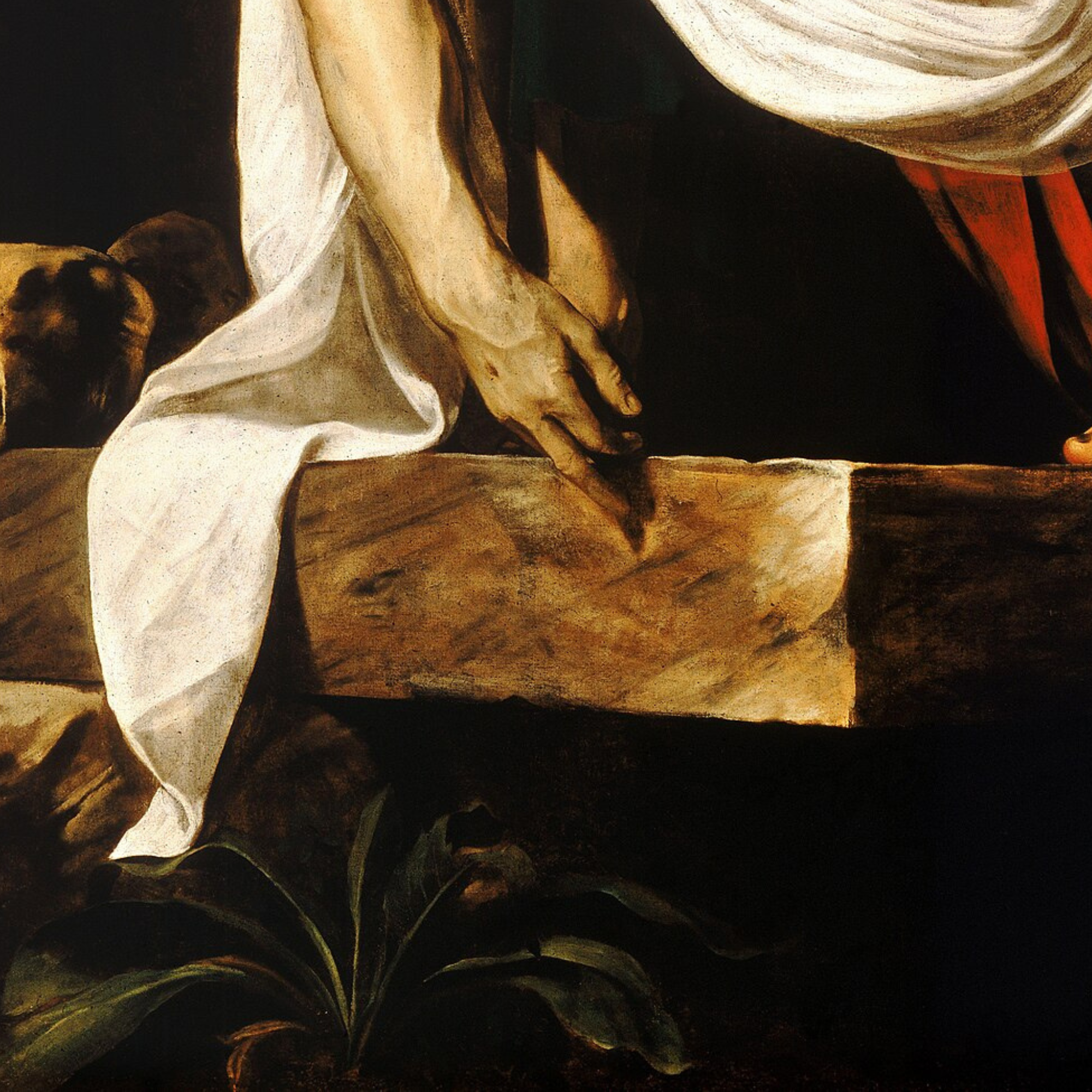
Detail of Deposition (Entombment of Christ) by Caravaggio, c. 1600-1604, Vaticana Pinacoteca, Wikimedia Commons, Public Domain
The fingers of Christ’s dangling left hand brush against a stone slab. Christ is the “stone which the builders rejected” and the cornerstone of His Church. According to St. Augustine, the Church was born from the side of Christ—from the wound that John touches with silent awe in the Deposition. By sacrificing His life for the Church, Christ became the firm foundation upon which she was built. His death made the birth of His Mystical Body possible, but it only did so together with His Resurrection, which completed Christ’s triumph over sin and death.
The compositional elements in the Deposition, particularly the contrast between Christ’s horizontal body and the upward-sloping diagonal culminating in Mary Cleophas’ raised arms, suggest both the presence of death and the promise of new life. Caravaggio’s choice in the symbols of a plant and stone affirm this interpretation, hinting at the glorious future which was yet to come.
Light and Dark
Another important aspect of the Deposition is lighting. Caravaggio employs a type of chiaroscuro known as tenebrism, characterized by dramatic contrasts between light and darkness. His use of this technique in works such as the Deposition influenced later Baroque painters, including Spanish artists like Francisco de Zurbarán.
In the Deposition, deep shadows and a spotlight effect create a somber atmosphere appropriate for the mourning figures. The darkness contrasts with a light shining on the scene from a source seemingly outside the painting. It breaks into the gloomy interior space, suggesting a transcendental presence entering an earthly realm marked by death.
The light mainly falls on the body of Christ, who refers to Himself as the Light of the World. The illumination of Christ against the dark backdrop calls to mind John 1:5: “The light shines in the darkness, and the darkness has not overcome it” (NABRE). The distinction between light and darkness correlates to that between life and death. Christ, the Light of the World, will soon triumph over death in His coming Resurrection. Tenebrism thus succeeds not only in generating a dramatic atmosphere, but it also contributes to the spiritual meaning embedded within the painting.
Sharing Their Sorrow
Caravaggio brightens the faces of the group taking Christ to His burial place. The three women each display different expressions of grief. The Blessed Virgin Mary stands solemnly on the left watching the proceedings, perhaps “pondering them in her heart” as she did in Christ’s infancy and youth (Luke 2:19, 51).
In the middle, Mary Magdalene wipes the tears from her closed eyes. Directly behind her, Mary Cleophas cries aloud as she raises her eyes and arms in despair. The three Marys formed close relationships with Christ during His lifetime, and the varying expressions of their sorrow each reflect their individual and intimate bond with Him.
The look on John’s face must also be noted. John appears to look with wonder at the open wound in Christ’s side. He witnessed the Roman soldier pierce Christ’s flesh firsthand, and now John touches the wound with his bare fingers. What could be going through his mind? Standing next to John is the sad yet focused Nicodemus, intent on gently hoisting Christ’s body onto the stone slab. By emphasizing these different facial expressions through lighting, Caravaggio asks the viewer to share their sorrow in mourning the death of Christ.
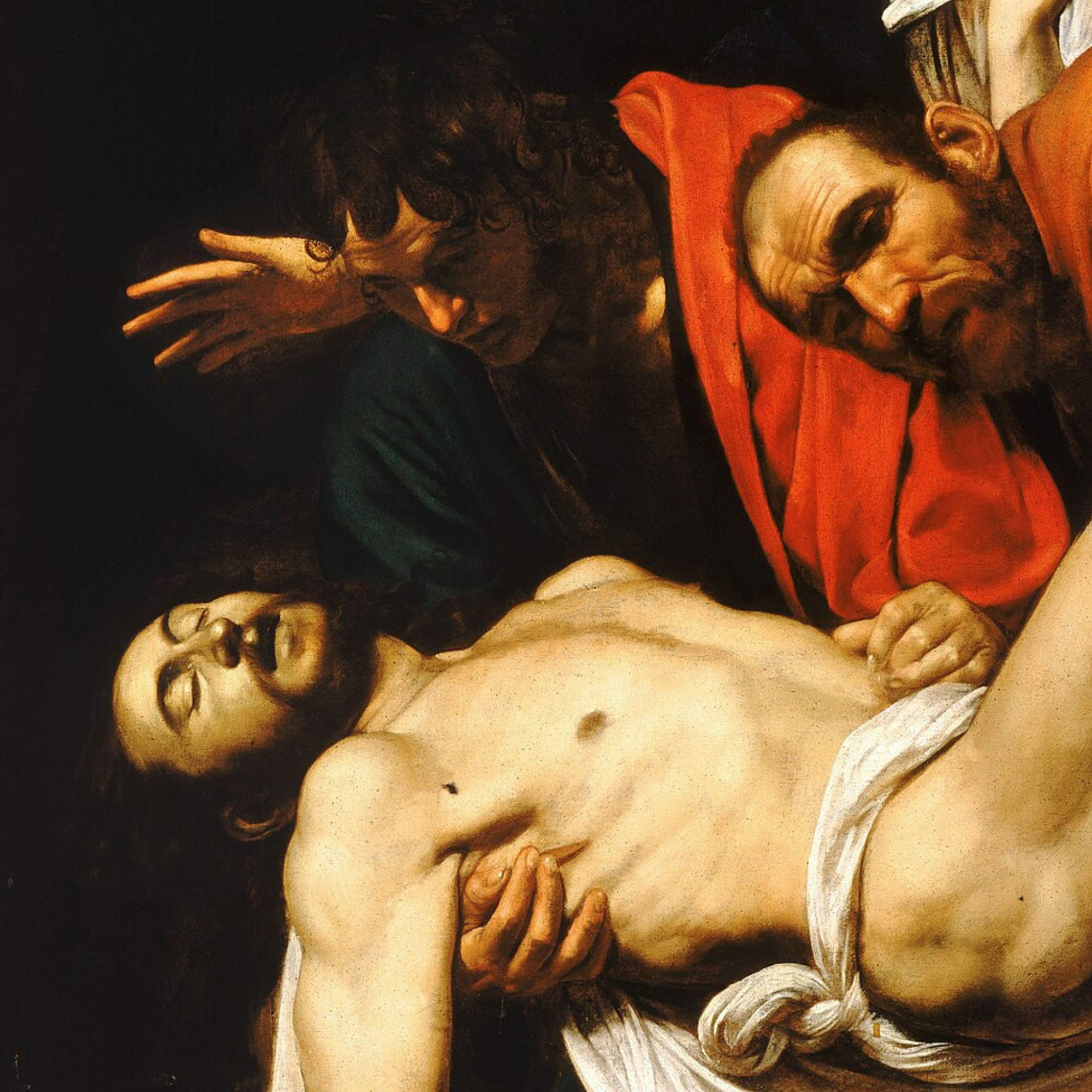
Detail of Deposition (Entombment of Christ) by Caravaggio, c. 1600-1604, Vaticana Pinacoteca, Wikimedia Commons, Public Domain
Finding Hope Amid Grief
Caravaggio masterfully conveys hidden meaning through his Deposition. A message of hope rests beneath the surface of the palpable anguish shown in the faces of the portrayed figures. These five close followers of Christ mourn His death, yet they will soon be overjoyed by His Resurrection. While there is a place for human mourning over the death of a loved one, we can find hope in the resurrection, “knowing that the one who raised the Lord Jesus will raise us also with Jesus” (2 Cor. 4:14, NABRE).