
The temptation of Christ is a subject in Christian art that depicts the devil tempting Christ in the wilderness. The Synoptic Gospels (Matthew, Mark, and Luke) contain the biblical account of this event, which occurred after Christ had fasted in the desert for forty days. The devil approached Him three times with the following temptations: turning stones into bread, throwing Himself from the top of the Temple, and worshipping the devil in exchange for all the kingdoms of the world. Each time, Christ refuted the devil’s offer with verses from Scripture.
The temptation of Christ holds theological significance not only because it counters the disobedience of Adam, but also because it offers a model for the faithful in resisting temptation. Depictions of this event based on Scripture provide us with a visual way of contemplating its meaning within salvation history and our own lives. Here are seven paintings of the temptation of Christ, including works by Duccio, Botticelli, Titian, and other artists in the Christian tradition.
1. Temptation of Christ on the Mount by Duccio
Duccio, Temptation of Christ on the Mount, c. 1308–1311, The Frick Collection, Wikimedia Commons, Public Domain
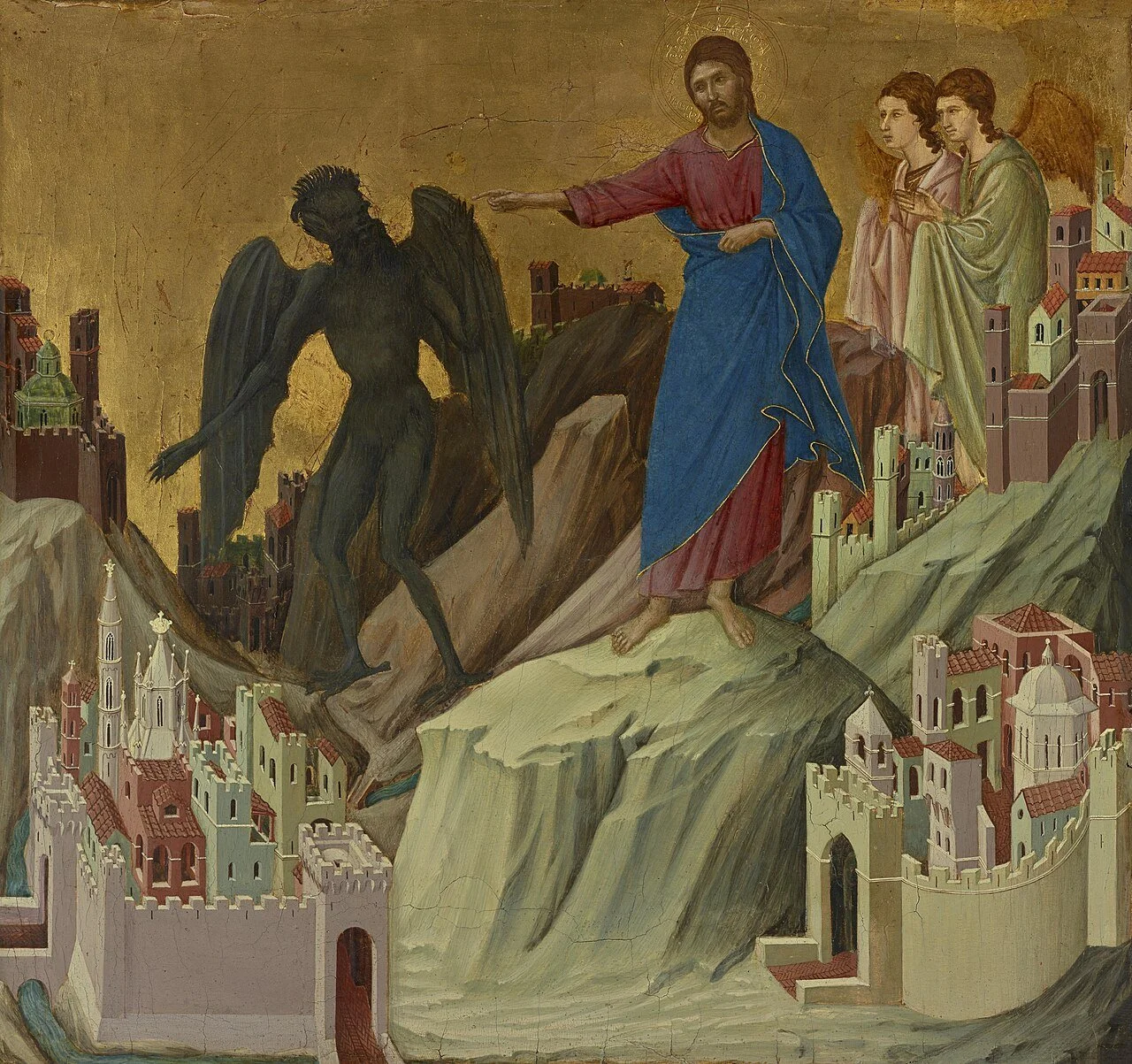
The Temptation of Christ on the Mount is a panel from the back of Duccio’s monumental Maestà altarpiece, which was commissioned for Siena Cathedral in 1308 and installed in 1311. The back of the work features 43 panels depicting the lives of Christ and the Blessed Virgin Mary. The Temptation is one of these small paintings, and it portrays the third temptation, in which the devil offers Christ the kingdoms of the world.
Duccio did not use natural proportions for the various elements in the composition: the figures appear quite large compared to the miniature cities in the foreground. Instead, the Sienese artist employed a medieval technique of rendering figures according to their relative importance. By making Christ the largest and most prominent figure, Duccio emphasized His divine nature and authority. Christ’s pointed finger adds a sternness to the solemn expression on His face. One can imagine Him saying, “Get away, Satan! It is written: ‘The Lord, your God, shall you worship and him alone shall you serve’” (Matthew 4:10).
2. Temptations of Christ by Sandro Botticelli
Sandro Botticelli, Temptations of Christ, 1480–1482, Sistine Chapel, Wikimedia Commons, Public Domain
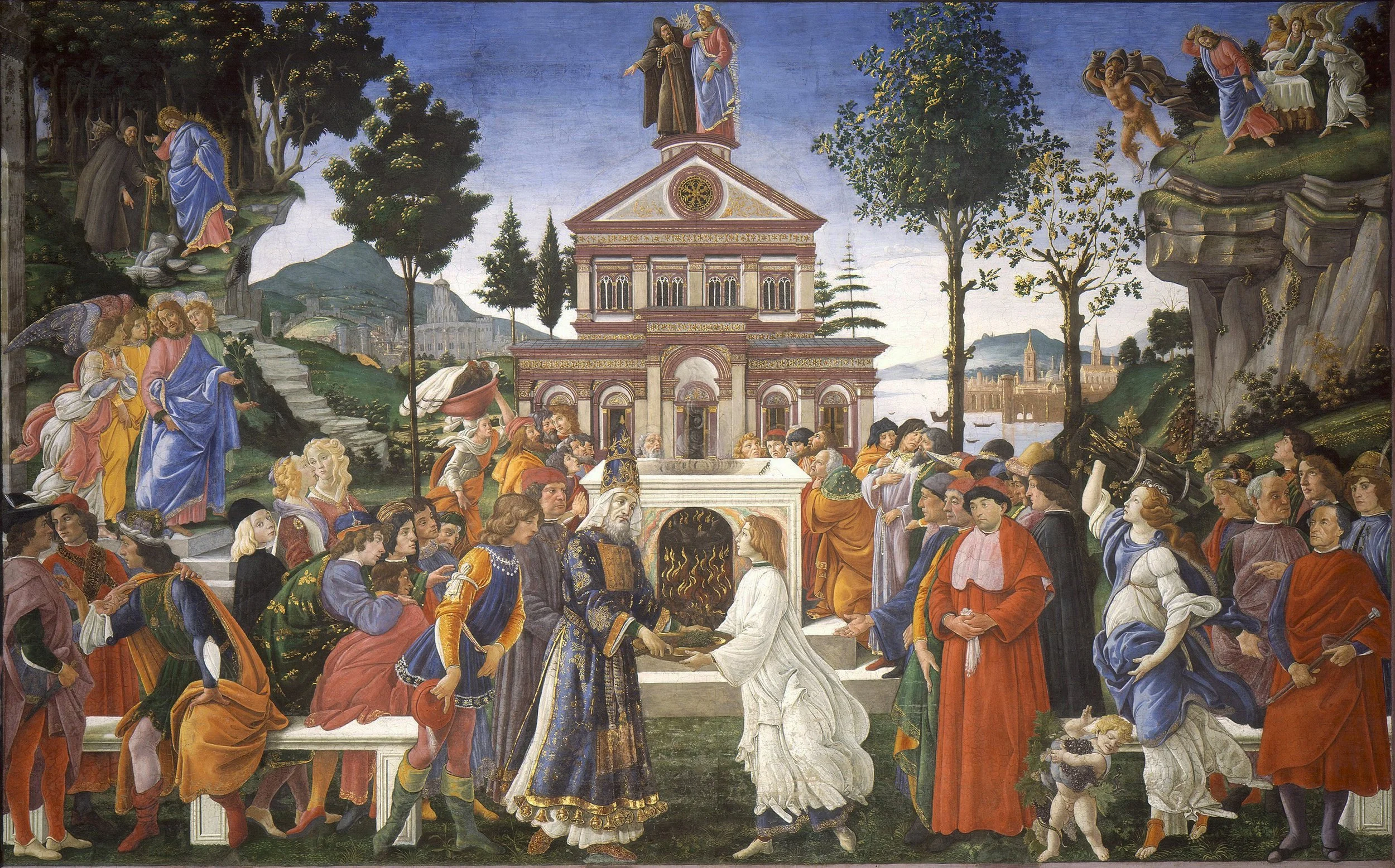
The Temptations of Christ is a fresco in the Sistine Chapel by Sandro Botticelli, created between 1480 and 1482. The three instances of the devil tempting Christ appear in the upper part of the work. On the left, the devil entices Christ to turn stones into bread to appease His hunger. The center shows the temptation atop the Temple of Jerusalem, where the devil tries to make Christ leap off. On the right, Christ has refused to bow to the devil and orders him to leave. In the first two temptation scenes, the devil wears the robe of a cleric and holds Rosary beads. His disguise falls away in the scene of the third temptation, when Christ exposes the devil’s true identity by saying, "Get away, Satan!"
Another noteworthy detail in the third temptation is a group of three angels standing behind Christ. This reflects the Scriptural account that angels came and ministered to Christ after the devil had departed (Matthew 4:11; Mark 1:13). Duccio also included two angels in a similar position in his Temptation of Christ on the Mount.
Although Botticelli’s work depicts the temptation of Christ, the majority of the space in the fresco is actually dedicated to an entirely different scene based on Scripture. Botticelli portrayed a young man whom Jesus cured of leprosy presenting himself to the High Priest, who bears the authority to declare him cleansed of his malady. The two figures are surrounded by a crowd of onlookers wearing Renaissance-style attire, waiting to witness the ritual of cleansing.
3. The Temptation of Christ by Juan de Flandes
Juan de Flandes, The Temptation of Christ, c. 1500/1504, National Gallery of Art, Washington, D.C.
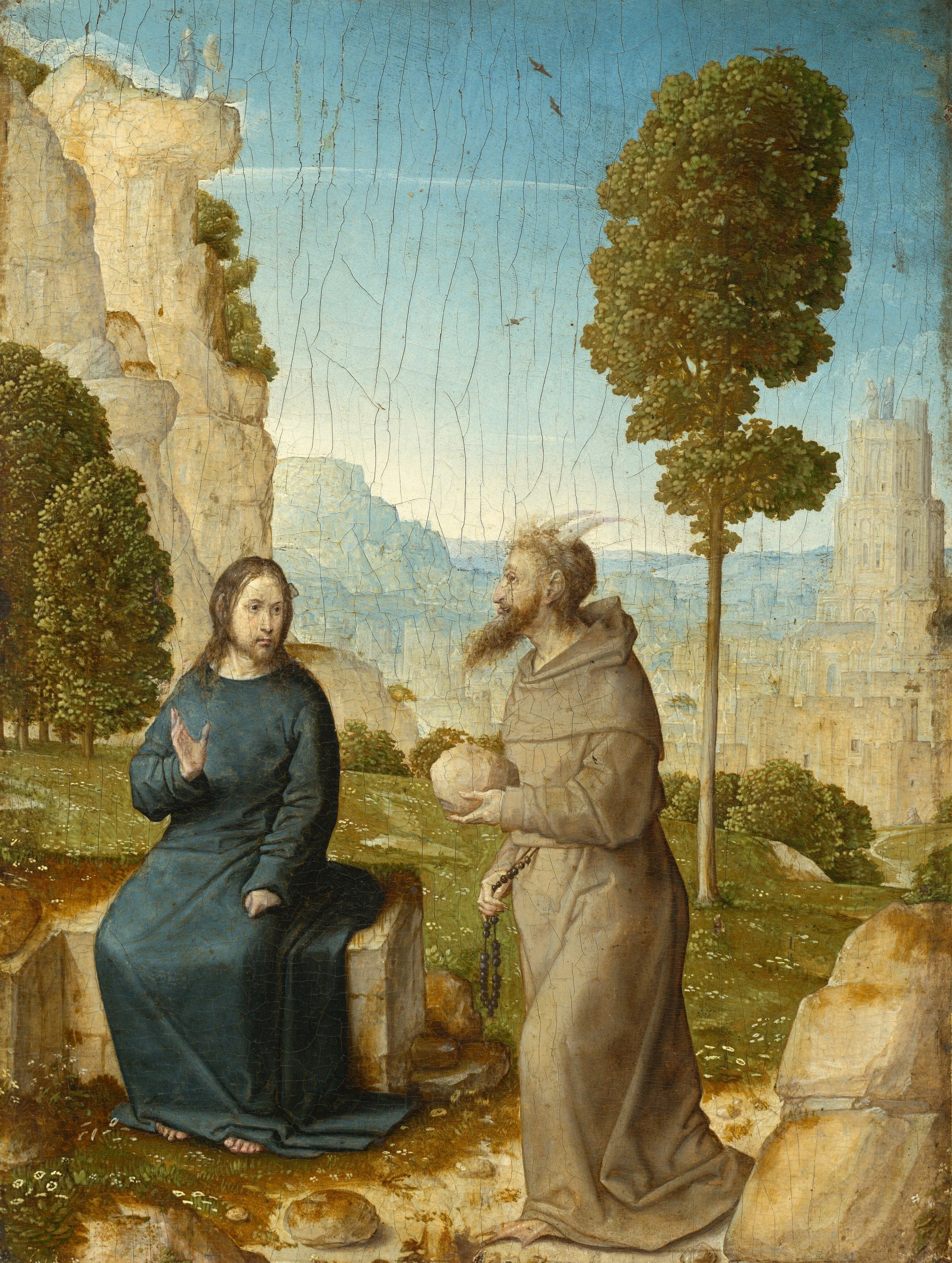
In The Temptation of Christ, Juan de Flandes depicts the devil disguised as a cleric, much like Botticelli. He holds Rosary beads and wears a hooded brown robe, but his horns and webbed feet disclose his true identity. Perhaps the Flemish painter was attempting to represent the idea of “a wolf in sheep’s clothing.” The interaction in the foreground portrays the first temptation of Christ. The devil holds out a stone, but the seated Christ rejects it with a raised hand. Juan de Flandes places the second and third temptations in the background. He repeats the color scheme of Christ in blue and the devil in brown to make the distant figures recognizable. They stand atop a temple to the right and a cliff to the left.
4. The Temptation of Christ by Titian
Titian, The Temptation of Christ, 1540, Minneapolis Institute of Art
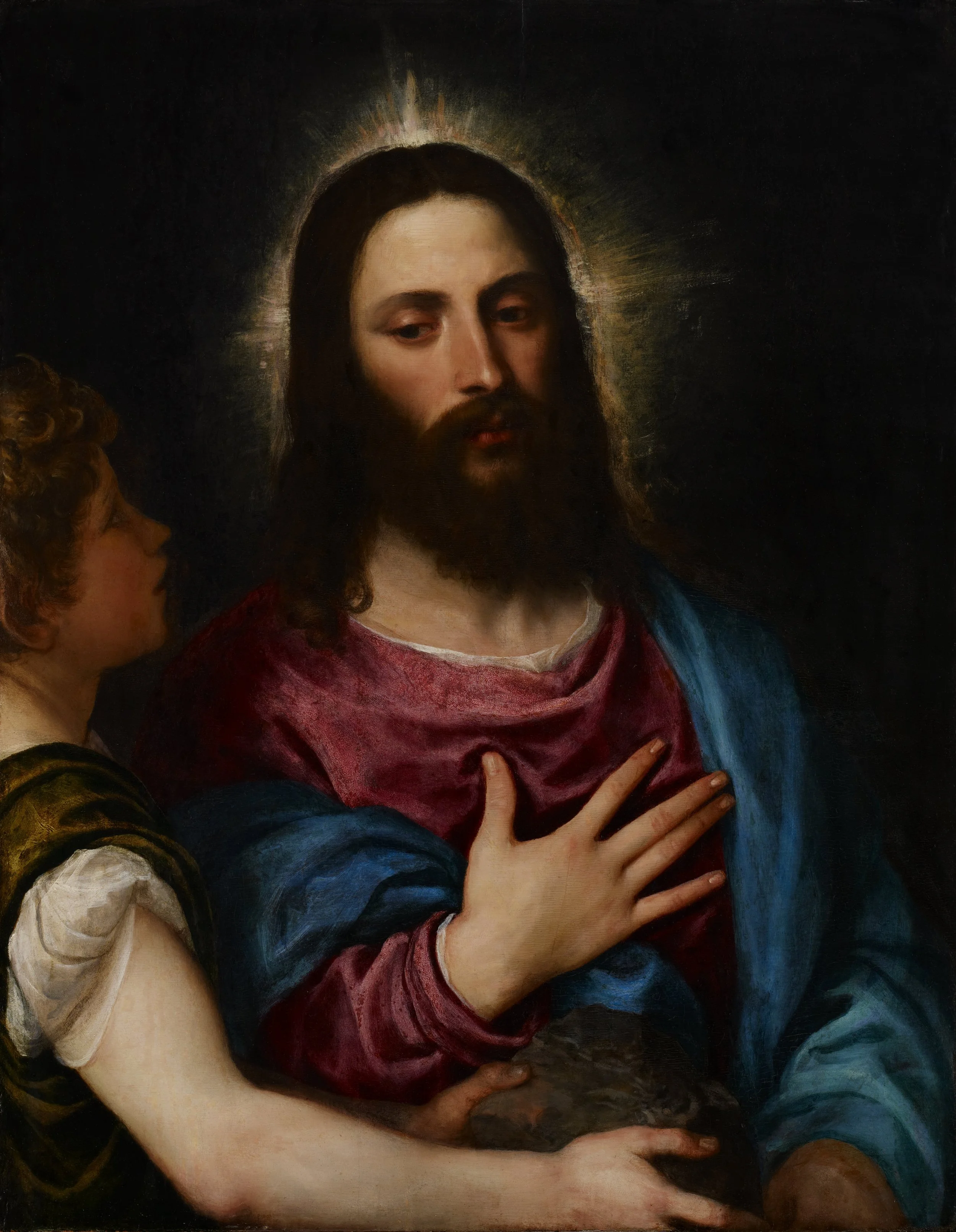
Titian, the greatest Venetian painter of the Italian Renaissance, departed from previous depictions of the temptation of Christ by presenting an up-close view of Christ's face. In The Temptation of Christ, he also made the unusual choice of portraying the devil as a young boy rather than as an ugly or terrifying figure. The child grips a loaf of bread in his right hand, establishing the first temptation as the subject of this 16th-century painting. The dark background isolates Christ’s expression, lending the work a psychological intensity and depth. The Savior gazes downward and holds His right hand to His chest, appearing somber. He may be contemplating His Heavenly Father as He prepares to deliver His response to the devil: “One does not live by bread alone, but by every word that comes forth from the mouth of God” (Matthew 4:4).
5. Landscape with the Temptation of Christ by Antonio Francesco Peruzzini and Alessandro Magnasco
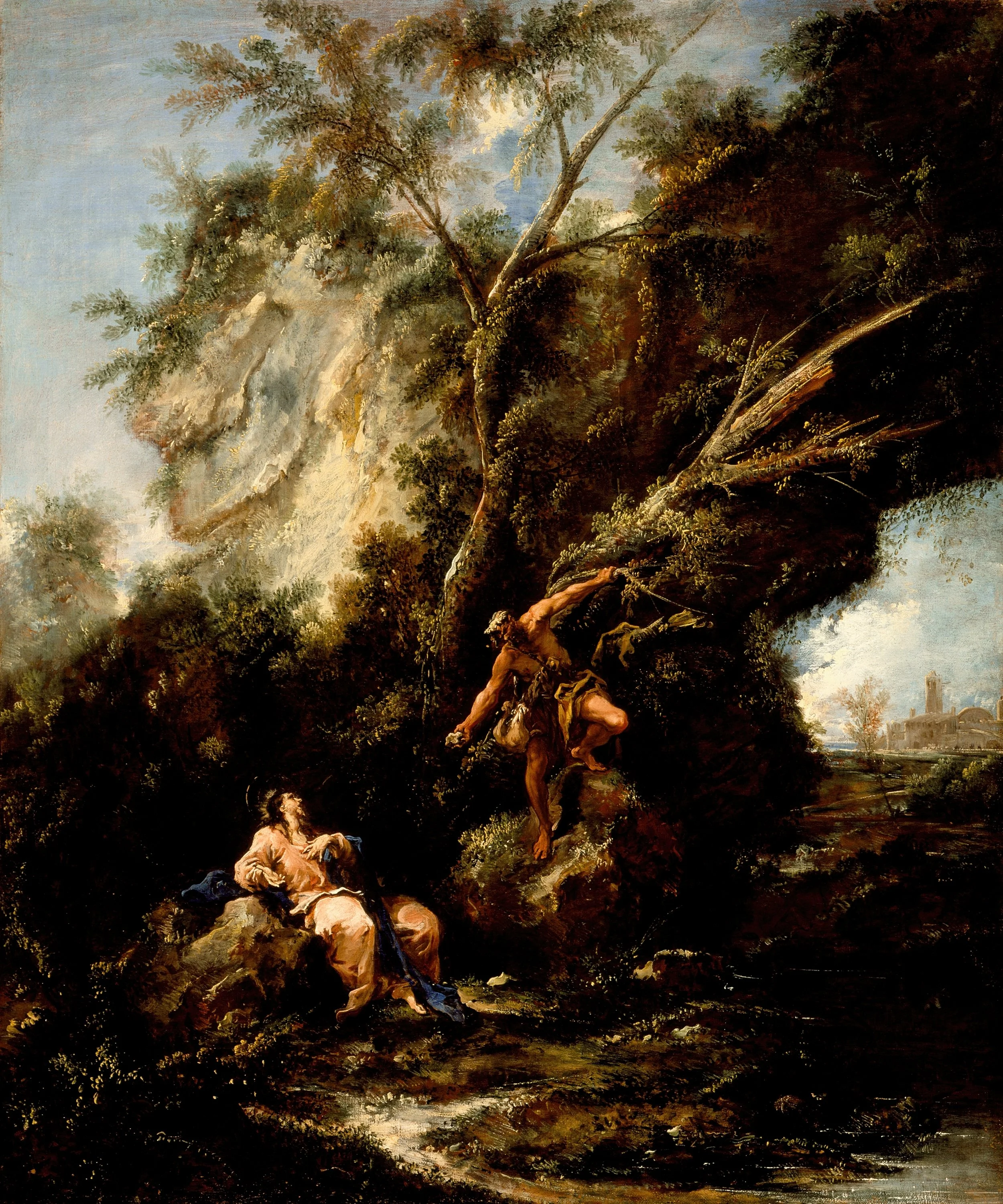
Antonio Francesco Peruzzini and Alessandro Magnasco, Landscape with the Temptation of Christ, c. 1715, Los Angeles County Museum of Art
Landscape with the Temptation of Christ is a Baroque landscape painting resulting from a collaboration between two Italian artists, Antonio Francesco Peruzzini and Alessandro Magnasco. The former was known for his skill in landscape painting, while the latter excelled in painting figures. Their portrayal of the temptation shows Christ reclining on a rock in the wilderness. He is conversing with the devil, who has just tempted Him to turn a stone into bread. Dark foliage fills the area surrounding this interaction, casting an oppressive and even sinister mood over the painting. On the right, the distant structure may represent the Temple of Jerusalem, alluding to the third temptation. The rock formation above Christ may also refer to the second temptation, although this is usually depicted on a much higher precipice.
6. The Temptation of Christ by the Devil by Félix-Joseph Barrias
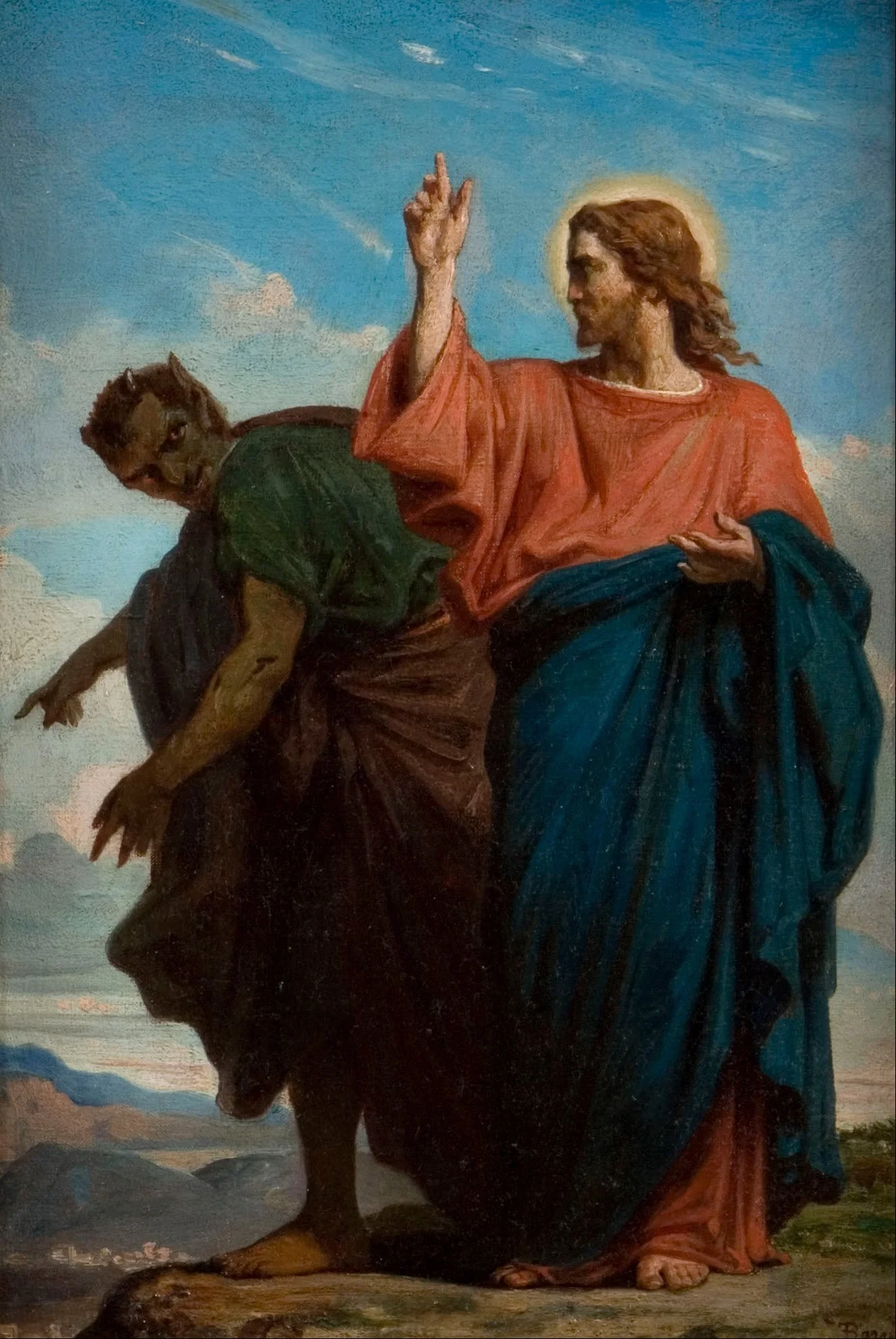
Félix-Joseph Barrias, The Temptation of Christ by the Devil, c. 1860, Philbrook Museum of Art, Wikimedia Commons, Public Domain
The Temptation of Christ by the Devil is a painting by the French artist Félix-Joseph Barrias, portraying the third temptation of Christ. Barrias, who once enjoyed a widespread reputation for his work, fashioned a dynamic composition through color, light, and body language. Light illuminates Christ’s upper body, while the devil crouches in His shadow. Christ’s stance suggests confidence and authority, and the devil’s posture implies guile and wickedness. Pointing toward the sky with His right hand, Christ may be commanding Satan to leave Him. Meanwhile, the devil gestures toward a distant city far beneath the cliff, still attempting to convince Christ to worship him in exchange for all the kingdoms of the earth.
7. Temptation of Christ by Hans Thoma
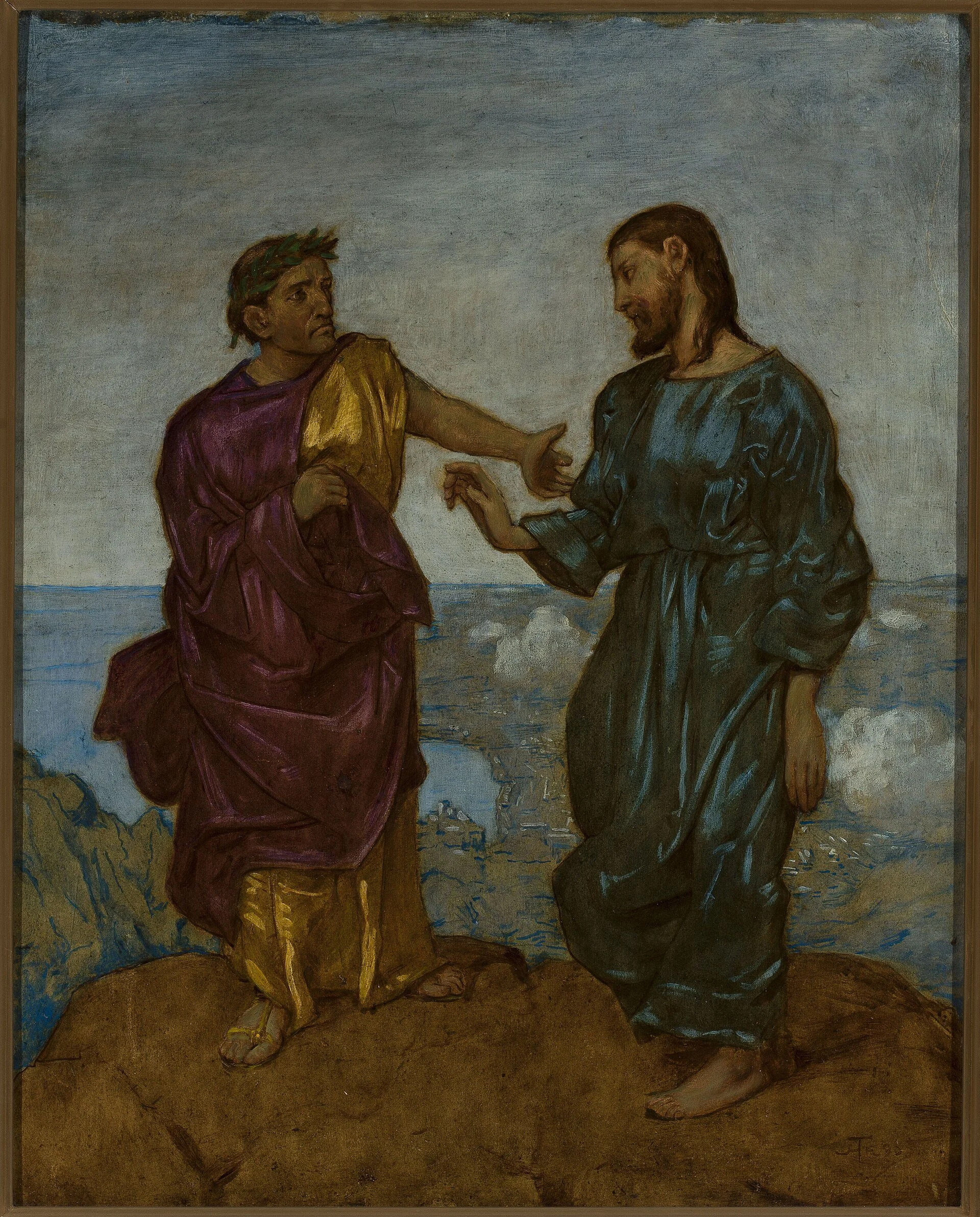
Hans Thoma, Temptation of Christ, 1890, National Museum in Warsaw
In Temptation of Christ, the German artist Hans Thoma dresses the devil up as a Roman emperor. He wears a golden tunic with a purple imperial cloak, colors traditionally associated with royalty. The crown of laurel leaves on his head symbolizes military success, divine favor, and political power. In Thoma’s painting, the devil tempts Christ to worship him in exchange for his earthly power. The two figures stand on the edge of a brown rock high above the land and sea, even above the clouds, which drift behind Christ. Clothed in a blue robe signifying His divinity, Christ raises His hand in a gesture of rejection, refusing the devil's proposal.
Conclusion
In Christian art, the temptation of Christ is often depicted as an encounter between Christ and the devil in the wilderness. As recounted in the Gospels, the devil tempts Christ to do three things: turn stones into bread, throw Himself from the top of the Temple in Jerusalem, and worship the devil in exchange for earthly power. Some sacred artists included all three temptations in their works, such as Sandro Botticelli and Juan de Flandes. Others chose to focus on just one, like Duccio and Titian. These paintings illustrate a significant event from the life of Christ, during which He revealed Himself as the Son of God who came to do His Father's will.