
In art, colors can carry symbolic meaning. This is particularly true for Christian sacred art, in which certain figures are often depicted wearing the same colors across different works. For example, the Blessed Virgin Mary is frequently portrayed wearing blue. In paintings of the Resurrection, Christ might be wearing a white or red robe. Keep reading to discover the meaning of seven different colors in sacred art.
Red
The color red in sacred art typically represents the Blood of Christ and His Passion. It is associated with His humanity. In paintings of the Blessed Virgin Mary, a red dress could likewise symbolize her human nature. More generally, red can stand for love, courage, and devotion. Finally, martyrs may wear red as a sign of their sacrifice.
Blue
If red represents humanity and mortality, blue commonly stands for divinity and eternity. The color of the sky, blue points to Heaven and the supernatural.
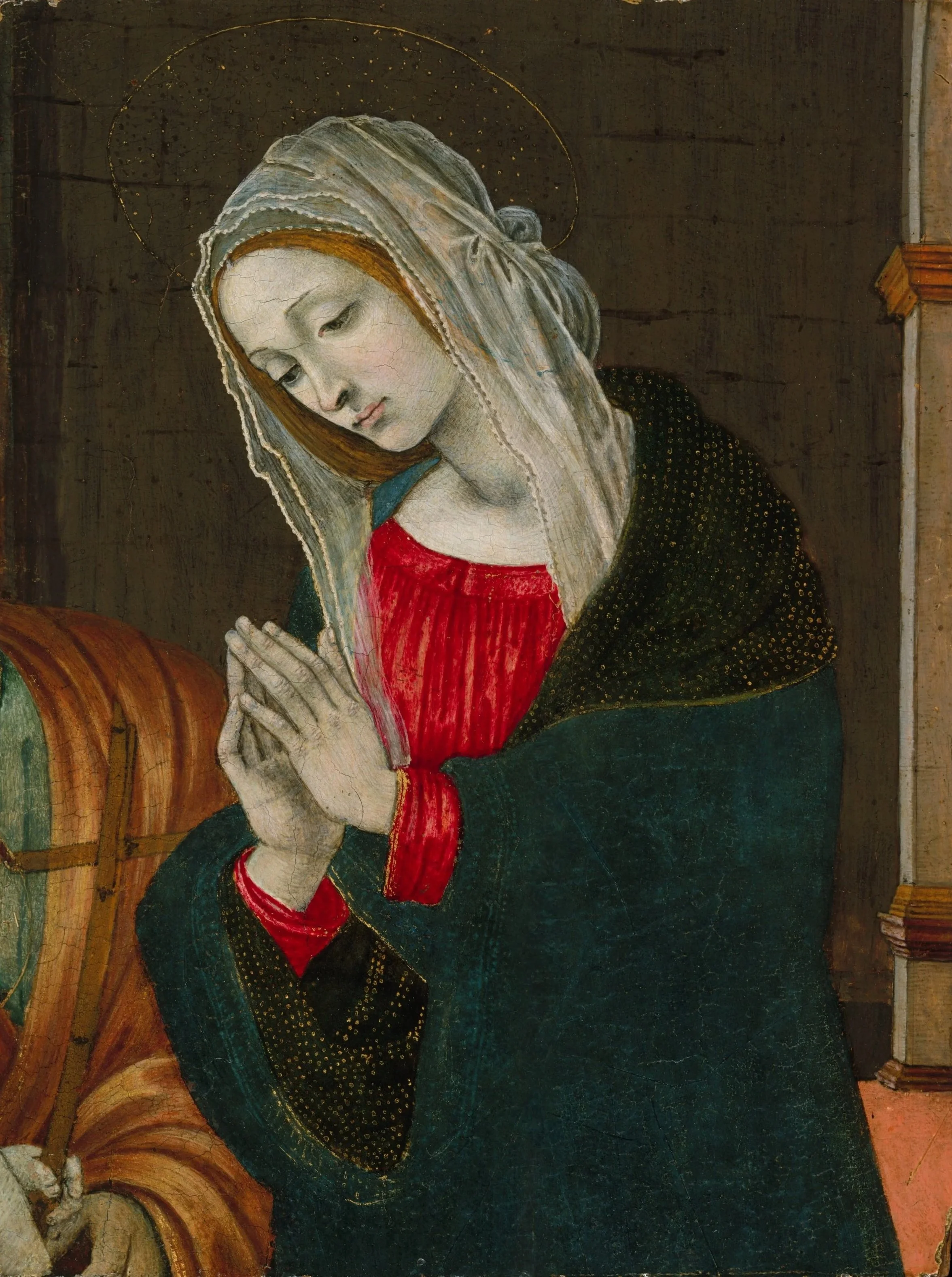
The Virgin Mary is often portrayed wearing red and blue: red for her humanity, and blue for her role as the Mother of God and Queen of Heaven.
Green
The meaning of the color green in Christian art is new life, hope, regeneration, and growth.
Purple
The color purple has historically been linked to majesty and royalty. It may be used in sacred art to signify Christ’s kingship over the universe.
Yellow
Yellow may have either a positive or negative meaning in Christian art. Some paintings depict Judas Iscariot wearing yellow to represent his greed and deceit. On the other hand, yellow could stand for glory, light, and eternal life.
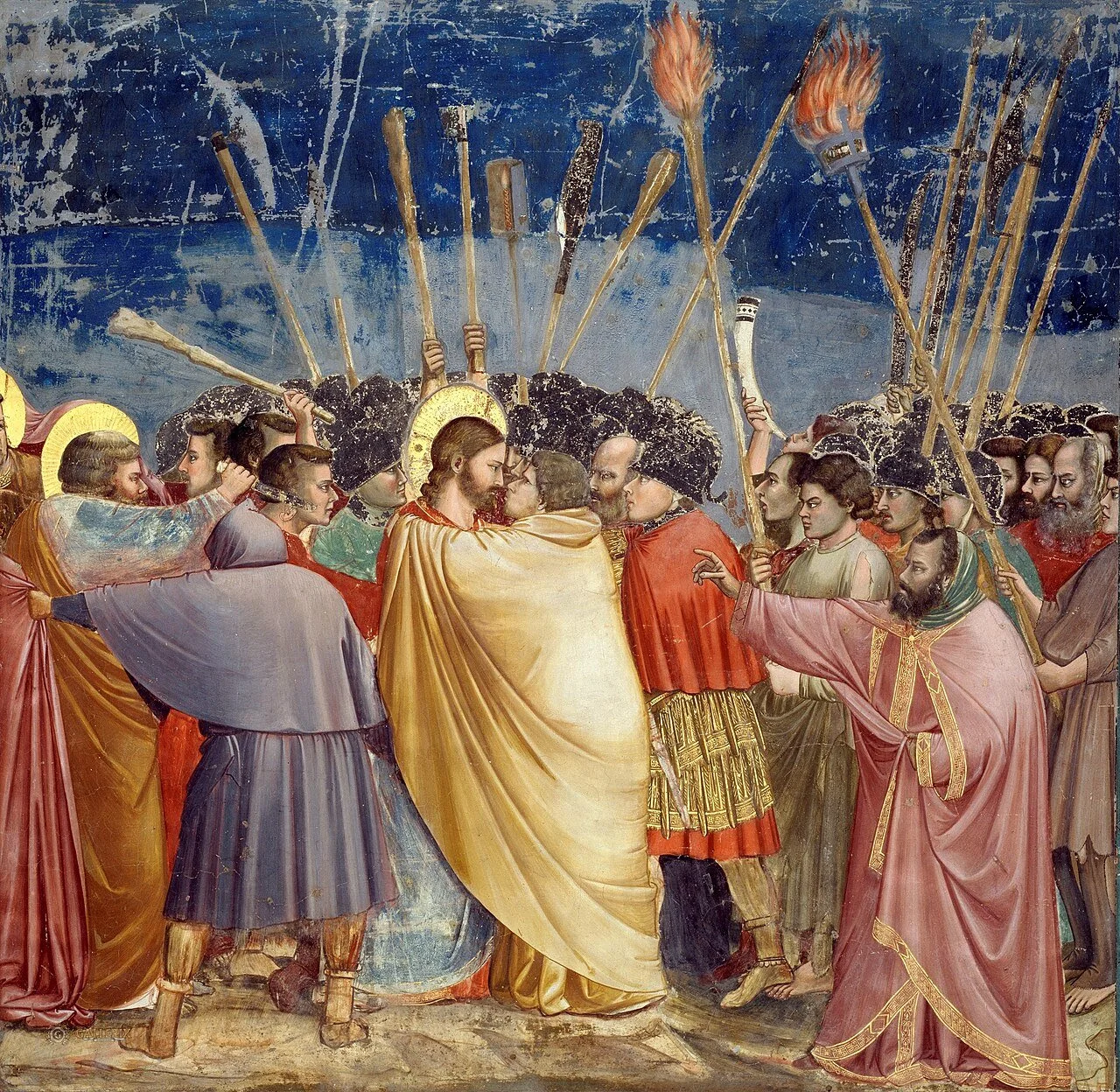
Judas wears a yellow cloak in the Kiss of Judas by Giotto (c. 1304–1306)
White
The color white can symbolize purity, sanctity, and righteousness. Christ may wear a white robe or tunic to signify his Resurrection and triumph over sin.
Brown
Brown is associated with the earth, humility, and poverty. It is often seen in the garments of saints who embraced a life of simplicity and asceticism, such as St. Francis of Assisi.
Conclusion
Next time you look at a religious painting, take a moment to observe the colors. They could carry a deeper meaning, particularly when worn by certain figures such as Christ and the Virgin Mary. By becoming familiar with the possible meanings of colors in sacred art, you can better appreciate the symbolism Christian artists use and gain a deeper understanding of the paintings you encounter.