
The Fifteen Saturdays of the Most Holy Rosary: History and How to Pray
The Fifteen Saturdays of the Most Holy Rosary is a traditional Catholic devotion that invites the faithful to spend fifteen consecutive Saturdays meditating on the Mysteries of the Rosary for a particular intention. Originating in the seventeenth century and later popularized by St. Bartolo Longo, the devotion has helped countless Catholics deepen their love of the Rosary and obtain many spiritual graces. This article explains its history, how to pray it, and why it remains relevant today.
Contents
What Is the Fifteen Saturdays?
History of the Fifteen Saturdays Devotion
How to Pray the Fifteen Saturdays
What Is the Fifteen Saturdays?
The Fifteen Saturdays devotion consists of spending fifteen consecutive Saturdays meditating on the fifteen traditional Mysteries of the Rosary: the Joyful, Sorrowful, and Glorious Mysteries. The devotion is meant to be offered for a special intention. In his Fifteen Saturdays book, St. Bartolo Longo noted that many graces have been received through praying the devotion, including miraculous healings and conversions. In fact, Longo called it “a very efficacious devotion to obtain all kinds of graces.”
At its heart, the Fifteen Saturdays is a way to slow down and spend time with each Mystery of the Rosary. Every Saturday presents an opportunity to intentionally reflect on one Mystery. Longo’s meditations are an excellent resource for this purpose. He based his work on Scripture and devotional material circulating at the time, such as The Glories of Mary by St. Alphonsus Liguori. Longo also paired each Mystery with a corresponding virtue, enabling the devotion to be carried out in a practical way until the following Saturday. In this way, the practice enables the Mysteries to be lived more fully through both prayer and daily life.
History of the Fifteen Saturdays Devotion
The Fifteen Saturdays appropriately fall on Saturday, the day dedicated to the Blessed Virgin Mary in Catholic tradition. The origins of the devotion can be traced back to the Dominican Order in France during the seventeenth century. Two centuries later, St. Bartolo Longo helped spread the devotion throughout Italy and beyond by publishing The Fifteen Saturdays of the Most Holy Rosary in 1887. Around this time, the devotion was even practiced by entire parishes, with the parish priest offering Mass in honor of the Mysteries for fifteen consecutive weeks.
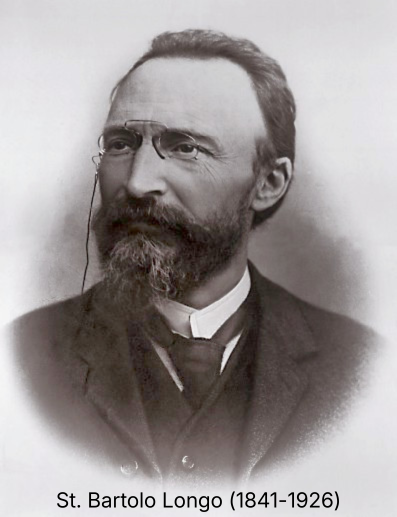
The devotion became so popular that it caught the attention of Pope Leo XIII, the “Pope of the Rosary.” He attached an indulgence to the recitation of the Fifteen Saturdays. Leo also expanded the provisions governing its practice in two important ways. First, he permitted the Masses said in honor of the Fifteen Saturdays to be celebrated at any church or altar. Previously, they had only been allowed for Dominican priests and members of the Confraternity of the Rosary. Second, Leo formally decreed that the faithful could attend the fifteen obligatory Masses on Sundays instead of Saturdays, recognizing that some people could not commit to an extra Mass on the weekends for work or family-related reasons.
Subsequent Popes likewise praised the Fifteen Saturdays, including Pope St. John Paul II and Pope Francis. Longo’s meditations on the Mysteries proved particularly influential for John Paul, who found his inspiration for the Luminous Mysteries by reading Longo’s writings.
How to Pray the Fifteen Saturdays
The Fifteen Saturdays is practiced over fifteen consecutive Saturdays. The devotion may alternatively be done over fifteen Sundays due to a provision made by Pope Leo XIII. Either way, the main consideration when choosing which day is consistency.
The devotion may be prayed at any time of the year. Longo suggested planning to end the fifteen weeks around the feast day of Our Lady of the Rosary (October 7th) or Our Lady of Pompeii (May 8th). The months of October or May are likewise suitable for praying the devotion, since they are dedicated to Our Lady of the Rosary and the Blessed Virgin Mary, respectively. However, these time frames are entirely optional. The devotion may be begun at any time of year, making it an ideal way to entrust a special intention to Our Lady.
To pray the Fifteen Saturdays, follow these three steps for fifteen weeks:
Attend Mass on Saturday (or Sunday) and offer your Communion in honor of the Mystery and for your intention.
Meditate on the Mystery on that Saturday (or Sunday).
Practice the virtue associated with the Mystery during the rest of the week.
Although fifteen weeks may sound like a long commitment, the weekly time requirement is modest—typically just one to two hours. Going to Mass takes up much of that time, and the length of meditation varies from person to person. Longo also recommends incorporating the Rosary into the Fifteen Saturdays devotion, whether that means praying a decade or an entire Rosary on Saturday or throughout the week.
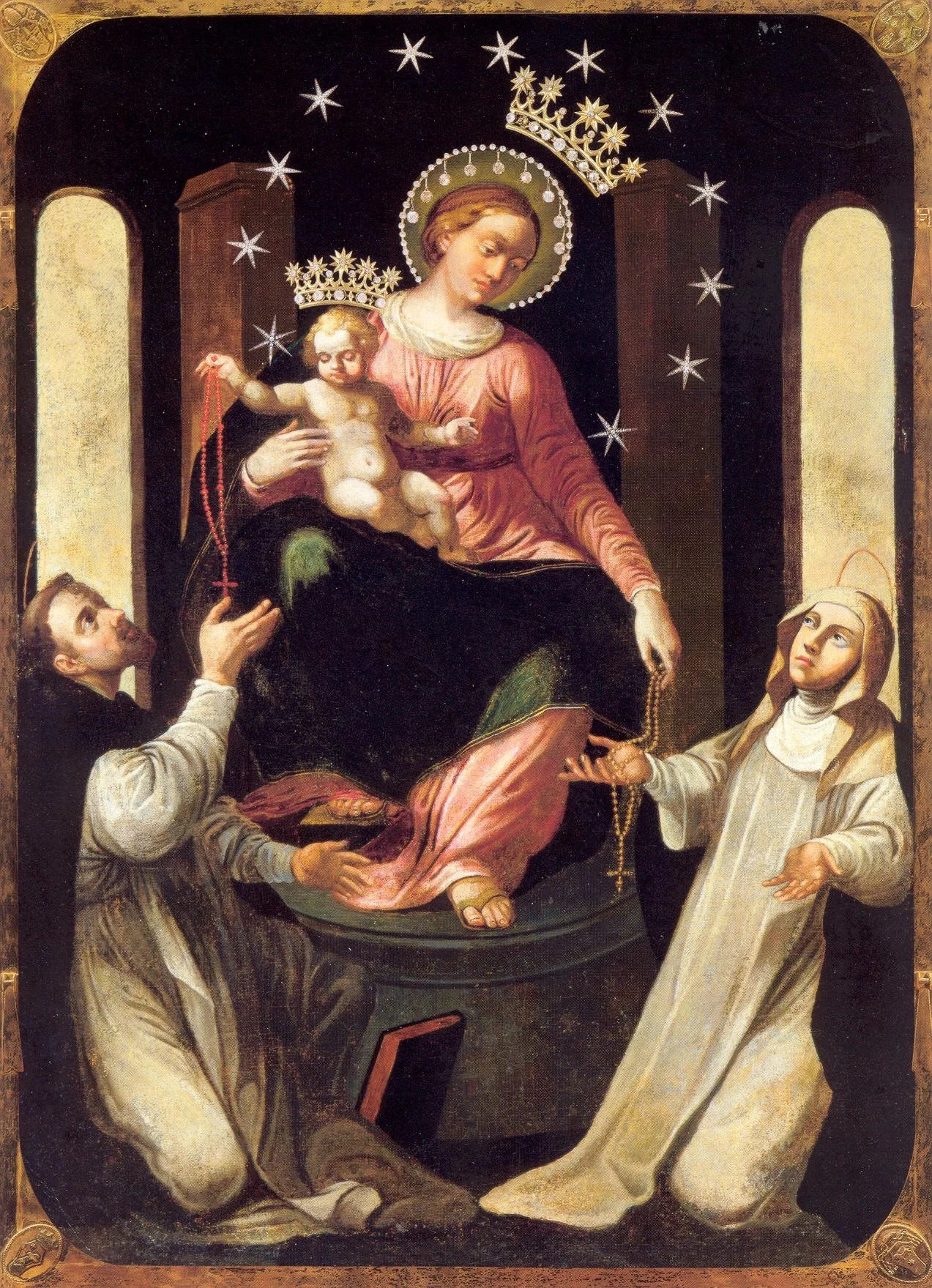
The image of Our Lady of the Rosary of Pompeii located in the Sanctuary of Pompeii, Wikimedia Commons, Public Domain.
Why Pray the Fifteen Saturdays?
The Fifteen Saturdays is a beautiful Catholic devotion that can bear fruit in your spiritual life. Here are five benefits of praying the Fifteen Saturdays:
1. It increases your love for the Holy Rosary.
Many Catholics struggle to pray the Rosary attentively. It’s easy to get distracted and fail to meditate on the Mysteries. The Fifteen Saturdays gives you a chance to slow down and focus on each Mystery in turn. This can transform the way that you approach the Rosary, helping you to more fully appreciate the Mysteries.
2. It encourages you to frequent the Sacrament of the Eucharist.
The reception of Holy Communion is a key component of the Fifteen Saturdays. By simultaneously meditating on the life of Jesus and receiving His Body and Blood, you can receive the grace to grow in holiness and become more like Him. In fact, St. Louis Marie de Montfort said that those who meditate on the Mysteries of the Rosary come to resemble Jesus. This transformation is aided by the graces that come through consuming the Eucharist.
3. It enables you to grow in virtue.
If you’re looking to grow in virtue, it can be difficult to know where to start. The Fifteen Saturdays provides a blueprint for you, outlining fifteen virtues that correlate to the Mysteries of the Rosary. In his Fifteen Saturdays book, St. Bartolo Longo also provided concrete suggestions for living out those virtues.
4. It fulfills one of the requirements for the First Five Saturdays.
The Five First Saturdays is another popular Marian devotion with a similar name. In 1925, Our Lady of Fatima requested the Five First Saturdays to make reparation for offenses committed against her Immaculate Heart. One of the requirements is to spend fifteen minutes meditating on the Mysteries of the Rosary. Since this is also an element of the Fifteen Saturdays, the two devotions can easily be practiced simultaneously.
5. It deepens your relationship with Jesus and the Blessed Virgin Mary.
The Fifteen Saturdays helps you progress in a relationship of love with Jesus and His Mother. If a friendship involves becoming acquainted with the life of another, wouldn't the same apply to our friendship with Jesus and Mary? The Mysteries of the Rosary may have occurred two thousand years ago, but they still contain many treasures that Jesus and Mary want to share with us. By reliving the Mysteries in your mind and heart, Jesus and Mary come to dwell in you and make the Mysteries part of your own life.
A Devotion for Our Times
Sadly, the Fifteen Saturdays fell out of practice during the twentieth century. Various factors likely led to this decline, including the overall downward trend in religious attitudes and activities. Consequently, few Catholics today have heard of the Fifteen Saturdays.
However, this Marian devotion remains as powerful as ever. Most recently, Pope Leo XIV referenced St. Bartolo Longo’s meditations on the Mysteries of the Rosary. Leo visited the Sanctuary of Pompeii on the one-year anniversary of his election and stated the following:
“This dimension [of the Rosary as a compendium of the Gospel] was also very much alive in St. Bartolo Longo, who offered pilgrims profound meditations to save the Holy Rosary from the temptation of mechanical recitation and to ensure it retained the biblical, Christological and contemplative spirit that must characterize it.”
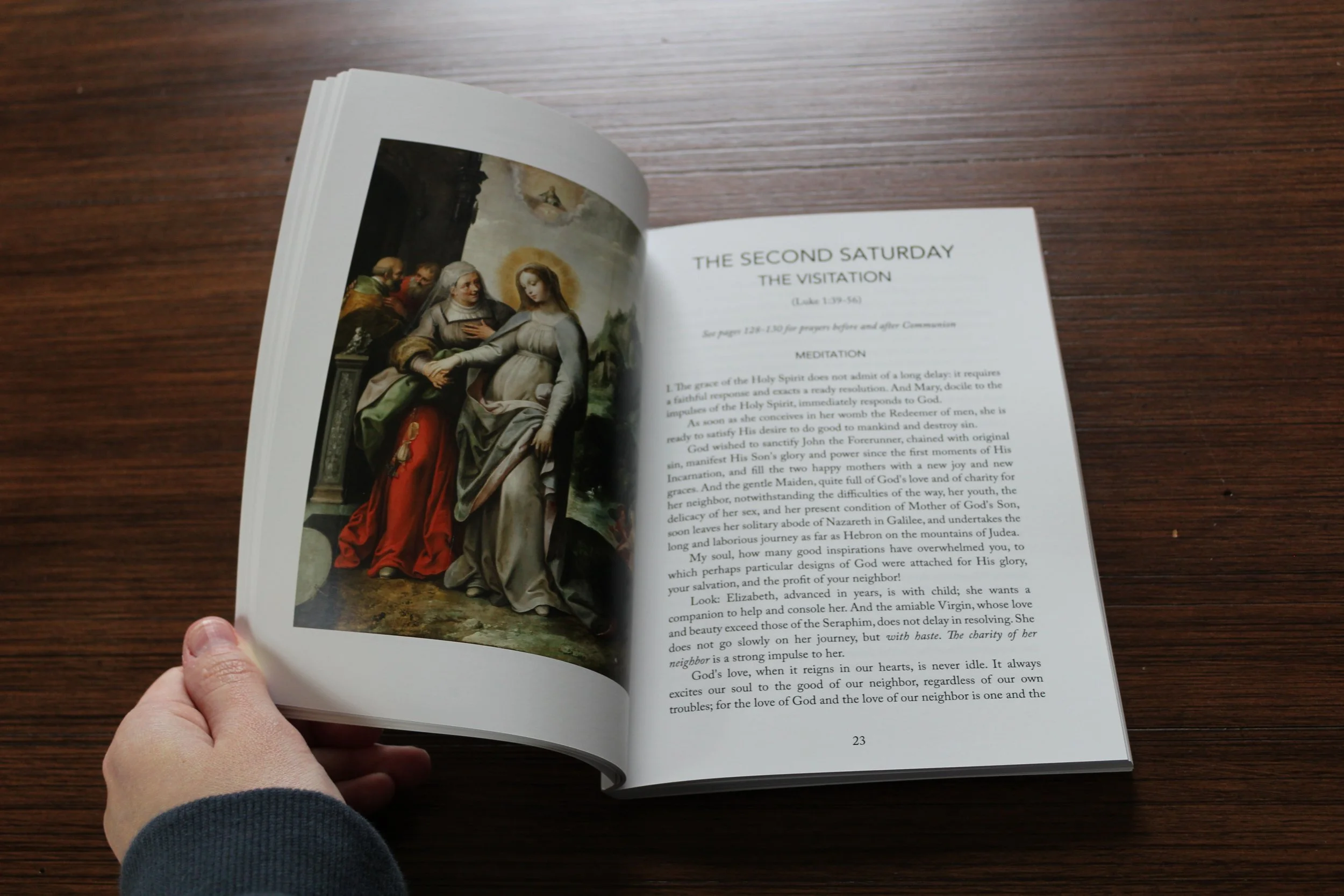
To help revive this beautiful devotion, Seek What Is Above has published a new edition of The Fifteen Saturdays of the Most Holy Rosary based on the 1911 English translation of Longo’s book. The volume updates the language while remaining faithful to Longo's original text and pairs each meditation with a unique Mystery of the Rosary painting from St. Paul's Church, a historic Dominican church in Antwerp. Whether used for the traditional Fifteen Saturdays or for year-round meditation, it is intended to help readers encounter the Mysteries more deeply through the beauty of sacred art and reflections rooted in Scripture.