
July Sacred Artwork of the Month: The Presentation of the Virgin in the Temple by Paolo di Giovanni Fei

Paolo di Giovanni Fei, The Presentation of the Virgin in the Temple, 1398-1399, National Gallery of Art, Washington, D.C.
Saints Joachim and Anne are known to us through tradition. Their story largely derives from the Protoevangelium of James, a non-canonical text from the second century. According to this account, they were married in Nazareth and relocated to the hills near Jerusalem, where the Blessed Virgin Mary would later be raised. However, for many years before her birth, Joachim and Anne suffered from infertility.
A holy couple, Joachim and Anne remained faithful to the Lord despite this heavy cross. God eventually blessed their fidelity with the conception of Mary in their old age. Catholic sacred art often depicts Joachim and Anne as elderly in accordance with this tradition. Paolo di Giovanni Fei, a fourteenth-century Italian painter, portrayed Mary’s aged parents in his altarpiece for the Cathedral of Siena. They stand on the left side of the composition, with halos identifying them as Mary’s pious parents.
Paolo’s altarpiece shows a scene taken from the Protoevangelium of James—the presentation of Mary in the Temple of Jerusalem. The text relates that Joachim and Anne brought Mary to the Temple when she was three years old. Using rich colors and intricate gold details, Paolo endowed the event with a sense of both solemnity and celebration. He translated the Temple’s interior into contemporary terms, depicting it as a Gothic cathedral with soaring arches and a rose window. At the center of the composition, Mary stands upon a dais before the high priest. She appears taller and more poised than a typical three-year-old child, perhaps emphasizing her spiritual maturity and unique role in salvation history.
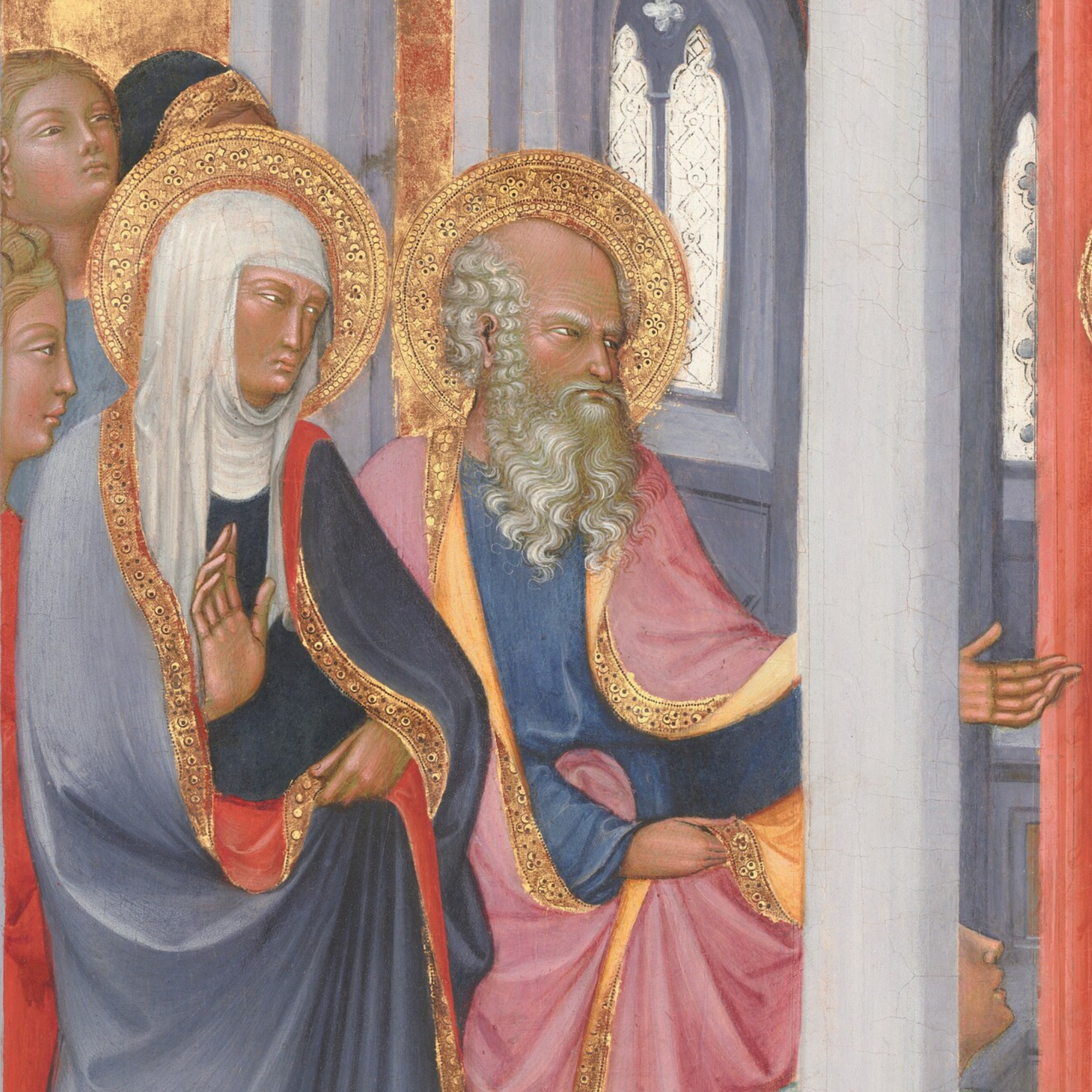
Detail from The Presentation of the Virgin in the Temple by Paolo di Giovanni Fei
As viewers of this painting, we are invited to witness this sacred event alongside the onlookers gathered on the left. Here we see an older couple who patiently endured the sorrow and shame of infertility, which was usually viewed as a social disgrace at the time. They now offer their daughter back to the Lord—the child they had spent years praying for. Paolo depicts Joachim and Anne each with one hand open, symbolizing their willingness to return to God the great gift He had given them. This must have been a profound sacrifice. Living near Jerusalem, Joachim and Anne likely would have been able to visit Mary, but she would have spent most of her time with the other young girls in the upper balcony on the right side of the altarpiece.
The presentation of Mary in the Temple ultimately reminds us how God blesses faithfulness and generosity. When Joachim and Anne consecrated their only child to God, they did not know that she would become the Mother of God. Their sacrifice allowed Mary to receive the religious formation that would prepare her for this extraordinary calling. Joachim and Anne would eventually receive an even greater blessing: a grandson named Jesus Christ. We can only imagine how different salvation history would have been if Joachim and Anne had rejected God because of their childlessness or had not consecrated Mary to Him.
While the details of Joachim and Anne’s lives come from tradition, there is much to learn from their example of piety, perseverance, and humility. One day, their own daughter would present her Son in the same Temple, offering Him back to the Father for the salvation of the entire world. While nothing so extraordinary will ever happen again, God continues to bestow His grace upon those who remain faithful to Him, bringing forth blessings that surpass our own understanding and accomplish His greater plan.