
20 Famous Madonna and Child Paintings (Part 1)
What is a Madonna? In Christian art, the term Madonna refers to an artistic depiction of the Virgin Mary, most commonly shown with the Christ Child. The word Madonna comes from the medieval Italian phrase ma donna, which means “my lady.” Beginning in the thirteenth century, it became the standard title for images of the Virgin Mary in Western art.
The Madonna and Child is one of the most beloved subjects in Christian art history. For centuries, artists have depicted the Blessed Virgin Mary holding the Christ Child, producing some of the greatest masterpieces of sacred art. Madonna paintings by masters such as Raphael, Leonardo da Vinci, and Botticelli continue to inspire admiration from believers and non-believers alike. Their works beautifully convey the tender love between Christ and His Mother—a love that the Virgin Mary also extends to each of her spiritual children.
Out of the countless artworks of the Madonna and Child created over the centuries, here are ten of the most famous in Christian art history.
1. Sistine Madonna by Raphael
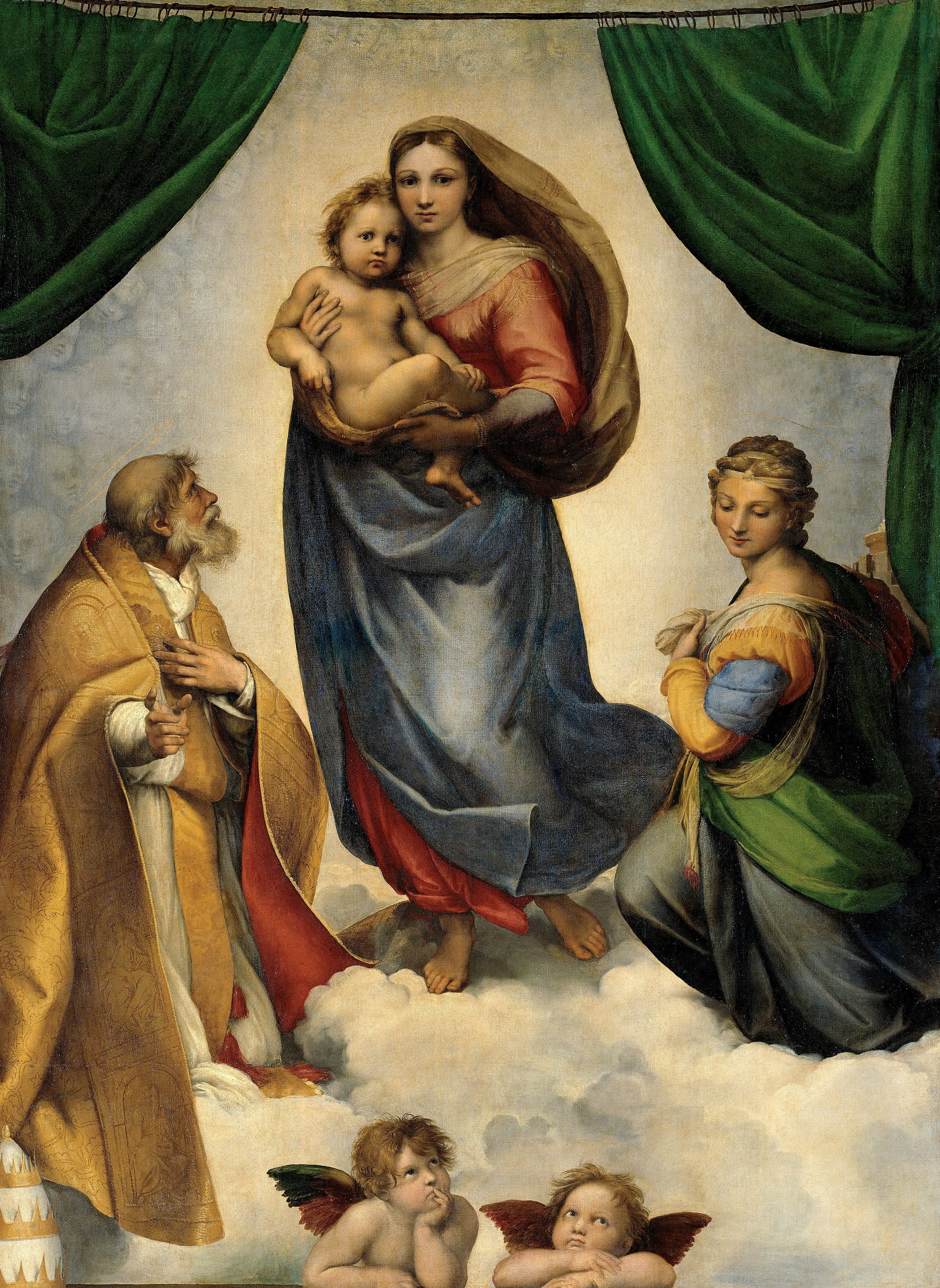
Raphael, Sistine Madonna, c. 1512-1513, Staatliche Kunstsammlungen Dresden, Wikimedia Commons, Public Domain
Commissioned by Pope Julius II in 1512, the Sistine Madonna is one of the last Madonna paintings created by Raphael. The artwork is most famous for the two putti, or winged angels, resting their arms on the ledge at the bottom of the composition. The Madonna and Child stand on a heap of clouds and are flanked by two saints—Pope St. Sixtus II and St. Barbara. These two saints were included because the work was commissioned for the Benedictine monastery church of San Sisto in Piacenza, which housed relics of Saints Sixtus II and Barbara.
2. Virgin of the Rocks by Leonardo da Vinci
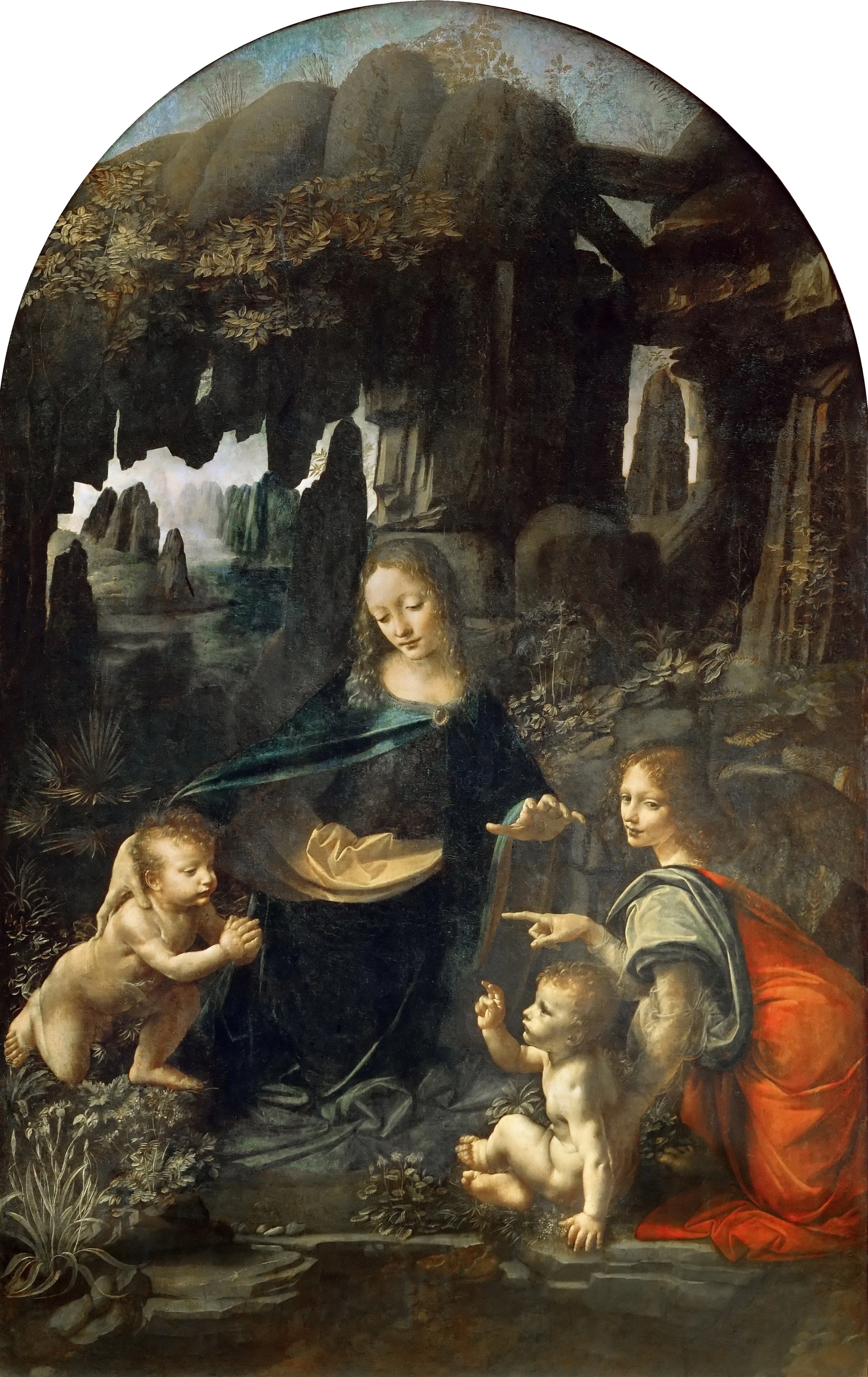
Leonardo da Vinci, Virgin of the Rocks, c. 1483-1486, Louvre Museum, Wikimedia Commons, Public Domain
The Louvre Virgin of the Rocks is the earlier of two nearly identical Madonna paintings by Leonardo da Vinci. The other is housed at the National Gallery in London. Both compositions portray the Virgin Mary and Child Jesus with the infant St. John the Baptist and Uriel, an archangel who appears in non-canonical apocryphal texts. Art historians regard the Louvre version as one of the finest examples of Leonardo's use of sfumato, a technique that blurs sharp outlines to create a hazy effect.
3. Madonna and Child with Two Angels by Fra Filippo Lippi
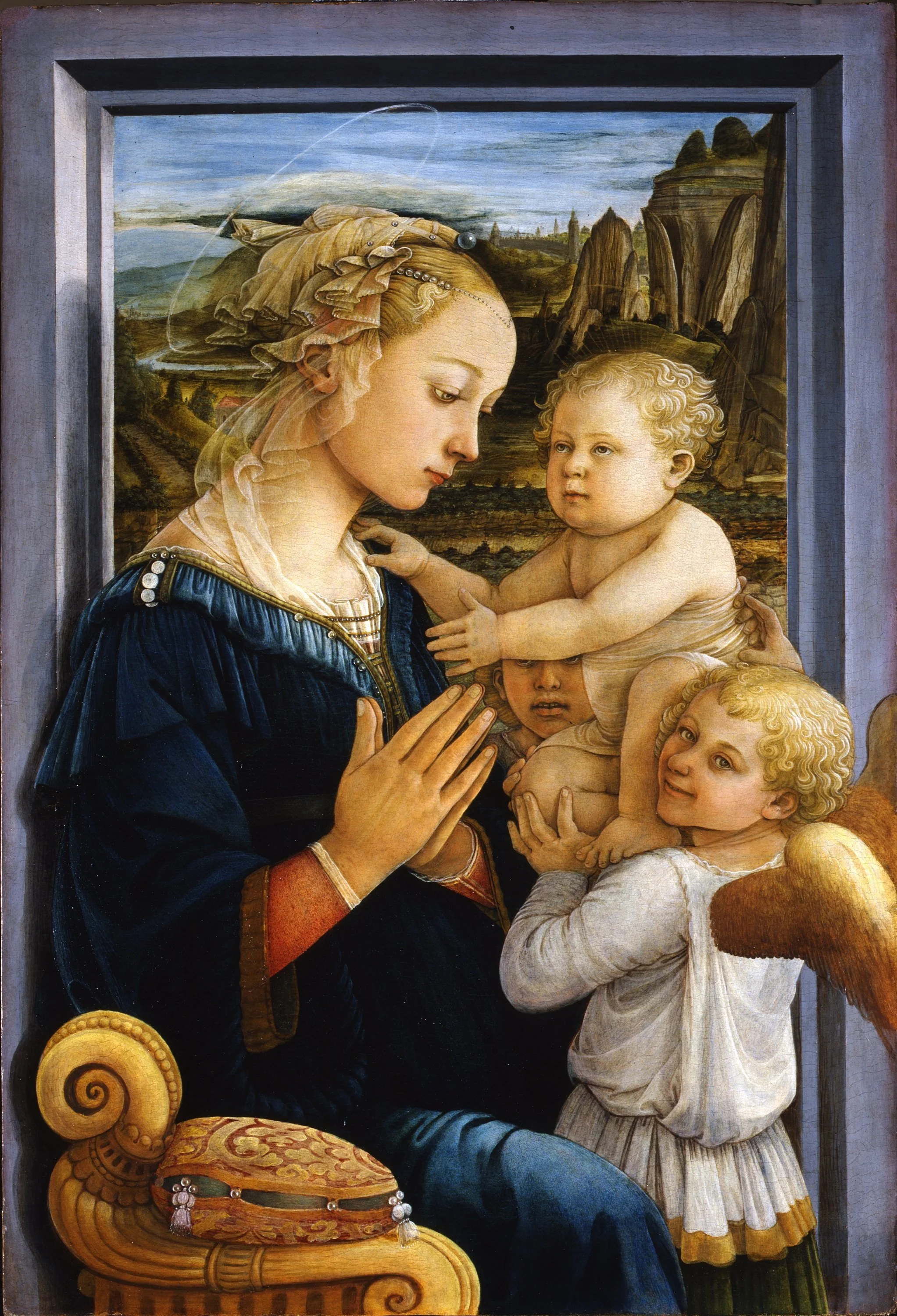
Fra Filippo Lippi, Madonna and Child with Two Angels, c. 1460-1465, Uffizi Gallery, Wikimedia Commons, Public Domain
Also known as the “Uffizi Madonna,” the Madonna and Child with Two Angels is Fra Filippo Lippi’s most famous work. The Early Renaissance artist completed this painting late in his career. The composition shows two angels presenting the Child Jesus to the Virgin Mary, who is dressed as a fashionable and wealthy Florentine woman from the fifteenth century. A window in the background opens onto a vast landscape featuring the distant sea, perhaps alluding to Mary’s title Stella Maris, or “Star of the Sea.” Lippi’s Madonna proved highly influential among later Renaissance painters, including Sandro Botticelli.
4. Madonna of the Magnificat by Sandro Botticelli
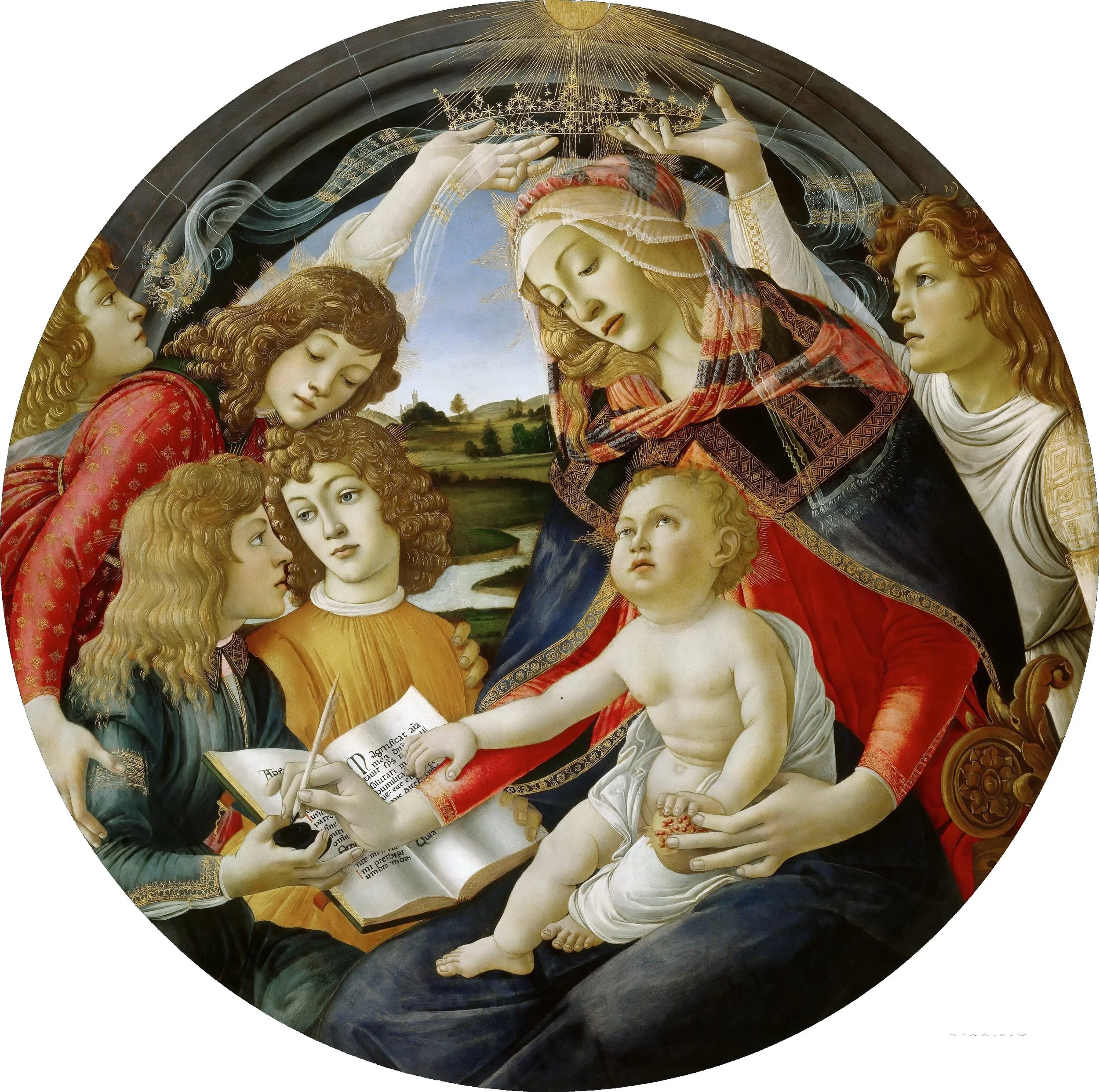
Sandro Botticelli, Madonna of the Magnificat, c. 1483, Uffizi Gallery, Wikimedia Commons, Public Domain
Botticelli’s Madonna of the Magnificat takes its name from the canticle that the Virgin Mary is writing down with her right hand. The Christ Child appears to guide her, as he gazes up at His Mother and rests his arm on hers. He grasps a pomegranate in his left hand. The dark red seeds typically symbolized the Passion of Christ in Renaissance art. Two of the five angels surrounding the Madonna and Child lift a crown to place on Mary’s head. While the original destination of this Madonna artwork remains unknown, the Renaissance painting is one of Botticelli’s most exquisite tondi, or small, round paintings (sing., tondo).
5. Ognissanti Madonna by Giotto
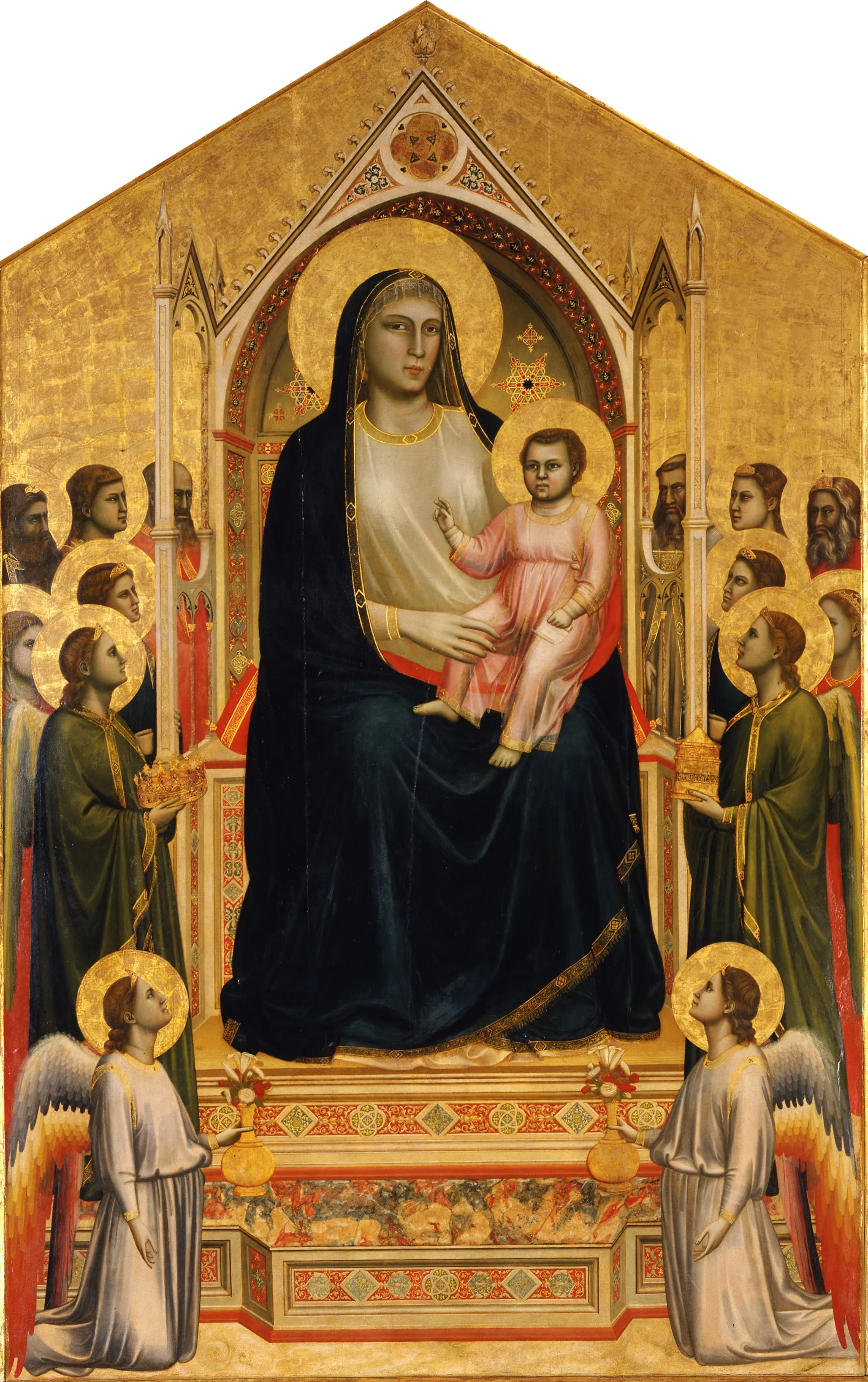
Giotto, Ognissanti Madonna, c. 1300-1305, Uffizi Gallery, Wikimedia Commons, Public Domain
Giotto’s Ognissanti Madonna is one of the first paintings in Christian art to depict the Madonna in a convincing three-dimensional space. The Virgin Mary and Child Jesus sit on a throne within a tabernacle surrounded by angels and saints, making the work a Maestà. Giotto departed from the flattened figures of the predominant Italo-Byzantine style. He used light and shadow to give his figures volume, reflecting a transition to the Early Renaissance. Commissioned for the Church of Ognissanti in Florence, the artwork proved highly influential among subsequent generations of Florentine painters for more than a century.
6. Rucellai Madonna by Duccio
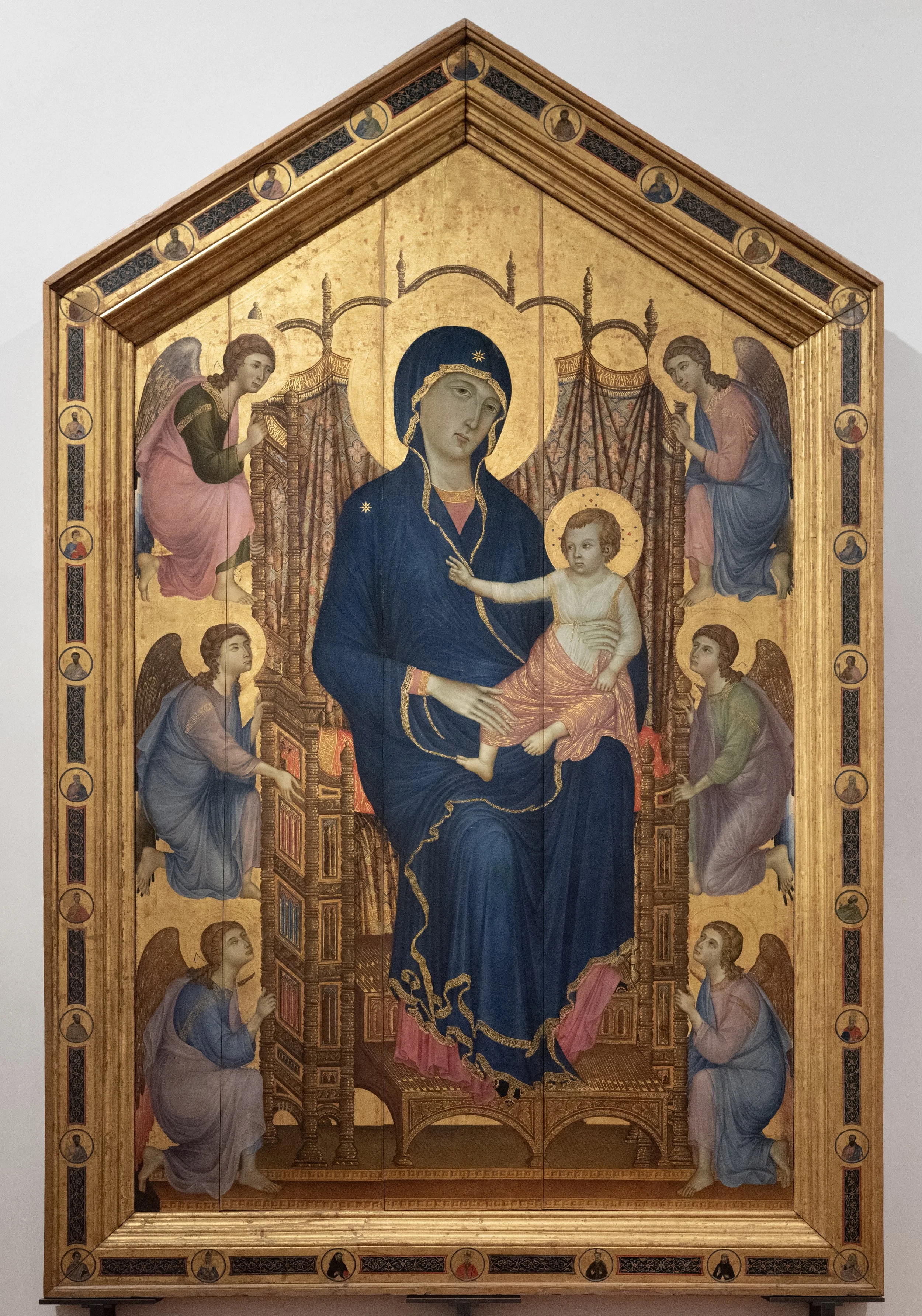
Duccio, Rucellai Madonna, 1285-1286, Uffizi Gallery, Wikimedia Commons, Public Domain
The Rucellai Madonna is one of Duccio’s oldest and most famous works. It is also the largest known painting on wood from the thirteenth century. Predating Giotto’s Ognissanti Madonna by about fifteen years, Duccio’s Madonna is likewise a Maestà that combines Byzantine and Gothic elements—although with a lesser degree of naturalism. The border features small roundels with images of Dominican saints, since the work was commissioned by a Florentine confraternity for Santa Maria Novella, a Dominican Church.
7. Madonna della Seggiola by Raphael
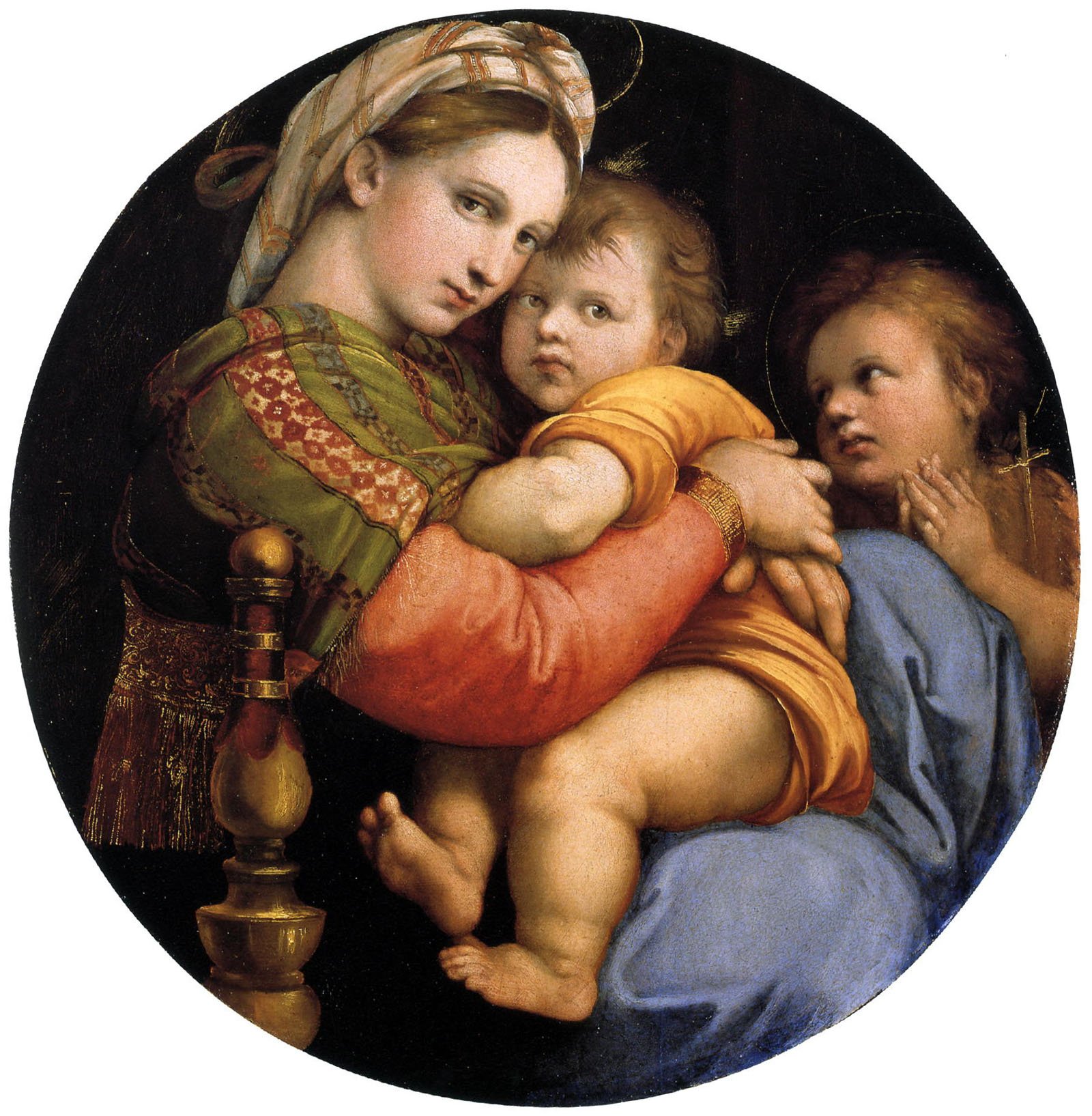
Raphael, Madonna della Seggiola, 1513-1514, Palazzo Pitti, Wikimedia Commons, Public Domain
Many art historians consider the Madonna della Seggiola to be Raphael’s most humanistic depiction of the Madonna and Child. His painting skillfully arranges the three figures of Mary, Jesus, and St. John the Baptist within the circular composition. Mary sits upon a “chamber chair,” a type of chair associated with high-ranking dignitaries of the papal court. She clasps the Christ Child on her lap, creating a scene that expresses the intimate bond of love that exists between Mother and Son. Raphael masterfully captures an intimate human moment without sacrificing the painting's profound sense of the sacred.
8. The Virgin and Child with Saint Anne by Leonardo da Vinci
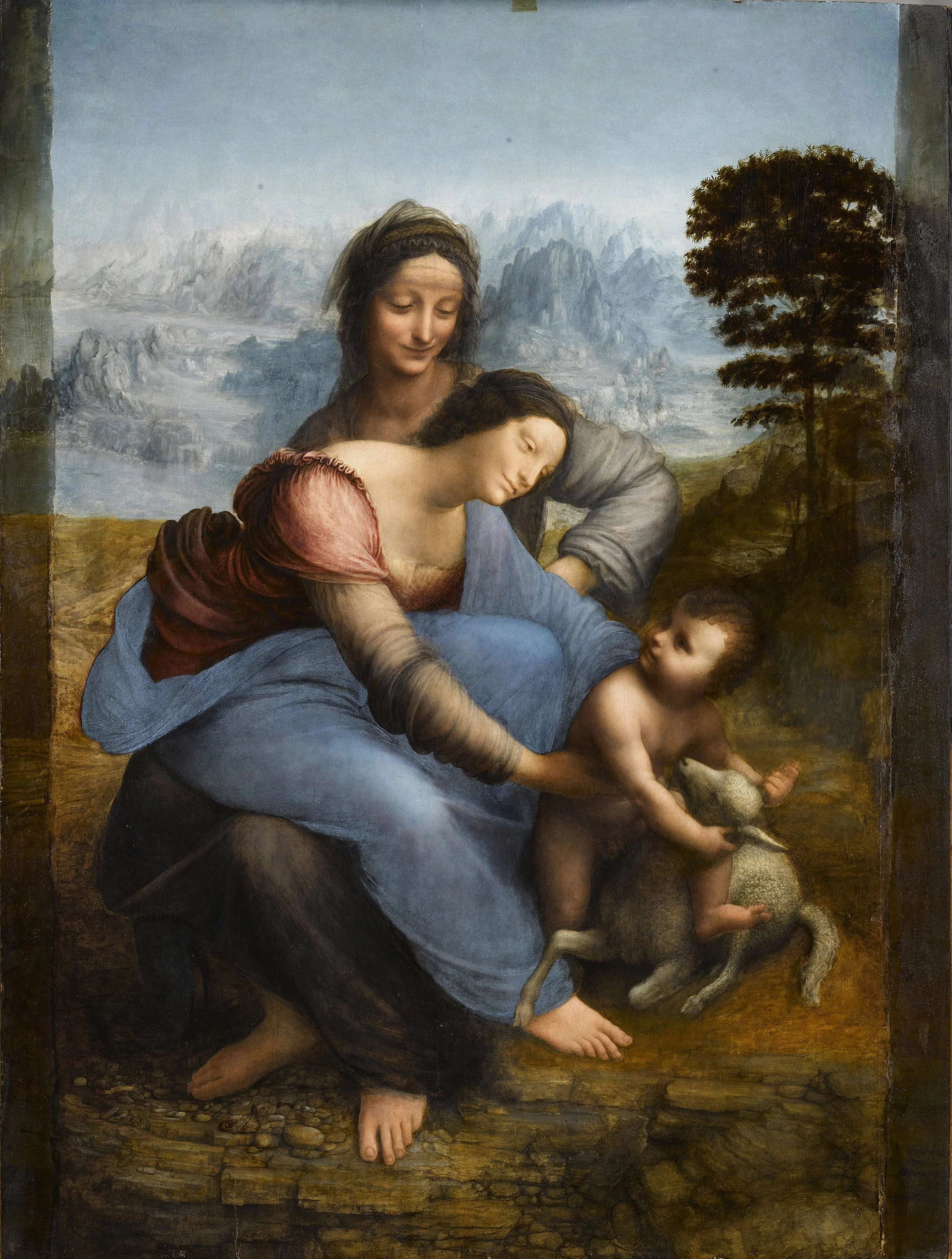
Leonardo da Vinci, The Virgin and Child with Saint Anne, c. 1501-1519, Louvre Museum, Wikimedia Commons, Public Domain
A dynamic and unprecedented composition, The Virgin and Child with Saint Anne is commonly held to be a landmark work in art history. Leonardo da Vinci’s painting shows Mary in an unconventional position on her mother’s lap. Mary grasps the Child Jesus, who in turn holds a lamb, symbolizing his Passion. This work is known for its psychological depth—Mary looks at her Son with an intense gaze of motherly love, while St. Anne observes the scene with a more subdued smile. Leonardo’s painting influenced many contemporaries—including Michelangelo and Raphael—to adopt his style of interlocking, overlapping figures.
9. Madonna of the Rose Bower by Martin Schongauer
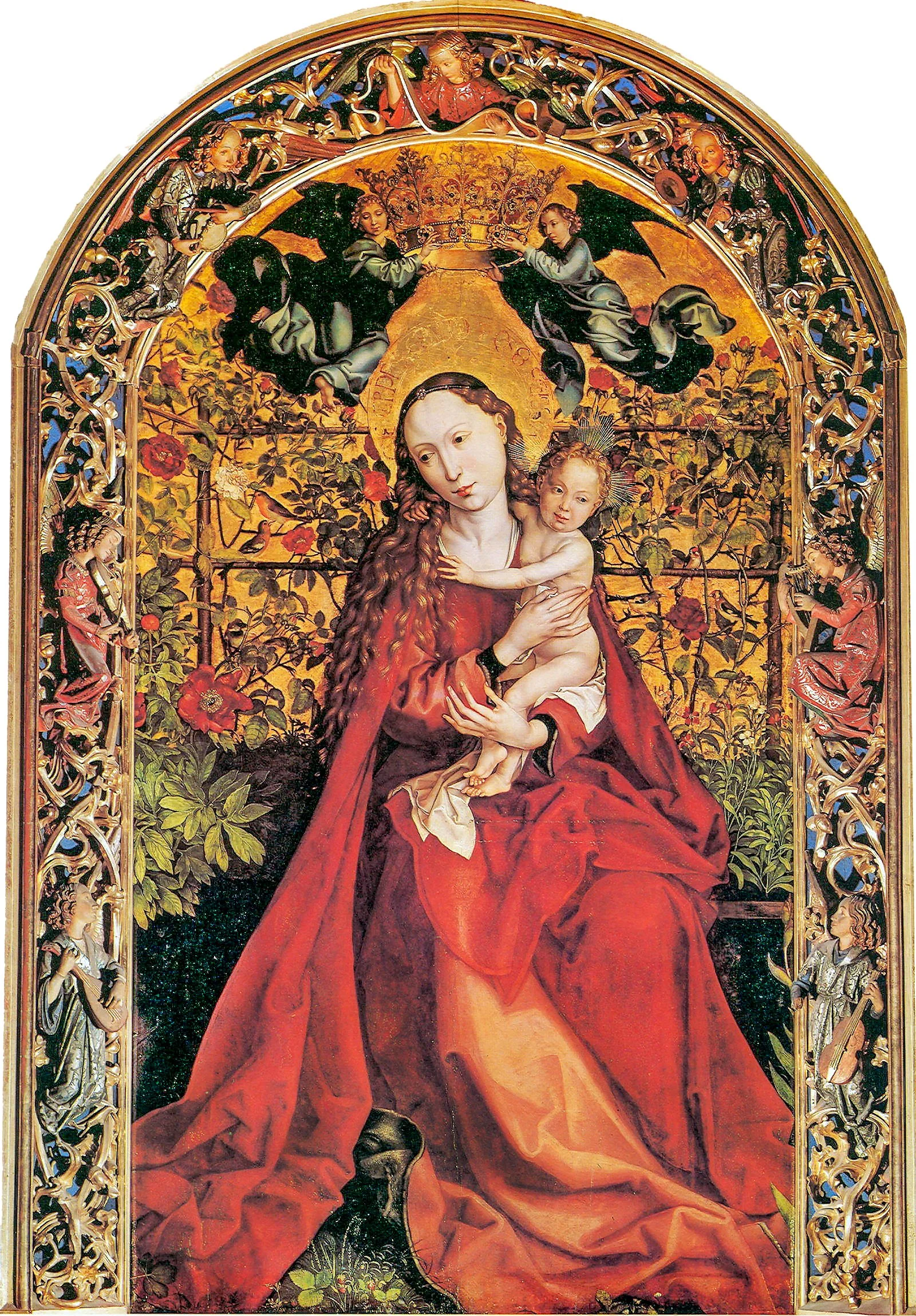
Martin Schongauer, Madonna of the Rose Bower, c. 1473, Wikimedia Commons, Public Domain
Often considered to be Martin Schongauer’s greatest panel painting, the Madonna of the Rose Bower depicts the Virgin Mary and Christ Child within a garden that prominently features roses, which likely foreshadow Christ’s Passion. The hortus conclusus, or “enclosed garden,” represents Mary’s virginity. Her red dress and the goldfinches interspersed throughout the composition also point to the suffering that Christ will have to endure. Schongauer made this work for St. Martin’s, the largest Catholic church in Colmar, France. His painting marks an important transition from medieval art to the Northern Renaissance.
10. Madonna of the Goldfinch by Raphael
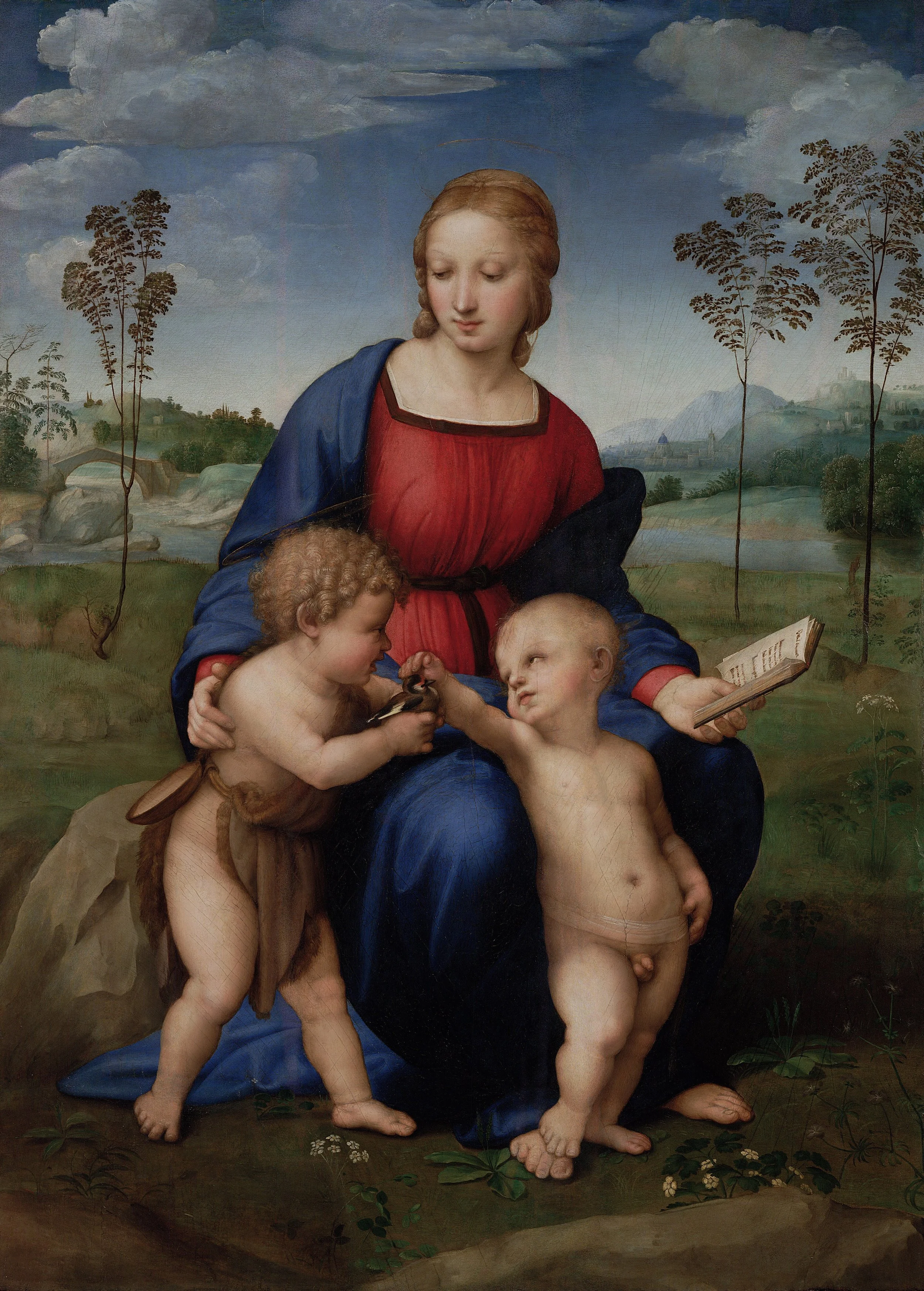
Raphael, Madonna of the Goldfinch, 1505-1506, Uffizi Gallery, Wikimedia Commons, Public Domain
In the Madonna of the Goldfinch, Raphael grouped the Blessed Virgin Mary, Christ Child, and young St. John the Baptist in a pyramid composition. The Renaissance master painted the work as a wedding gift for his friend Lorenzo Nasi. The artwork portrays John holding out a goldfinch for his cousin to pet. During the Middle Ages and Renaissance, the goldfinch became a symbol for Christ’s Passion due to a popular legend, which associated the bird with the Crucifixion. According to the tale, the goldfinch received its red spot from Christ’s Blood while trying to pull a thorn from His crown. In Raphael’s painting, the Virgin Mary watches this interaction between John and Jesus with a gentle smile.
Conclusion
These first ten paintings are among the most famous and influential depictions of the Madonna and Child in Christian art history. At some point in their artistic careers, many of the greatest religious artists created images of the Virgin Mary and Child Jesus, including Raphael, Leonardo da Vinci, and Giotto. Their paintings continue to offer a glimpse into the beauty of the mystery of the Incarnation—how God became man by choosing to enter the world through the Virgin Mary. These works remain an enduring reminder of the human and divine love that exists between the Blessed Mother and her Son. Check out Part 2 of this series to discover ten more significant Madonna paintings from Christian art history (Coming soon!).